| |

Remembering Veteran Victims of Mesothelioma

On this day when the US honors its fallen heroes, it is important to remember that not all who lost their lives from military service died on the battlefield.

In fact, many died decades later of the rare asbestos-linked cancer, mesothelioma, as a result of exposure to asbestos in the military. Others are still battling this aggressive and incurable malignancy.

Scientists have suspected a link between the fibrous mineral asbestos and malignant mesothelioma since as early as the 1930s. That was when miners and those who processed asbestos for a variety of uses began to get sick from a mysterious lung-related disease.

But many decades passed and many people died—both in and outside of the military—before the Armed Services recognized the connection between asbestos and malignant mesothelioma and curtailed its use of the toxin.

Asbestos Use on Naval Ships

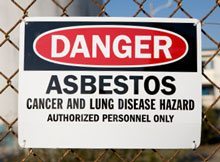
Asbestos is a naturally-occurring mineral that is fire and heat resistant, strong, inexpensive and plentiful. Before it was linked to diseases such as pleural mesothelioma, lung cancer, and asbestosis, it was a common building material and insulator.

The Navy is known to have used asbestos in boiler rooms, around pipes, and in valves and gaskets on its vessels until as late as the 1970s. Because they were often in close quarters with the material on their ships, Navy veterans and Merchant Marines have one of the highest rates of mesothelioma of any population.


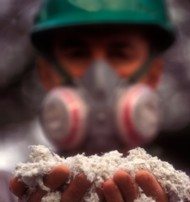
Sailors who worked in areas where asbestos was used, those who were involved in repair or overhaul of ships, or those who were present when a ship was damaged during attack, often breathed in or ingested asbestos dust.

Once it is inhaled or swallowed, fibers from this dust stay in the tissues, triggering changes that can result in mesothelioma many decades later. Often, Naval veterans who were exposed to  asbestos when they were young do not develop mesothelioma symptoms until they are seniors.

Naval Veterans Not the Only Ones at Risk

But living on a Navy ship was not the only way for veterans to come in contact with asbestos.

Millions of shipyard workers were also exposed, especially during World War II when the US added thousands of new ships to its fleet. It is estimated that thousands of metric tons of asbestos were used by the men and woman who built and repaired these vessels.

According to one source, while the combat death rate was 18 per 1,000 at this time, approximately 14 per 1,000 shipyard workers died of mesothelioma.

Even many Air Force veterans were put at risk for mesothelioma by the asbestos used to build their base housing and the asbestos found in the brakes, engine heat shields, gaskets, and insulation in the airplanes themselves.

In the US, about 2,500 people each year receive a diagnosis of mesothelioma, a cancer of the lung and abdominal lining that typically carries a poor prognosis.  About a third of those cases occur among veterans.

Standard treatment for mesothelioma includes some combination of chemotherapy, surgery, and/or radiotherapy. Immunotherapy and gene therapy are also being investigated as potential therapeutic options for mesothelioma patients.

An extension of the Veterans Choice Program, which was signed by the President this spring, will help ensure that veterans with mesothelioma can continue to access mesothelioma care closer to home. The act allows veterans to receive full coverage for civilian medical care if they cannot easily access care from a VA provider.


Similar Posts

  • |

    Teacher’s Diagnosis Highlights Mesothelioma Risk in Schools

    A recent mesothelioma diagnosis in the UK once again dramatically highlights the fact that even a small amount of asbestos can be deadly. Sixty-three-year-old school teacher Marion Potts of Brockenhurst died of mesothelioma in a Southampton hospital in June. According to an article in The Mirror, the Coroner recorded a verdict of “death from an industrial disease” after hearing evidence last week that Potts actually saw asbestos dust being released when she pinned work on the classroom walls. Most recently, Potts was head of the English department at Romsey School in Hampshire until her retirement two years ago. Mesothelioma is a growing threat among school teachers, administrators, maintenance workers, and even students in British schools. A government report released last…

  • |

    Study Confirms Firefighters at Elevated Risk for Mesothelioma

    A 5-year National Institute for Occupational Safety and Health (NIOSH) study of U.S. firefighters is the first to confirm what has long been suspected: Firefighters are definitely at higher risk for malignant mesothelioma. The study examined the mortality patterns and cancer incidence (including mesothelioma) among 30,000 firefighters in three major cities. The study subjects were all career firefighters who started their careers after 1950 and were followed through 2009. In order to get a diverse sample of firefighters from across the country, the study focused on firefighters from San Francisco, Chicago and Philadelphia. Comparing firefighters to a sampling of the general public, the study looked at 92 causes of death and 41 cancer incidence groupings, with a focus on 15…

  • |

    Mesothelioma Still Carries Heavy Mortality Burden in U.S.

    Asbestos exposure cost Americans more than 427,000 years of potential life in the first decade of the new millennium. That figure comes from a study on mesothelioma and asbestosis – the two most deadly asbestos-related diseases – conducted by the CDC’s National Institute for Occupational Safety and Health (NIOSH). Using National Center for Health Statistics mortality data, NIOSH researchers evaluated premature deaths and “loss of potentially productive years of life” attributable to either asbestosis or mesothelioma between 1999 and 2010. The data included only people 25 years or older with an underlying cause of death listed on their death certificate of either asbestosis or malignant mesothelioma. When the figures were calculated using the normal life expectancy for each asbestosis victim…

  • |

    Mesothelioma Case Shows Danger of Accidental Asbestos Exposure

    A mesothelioma case in Birmingham, England is a dramatic illustration of the very real danger of hidden asbestos. The widow of a physician who died of mesothelioma last year at the age of 51 claims her husband was exposed to asbestos just walking to and from his medical classes. Monisha Coelho believes that exposed asbestos insulation in the underground hallways that connect the University of Birmingham to buildings on the Queen Elizabeth Hospital campus triggered Dr. Ian Pardoe’s mesothelioma. In an article in the Birmingham Mail, Coelho explained how her husband decided how and where the deadly exposure had occurred. “Ian thought long and hard about where he might have come into contact with asbestos,” Coelho told the paper. “He…

  • |

    Mesothelioma Rates Expected to Rise for Another Decade

    Most developed countries can expect another decade or more of rising mesothelioma rates before the incidence of the disease starts to wane. That is one of the major findings in a recent report from The Baird Institute for Applied Heart and Lung Surgical Research in Australia. The report, which looked at the causes, distribution and projected future incidence of malignant mesothelioma, contains both good and bad news for the U.S.. Mesothelioma is an aggressive and often fatal cancer caused by exposure to asbestos.  It is thought to be triggered by chronic inflammation and irritation in the lung tissue and the surrounding pleural membrane by the sharp asbestos fibers.   Mesothelioma often takes decades to develop. According to the Baird Institute report, the average…

  • |

    Short-term Asbestos Exposure Triggers Mesothelioma

    The recent death of a British man from mesothelioma is evidence of the destructive power of asbestos – even when exposure is short.  A British newspaper reports that Welwyn resident Roger Beale first began experiencing a classic symptom of mesothelioma, shortness of breath, nearly 4 years ago. Beale first noticed the problem while walking up stairs. After a chest X-ray, Beale’s symptoms were attributed to a chest infection.  But when his symptoms continued to worsen, Beale sought medical care again in January, 2010 and was diagnosed with pleural mesothelioma, an intractable cancer of the lung lining that is almost always caused by exposure to asbestos. By November of 2010, Beale’s shortness of breath had gotten worse, despite regular monitoring and…