Author: Holly Zink

  • |

    Navigating Uncertainty: Patients and Alternative Cancer Treatments

    Mesothelioma introduces a whirlwind of uncertainties when it comes to treatment options. Many patients consider complementary and alternative medicine or CAM. A recent study looked at the relationship between patient uncertainties and their views on CAM. Results showed interesting insights into how individuals perceive these additional treatment options. Alternative Medicine and Patient Perspectives The study uncovered a mix of ideas among mesothelioma patients. Most knew about CAM, with many getting their information from friends or family. Surprisingly, while many believed CAM could work, most didn’t tell their doctors they were using it. Researchers used two tests, the Holistic Complementary and Alternative Medicine Questionnaire (HCAMQ). The second test was the Intolerance of Uncertainty Scale (IUS-12). They used these surveys to understand…


  • Unlocking the Potential of Value-Based Healthcare in Mesothelioma Cancer Care

    In the world of healthcare, there’s something called Value-Based Healthcare (VBHC). It’s all about making healthcare better by focusing on the results it delivers. When it comes to diseases like cancer, doctors want to get the best results for patients. A group of European healthcare centers came together in the VOICE community to see if they could make this happen. Understanding Value-Based Healthcare Value-Based Healthcare is all about understanding what works best in healthcare. It looks at the outcomes (results) that patients get from treatments and connects them to the costs. This way, doctors can see which treatments are worth it. The goal is to get the best results for the money spent by patients. In the world of cancer,…

  • |

    Exciting News: Special FDA Designation for Mesothelioma Vaccine

    A company called Ultimovacs has achieved something big in the world of cancer treatment. They received a special title from the US Food and Drug Administration (FDA) for their vaccine called UV1. This vaccine is meant to help people with mesothelioma, which is a rare and tough-to-treat cancer. Understanding UV1 and Its Goal UV1 is not like regular vaccines that protect you from diseases. Instead, it’s a vaccine that tries to make your immune system fight cancer. It targets an enzyme in cancer cells called telomerase (hTERT), which is important in mesothelioma. This cancer is known for growing in the lining around your lungs due to asbestos exposure. The UV1 vaccine is made of three special hTERT parts, chosen based…

  • |

    New Hope for Pleural Mesothelioma: Targeting YB-1 for Enhanced Treatment

    Pleural mesothelioma has been challenging to treat with limited options and a poor outlook. But, researchers have uncovered a promising new way to improve chemotherapy and radiotherapy. This exciting breakthrough means new treatment options for mesothelioma treatment. Understanding YB-1 in Mesothelioma A new study focused on a protein called Y-box-binding protein 1 (YB-1). Previous research has shown that YB-1 plays a role in controlling various aspects of pleural mesothelioma. It plays a role in cancer cell growth, cell death, and cell movement. Building on this knowledge, the researchers set out to see if targeting YB-1 could make treatments more effective. To target YB-1, the researchers used small interfering RNA to “knock down” YB-1. This significantly reduced tumor growth. This also…

  • |

    Promising Results: Pembrolizumab Enhances Mesothelioma Treatment

    Pleural mesothelioma is a challenging cancer caused by asbestos exposure. It is often diagnosed in advanced stages with limited treatment options. However, a glimmer of hope has emerged in recent years with a groundbreaking approach. The addition of pembrolizumab to standard chemotherapy has shown promising results in improving the overall survival of patients with this devastating disease. A Global Effort A phase 3 clinical trial was conducted across 51 hospitals in Canada, Italy, and France. Eligible participants, aged 18 years or older, had previously untreated advanced pleural mesothelioma and a good performance status. They were randomly divided into two groups. One received intravenous chemotherapy with or without pembrolizumab. A Game-Changing Outcome The trial ran from January 2017 to September 2020…

  • |

    New Hope for Treating Pleural Mesothelioma: Breakthrough Therapies on the Horizon

    Pleural mesothelioma is a rare and tough cancer with a history of limited treatment options and a difficult prognosis. But recent years have brought good news for patients, as new treatments give hope to those facing this challenging condition. A Positive Shift in Treatment Since 2021, a big change has happened in how we treat pleural mesothelioma. Doctors now use immune checkpoint inhibitors as the first choice for treatment. These include nivolumab and ipilimumab. This is a big step forward for patients who once had few options for this tough cancer. Combining chemotherapy and immune checkpoint inhibitors is a good next step. But researchers are also exploring other ways to treat pleural mesothelioma. They are learning more about how this…

  • |

    Expanding Treatment Horizons: CIRT’s Potential for Mesothelioma Patients

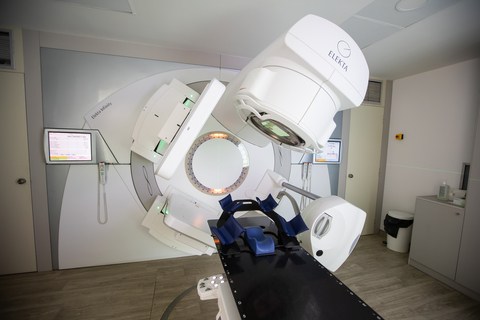
    When it comes to treating early-stage cancer, surgery is often the recommended approach. But did you know that some patients choose a different option – radiotherapy? In recent years, a special type of radiotherapy called Carbon-ion radiotherapy (CIRT) has become popular, and a study from Japan has shown how it can help people with early-stage lung cancer. CIRT also has treatment applications in mesothelioma. CIRT: A Different Kind of Treatment Carbon-ion radiotherapy, or CIRT, is a unique way to treat cancer using special particles called carbon ions instead of X-rays. This treatment has several advantages, making it an attractive choice for people who don’t want surgery. CIRT is known for its ability to control cancer locally while causing fewer severe…

  • |

    Unlocking Mesothelioma’s Secrets: Understanding the Tumor Microenvironment

    Researchers are working hard to understand the area around mesothelioma tumors. This is known as the tumor microenvironment. The tumor microenvironment affects mesothelioma growth and development. Decoding the Tumor Microenvironment Malignant mesothelioma is a serious type of cancer that affects the lining of the lungs, heart, and abdomen. It is caused by asbestos exposure. Scientists are always looking for new ways to understand and treat this disease. One important aspect they’re exploring is how the environment around the tumor, known as the tumor microenvironment. This area affects its growth and development. In a new study, scientists from Wenzhou Medical University in China used advanced computer programs, called machine learning methods. They studied 87 cases of malignant mesothelioma. They collected a…

  • |

    Safety First: Managing Cisplatin Exposure After Mesothelioma Treatment

    Mesothelioma is an aggressive type of cancer that affects the lining of the lungs, abdomen, or heart. It is caused by exposure to a mineral called asbestos. Mesothelioma can be difficult to treat, and doctors use a combination of treatments to help patients. One of these treatments is called Hyperthermic Intrathoracic Chemotherapy (HITOC), which delivers a drug called cisplatin directly to the area where the cancer is found. Decoding Mesothelioma Treatment A recent study aimed to learn more about the safety measures needed after HITOC. The researchers focused on understanding how cisplatin is removed from the body through fluids like blood, urine, and secretions from the lungs. They collected samples from five patients who underwent HITOC, both before and after…

  • Understanding Mesothelioma: The Impact of BAP1 and p16 in Accurate Diagnosis

    Mesothelioma is a rare and serious type of cancer that affects the lining of organs like the lungs and abdomen. It is caused by exposure to a harmful substance called asbestos, which is sometimes used in construction materials. Detecting mesothelioma can be tricky, and doctors often need special tests to be sure. A recent study looked into two important factors, called BAP1 and p16, to help diagnose mesothelioma more accurately. Redefining Mesothelioma Diagnosis Between 2019 and 2022, scientists studied 21 fluid samples from around the lungs and abdomen of people suspected to have mesothelioma. These samples were examined closely to find out if the BAP1 protein was missing and if the p16 gene had certain changes. These tests were important…