
Author: Alex Strauss

  • |

    Minimally Invasive Surgery for Mesothelioma is “Viable Alternative” to Standard Approaches

    A new study from the Icahn School of Medicine at Mount Sinai in New York suggests that minimally invasive surgery for mesothelioma is a “viable alternative” to open-chest procedures.  Both of the two main surgical procedures for pleural mesothelioma are usually done through a large incision in the chest. Both procedures also carry a high risk of post-surgical complications.  But the New York researchers found that minimally invasive surgery for mesothelioma may produce fewer serious problems in the short-term. It may also give mesothelioma patients a better quality of life after surgery. Surgical Treatment of Pleural Mesothelioma Pleural mesothelioma tumors occur on tissue that surrounds the lungs. These tumors tend to spread out across the tissue in irregular shapes. Their…

  • | | | |

    Prognostic Value of PET/CT in Pleural Mesothelioma Patients

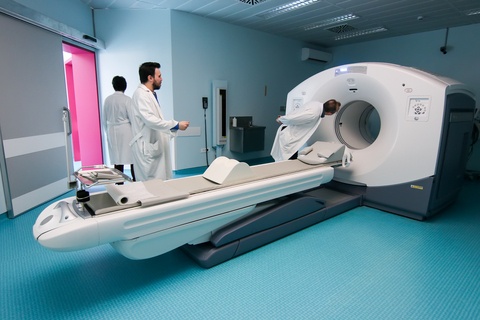
    New data highlights the prognostic value of PET/CT scans for patients with malignant pleural mesothelioma. Pleural mesothelioma is a rare malignancy with a poor prognosis. But some patients tend to do better than others. Scientists are always looking for better ways to predict which patients will respond best to which treatment. A new Turkish study focused on the prognostic value of scans that measure tumor volume and metabolic activity. They conclude that PET/CT is a valuable way to predict mesothelioma outcomes. Doctors can use the information to help plan for chemotherapy or surgical treatment.  How PET/CT Scans Work Doctors have been aware of malignant mesothelioma since the 1930s. That is when it first started appearing among asbestos workers. But there…

  • | | |

    Real-World Mesothelioma Patients Need New Systemic Treatments

    The newest study on real-world mesothelioma patients illustrates the need for more ways to treat this devastating cancer.  Many studies focus on a carefully-chosen subset of patients. Patients have to meet specific guidelines to qualify for a mesothelioma clinical trial.  But the authors of a new report in Future Oncology focused on real-world mesothelioma patients in community clinics. The goal was to see what kinds of treatments these patients got and how well they worked.  The results show most people do not have other treatments after first-line therapy. They also suggest that mesothelioma doctors and patients need new first-line alternatives.  First- and Second-Line Mesothelioma Therapies Malignant mesothelioma is the name for cancer on the membranes around internal organs. Pleural mesothelioma…

  • | | | |

    Mesothelioma Clinical Trials: Eligibility May Be Too Strict, Study Finds

    A new Australian study suggests that too many people are being left out of mesothelioma clinical trials under current trial rules.  The researchers say that eligibility requirements around pleural mesothelioma studies are too strict. The result is that many people never have the opportunity to take advantage of investigational treatments only available through studies.  In addition, the trial data gathered may not really apply to average mesothelioma patients. The Australian researchers are calling for changes that will let more people qualify for mesothelioma clinical trials.  What Are Mesothelioma Clinical Trials? Pleural mesothelioma is an intractable cancer of the lining around the lungs. People who get it usually worked in an industry that exposed them to asbestos. Once asbestos gets in…

  • | | |

    Which Mesothelioma Patients will Benefit from Second-Line Chemotherapy

    Japanese oncologists say they have found a way to help predict which peritoneal mesothelioma patients are most likely to get results from second-line chemotherapy. First-line therapy is the mesothelioma treatment that doctors try first. Usually, that is chemotherapy. If that does not work or stops working, they may move on to another option. Second-line chemotherapy is one of those options.  Doctors at National Cancer Center Hospital in Tokyo evaluated mesothelioma cases. These were patients at their institution between 2007 and 2019. They found that patients who have more rounds of first-line chemotherapy are most likely to respond to second-line chemotherapy.  Drug Treatment for Malignant Mesothelioma Peritoneal mesothelioma is a cancer on the lining that surrounds the abdominal organs. It usually…

  • Mesothelioma Case Study: Keytruda Side Effect Treated with Plasma Exchange

    German mesothelioma doctors say a Keytruda side effect that causes the heart to swell can be treated by “cleaning” the blood plasma.  The team shared the details of a recent mesothelioma case in Translational Lung Cancer Research. The mesothelioma patient developed a condition called myocarditis after treatment with pembrolizumab (Keytruda).  The Keytruda side effect is rare but serious. The good news is that cleaning the blood through a process called plasmapheresis restored the patient’s heart function. The article could help other doctors if any of their mesothelioma patients have similar problems.   Myocarditis as a Keytruda Side Effect Keytruda is a type of immunotherapy drug called an immune checkpoint inhibitor. It is approved to treat patients who have already tried other…

  • |

    COVID-19 Fears May Lead to Delayed Mesothelioma Diagnosis

    Cancer experts are warning that the fear of contracting COVID-19 may result in delayed mesothelioma diagnosis and worse outcomes for some patients.  A study from the Epic Health Research Network shows that many patients delayed cancer screenings and other preventative health appointments during the pandemic.  Although the numbers have started to increase, the trend may mean that some patients have already faced a delayed mesothelioma diagnosis.  Understanding Pleural Mesothelioma Pleural mesothelioma is a fast-growing cancer on the tissue that surrounds the lungs and lines the chest wall. It is most common in people who lived or worked around asbestos.  Even in the best of times, mesothelioma is extremely difficult to diagnose. Most mesothelioma patients have very few symptoms until the…

  • | | | |

    Phase 3 Clinical Trial to Test Durvalumab for Mesothelioma

    A potential new first-line immunotherapy treatment for mesothelioma is now recruiting patients for a phase 3 clinical trial. The trial will compare the immunotherapy drug durvalumab (IMFINZI) combined with chemotherapy against chemotherapy alone.  Results from the phase 2 trials of this combination released last year were promising. Tests showed that it extended mesothelioma survival by about 8 months with no debilitating side effects.  The randomized phase 3 clinical trial will try to confirm these results in a larger group of people. Mesothelioma Treatment with Durvalumab Durvalumab is an immune checkpoint inhibitor. Immune checkpoint inhibitors deactivate a cancer cell survival mechanism that helps cancer cells evade the immune system. Pleural mesothelioma and other types of cancer use proteins like PD-1 to…

  • | | | | |

    Mesothelioma Subtypes Often Misclassified by Biopsy

    Pleural biopsy is not perfect when it comes to telling the difference between the three mesothelioma subtypes. But misclassification could lead to shorter survival.  That is the conclusion reached by top mesothelioma researchers in Brescia, Italy.  They compared autopsy records from 134 Italian mesothelioma patients. The patients were either shipyard workers or their spouses. The researchers found that the mesothelioma subtypes identified from biopsy tissue were incorrect a large percent of the time. Misclassification matters because it impacts which mesothelioma treatments doctors choose.  The Three Mesothelioma Subtypes Pleural mesothelioma is an aggressive malignancy on the lung lining. It is caused by exposure to asbestos. Mesothelioma cells fall into three mesothelioma subtypes based on certain cellular characteristics. Pleural mesothelioma is notoriously…

  • | | |

    New Lung Cancer Screening Guidelines Could Catch Some Mesotheliomas Earlier

    New lung cancer screening guidelines for smokers might have an unexpected benefit for people who have also been exposed to asbestos: They may catch mesothelioma earlier.  Malignant pleural mesothelioma is a lung-related cancer caused by asbestos. It develops over many years. Many mesothelioma patients do not show any symptoms until the disease is very advanced. There is currently no routine screening for mesothelioma. The new lung cancer screening guidelines apply to people ages 50 to 80. They suggest that those who have smoked the equivalent of a pack a day for 20 years should have annual low-dose CT scans.  If screening shows a tumor, doctors can dig further to determine its type. Both lung cancer and pleural mesothelioma are more…