Author: Holly Zink

  • |

    Navigating Love, Mental Health, and Mesothelioma

    Divorced mesothelioma patients may be more likely to be depressed, according to a new study from the journal Palliative and Supportive Care. Researchers from the United States measured the quality of life, coping, depression, and social support of 67 mesothelioma patients. Most of these patients coped with their diagnosis with active coping, emotional support, and acceptance. Mesothelioma Diagnosis Malignant mesothelioma is a disease linked to asbestos exposure. Mesothelioma is often diagnosed in older people, and survival rates are poor. There are approximately 2,000 cases of mesothelioma in the United States every year. People with mesothelioma might start to feel shortness of breath, chest pain, and weight loss. Symptoms first appear after a long latency period of 20 to 50 years….


  • Suicide Prevention in Mesothelioma

    Cancer patients who receive surgery have a higher risk of suicide up to three years after their treatment. Researchers from Massachusetts and California looked at data from 1,811,397 patients between 2000 and 2016. Patients who receive cancer surgery should be closely monitored for psychological distress. Social support from family, friends, and peers can help, too. Psychological Effects of Mesothelioma Mesothelioma is a type of cancer that develops in the lining of internal organs like the lungs. The current treatment options can be invasive and may not be effective. It can be a lonely disease for caregivers and patients. Only about 2,500 Americans receive a mesothelioma diagnosis each year making it one of the rarest types of cancer. In many cases,…

  • The Challenges of Diagnosing Mesothelioma

    The case of a 67-year-old man complaining of abdominal pain is a sobering example of the challenges of diagnosing malignant peritoneal mesothelioma. Malignant mesothelioma is a type of cancer that develops from the thin layer of tissue that covers many of the body’s internal organs. When mesothelioma grows in the lining of the abdomen, it’s called malignant peritoneal mesothelioma. Malignant mesothelioma is generally caused by exposure to asbestos. This exposure usually happens on the job, and it can take years for symptoms to appear. In this case, the elderly man went to the emergency room for help with abdominal pain. This pain had been getting worse over the last month. He was also experiencing shortness of breath and fatigue. After…

  • |

    New Biomarker for Early Mesothelioma Diagnosis

    Early treatment for mesothelioma is critical for overall survival. Researchers from Italy may have found a biomarker that can identify malignant pleural mesothelioma up to five years before a clinical diagnosis. This is an important area of research for mesothelioma because it is hard for doctors to diagnose this disease until it has become too difficult to treat. The sooner that doctors can diagnose a patient with mesothelioma, the sooner they can begin life-saving treatment. In addition, the current diagnosis methods involve surgically removing cancerous tissue for testing. This type of procedure can be hard even for healthy patients. Because of this, patients who are already too sick from mesothelioma might not be able to get a proper diagnosis. MicroRNA…

  • |

    New Therapy to Stop Mesothelioma Tumor Growth

    Carbon-ion beam irradiation with cisplatin may stop the growth of malignant pleural mesothelioma. Researchers at one of the world’s most experienced carbon ion therapy centers in Chiba, Japan shared that conclusion in a new article in the American Journal of Cancer Research. New Treatment Strategy Carbon-ion beam irradiation is a new treatment strategy for different cancer types. It has been used to treat cancer in patients for almost 30 years. It involves using a particle accelerator to pummel a tumor with DNA-damaging carbon ions. Unlike conventional radiation, carbon ion therapy carries a lower risk of damaging healthy surrounding tissues since most of the energy is scattered as soon as the particles hit the cancer cells. This could be especially useful…

  • |

    Finding Patterns in Malignant Peritoneal Mesothelioma

    Researchers from the United States looked at malignant peritoneal mesothelioma (MPM) data over eighteen years for patterns in incidence and survival. They found that the incidence of MPM cases was steady while survival rates have increased. More cancer-directed surgeries and better identification of cell types in MPM patients may be behind the improved survival rates. Second Most Common Site MPM is an aggressive disease caused by asbestos. The peritoneum is the space in your abdomen that contains the intestines, the stomach, and the liver. The abdomen (peritoneum) is the second most common site of mesothelioma after the pleural area (lungs and chest). Most doctors believe MPM is caused by the ingestion of asbestos fibers. Microscopic asbestos fibers become embedded in…

  • |

    New Mesothelioma Diagnosis Technique

    A patient was diagnosed with malignant pleural mesothelioma using a new technique. Her doctors used endobronchial ultrasound and endoscopic ultrasound-guided biopsy at the same time. These two techniques are less invasive than the usual diagnostic procedures. This could be helpful for diagnosing mesothelioma patients who are in poor health. Signs of Cancer Mesothelioma, an asbestos-linked malignancy that starts on the membrane around the lungs, can be difficult to diagnose. Mesothelioma diagnosis usually involves several tests. Patients may have imaging scans, blood tests, and a biopsy. By the time mesothelioma is finally diagnosed, it may already be too late for treatment to help. A 48-year-old woman went to the hospital because she had been experiencing shortness of breath and coughing for…

  • Promising New Second-Line Treatment for Mesothelioma

    Tislelizumab combined with anlotinib may be a promising new second-line treatment for malignant pleural mesothelioma. A mesothelioma patient in China was successfully treated with these drugs in 2021. The patient has survived for 10 months on this treatment. First-Line Treatments Malignant pleural mesothelioma develops from the thin layer of tissue that covers the lungs and chest wall. It is caused by exposure to asbestos. A healthy pleura is thin and flexible and expands to accommodate the lungs during respiration. In a person with mesothelioma, this membrane becomes thick and stiff, constricting the lungs and causing shortness of breath. First-line treatment for mesothelioma may be chemotherapy, radiation, or therapy. Depending on the health of the patient, more than one treatment might…

  • | |

    Body Radiation Therapy for Mesothelioma

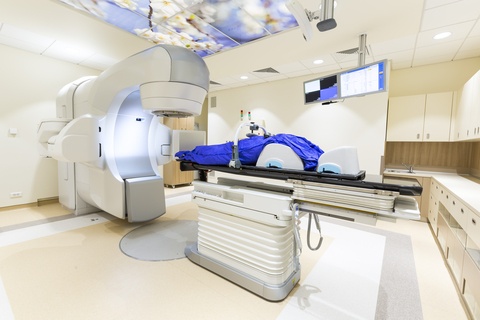
    Stereotactic body radiation therapy may be a safe treatment option for patients with malignant pleural mesothelioma. This is the finding of a team of researchers from Memorial Sloan Kettering Cancer Center in New York. Stereotactic Body Radiation Therapy Malignant pleural mesothelioma is a difficult cancer to treat. It develops from the thin layer of tissue that covers the lungs and chest wall. Signs and symptoms may include shortness of breath due to fluid around the lung, chest pain, cough, and fatigue. This cancer is caused by exposure to asbestos. It can often take around 40 years for pleural mesothelioma to begin. Pleural mesothelioma occurs in about 2,000 people in the United States every year. Conventional treatment may include surgery, radiation…

  • |

    Improving Survival in Malignant Pleural Mesothelioma

    Surgery to remove cancer tissue can lead to improved survival for epithelioid malignant pleural mesothelioma (MPM). Patients with sarcomatoid or biphasic malignant pleural mesothelioma did not have the same results. This is the finding of a study that looked at patient data from the National Cancer Database. Worst Prognosis with Standard Therapies MPM is an aggressive cancer that develops in the lining of the lungs. It is caused by exposure to asbestos and is difficult to treat. There are three cell types for this type of cancer: epithelioid, sarcomatoid, and biphasic. About half of malignant mesotheliomas are epithelioid. This type tends to have better treatment outcomes. About 10% of mesotheliomas are sarcomatoid. This type generally has the worst prognosis with…