mesothelioma

  • | |

    A ‘Breath of Hope’ for Mesothelioma Diagnosis

    A new report that analyzes the available data on breath testing for mesothelioma says the technique has great promise for detecting the disease earlier. The study, entitled “Breath analysis in asbestos-related disorders: a review of the literature and potential future applications”, says many of the current invasive methods for diagnosing mesothelioma carry a high risk of complications, especially in the elderly, who are most likely to contract the disease.  Mesothelioma is the most deadly of a group of asbestos-related disorders which also include asbestosis, pleural plaques, and lung cancer.  Because the disease can take from 20 to 50 years to develop, most mesothelioma patients are over 65. Mesothelioma surgery carries many risks, a fact that has prompted researchers around the world to…

  • | |

    Computer Evaluation May Help Guide Mesothelioma Treatment

    A computer program designed to help doctors analyze tumors in three dimensions could be a valuable tool for guiding treatment of malignant pleural mesothelioma. Malignant pleural mesothelioma is a virulent cancer that attacks the membrane surrounding the lungs.  Because it is highly resistant to conventional treatments, an effective method for evaluating the efficacy of a given treatment is vital.  Diagnostic scans that can measure the volume of the tumor over three dimensions are an improvement over measures that only examine two dimensions. Currently, doctors often use a one- or two-dimensional linear method to examine and measure mesothelioma tumors for treatment response.  But a team from the radiology department at the University of Chicago calls that method “insufficient” for mesothelioma and has…

  • | |

    Drug May Improve Chemotherapy for Mesothelioma

    A medication used to slow the growth of kidney cancer may help improve the effectiveness of chemotherapy for mesothelioma. Temsirolimus is a kinase inhibitor, which works by blocking the action of the abnormal protein that signals replication in cancer cells. It is often used to treat advanced renal cell carcinoma (RCC), a cancer that begins in the kidney. But a team of researchers in Vienna has found that the drug also appears to inhibit the growth of malignant pleural mesothelioma (MPM) cells, both in cell cultures and in animal models. The researchers used temsirolimus to ‘turn off’ the gene pathway known as mammalian target of rapamycin (mTOR) in mesothelioma cells. The mTOR pathway is responsible for signaling the growth and…

  • |

    Antioxidants May Help Fight Mesothelioma

    New research from a Philadelphia cancer center suggests antioxidants may be another important tool in the fight against malignant mesothelioma. Consumers know antioxidants, such as beta carotene, as dietary supplements which can fight oxidative stress at the cellular level. Certain beans, blueberries, apples, cranberries, strawberries, cherries and plums are just some of the foods that are high in antioxidants. But there are also several antioxidant-based drugs that have a similar effect on cells and are currently being used to treat conditions such as lung disease, diabetes and malaria. Now, researchers at Thomas Jefferson Hospital’s Kimmel Cancer Center in Philadelphia have found evidence that these drugs may also be effective against cancers, such as mesothelioma. The team showed that the loss…

  • | |

    Mesothelioma, One Rare Disease in the Spotlight

    Mesothelioma is one of more than 7,000 rare diseases that will be in the spotlight on National Rare Disease Day on February 28th. The National Organization for Rare Disorders (NORD), a consortium of patient organizations, is sponsoring the day to draw attention to mesothelioma and other rare conditions that affect some 30 million Americans. In the U.S., a disease is defined as rare or ‘orphan’ if it affects fewer than 200,000 Americans at any given time.  The Centers for Disease Control estimates that fewer than 3,000 people are diagnosed with mesothelioma each year.  Disturbingly, however, the incidence of mesothelioma has risen over the past 20 years in the U.S., and is still rising in Europe. Malignant mesothelioma is the most aggressive…

  • |

    Study Reveals Mesothelioma Characteristics

    Mesothelioma is a thin, fast-spreading tumor of the pleura, peritoneum or pericardium.  These are tissues that surround and encase internal organs. It almost always arises from exposure to asbestos, either on the job or in the home, and can take many years to develop. About 3,000 people are diagnosed with malignant mesothelioma in the United States every year. Because mesothelioma is such a rare cancer, many published studies focus on a single notable case or a small group of cases.  A new study conducted by the Texas Occupational Medicine Institute attempts to paint a bigger picture of mesothelioma by analyzing a larger number of cases.  The Texas researchers report on the findings of 238 cases of malignant mesothelioma from a private…

  • |

    Excess Iron Linked to Mesothelioma

    New studies suggest that overloading the body with iron may be another way asbestos can trigger mesothelioma.  And ridding the body of that excess iron may eventually be another way to help manage this cancer. Malignant mesothelioma is caused by exposure to asbestos, especially crocidolite and amosite asbestos, whose tiny sharp fibers contain high amounts of iron.  In recent years, medical researchers have confirmed that chronic inflammation caused by the irritation of asbestos fibers appears to be one of the triggers for mesothelioma.  But mounting evidence suggests that the iron in asbestos may also play a role in this aggressive cancer. While iron is essential for health, numerous epidemiological studies have shown it to be carcinogenic in high amounts.  To…

  • | |

    PET Valuable for Diagnosing and Staging Mesothelioma

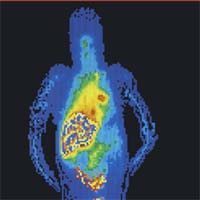
    Positron Emission Tomography (PET) scans are one of the most effective tools for predicting how well a mesothelioma patient will respond to treatment, and for planning that treatment. That’s the conclusion of a team of British researchers who analyzed 15 different studies comparing PET to other types of tools for diagnosing and staging mesothelioma and for predicting survival and mortality. Eleven of the studies evaluated the role of FDG-PET (PET scanning using a fluorodeoxyglucose marker). Several of those studies found that malignant mesothelioma cells absorbed more of the FDG marker than healthy cells, making FDG-PET a good method for determining the extent of the mesothelioma. In these studies, patients whose bodies were seen on FDG-PET scan to absorb the most…

  • |

    Faulty DNA Repair Genes May Raise Mesothelioma Risk

    Not everyone who is exposed to asbestos has the same risk of developing mesothelioma.  Now, new research supports the idea that some people’s genetic inability to repair DNA damage at the cellular level may raise their risk of mesothelioma. When asbestos dust is inhaled, tiny fibers can lodge in the lungs and stay there for decades, causing irritation and inflammation that have been linked to a range of illnesses, including asbestosis, lung cancer and malignant mesothelioma. But scientists have not been able to come up with a specific genetic explanation for why different people exposed to the same amount of asbestos dust do not contract these diseases at the same rate. Now, a group of Italian researchers believe they may have found…

  • | |

    Open Biopsy Better for Diagnosing Mesothelioma Subtype

    Open surgical biopsy – called thoracotomy – appears to be the best way to get an accurate diagnosis of mesothelioma subtype. Mesothelioma is a fast-growing malignancy caused by asbestos exposure.  Epithelial mesothelioma is the most common subtype, followed by sarcomatoid and biphasic.  Determining which subtype a patient has is an important prognostic indicator and can help guide doctors in making treatment decisions. But mesothelioma itself is notoriously difficult to diagnose, and determining subtype can be equally tricky. To help determine the most accurate diagnostic method, a group of Australian scientists evaluated the records of 83 patients who underwent a surgical procedure called extrapleural pneumonectomy (EPP) for mesothelioma between 1994 and 2009. A panel of pathologists reviewed the specimens collected during EPP and…