treatment

  • |

    TTFields Treatment for Mesothelioma: Physician Acceptance is Critical

    A new article suggests that non-invasive TTFields treatment for mesothelioma has the potential to save lives – as long as enough physicians accept it.  TTFields stands for Tumor Treating Fields. It is an electricity-based treatment approved by the FDA for use along with standard mesothelioma chemotherapy.  Cancer researchers from West Cancer Center and Research Institute wrote the new article for The Oncologist. They say the success of TTFields treatment for mesothelioma depends on doctors learning the logistics of using it.  How Does TTFields Treatment for Mesothelioma Work? TTFields use low-intensity alternating electric fields. When these electric fields hit a mesothelioma tumor, they disrupt normal cell division. If cancer cells cannot divide properly, they are less likely to spread out of…

  • | | |

    Mesothelioma Survival Rates Have Remained Flat for Decades

    Mesothelioma survival rates have stayed steady for decades, even though treatments are improving. According to more than 25 years worth of data from the National Mesothelioma Virtual Bank, people with malignant mesothelioma live a median of 15 months. That number has changed little since 1990. Charting Mesothelioma Patients Over Time Researchers from several major US cancer centers compiled the new report. The goal was to chart mesothelioma survival rates over time and identify factors that impact them. The group evaluated mesothelioma survival rates from 888 cases of pleural and peritoneal mesothelioma in the NMVB. The NMVB houses information on more than 1400 mesothelioma cases diagnosed between 1990 and 2017. Overall mesothelioma survival rates stayed right around 15 months. But there…

  • | | | |

    Many Elderly Mesothelioma Patients Get No Treatment

    The majority of elderly mesothelioma patients are observed rather than treated and this can have a negative impact on their survival. That is the finding of a new study published in the Annals of Surgical Oncology. The study included more than 4,500 mesothelioma patients. Less than a quarter of these patients received any treatment for their mesothelioma. As a result, most of these patients lived less than six months. Treatment Options for Elderly Mesothelioma Patients Exposure to asbestos causes pleural mesothelioma. It can take decades after exposure for mesothelioma symptoms to occur. The median age for a malignant pleural mesothelioma diagnosis is 72. The older a patient is at diagnosis, the more likely they are to have other health problems….

  • | | |

    Mesothelioma Survival Factors Revealed by New Study

    New research from the University of Pittsburgh reveals six primary mesothelioma survival factors. These characteristics appear to separate those who die of mesothelioma within just a few months from those who live much longer. The research focused on 888 cases of pleural or peritoneal mesothelioma listed in a national database. Patients received their mesothelioma diagnosis between 1990 and 2017. The study shows that most mesothelioma survival factors are out of patients’ control. Calculating Mesothelioma Survival Factors Not many people survive mesothelioma long term. It is one of the most aggressive and hard-to-treat types of cancer. By the time mesothelioma patients develop their first symptoms, the asbestos cancer is usually already at an advanced stage. Deciding the best way to treat…

  • | | | | | |

    New Mesothelioma Immunotherapy Treatment Reduces Tregs with Immunotoxin

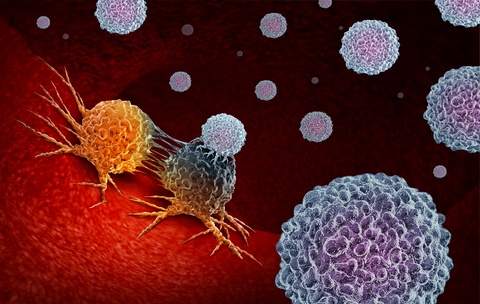
    There is a new mesothelioma immunotherapy treatment in the works. This one is based on reducing the number of Tregs or regulatory T-cells around a mesothelioma tumor. Tregs are an important part of maintaining balance in the immune system. They help protect people against autoimmune diseases like MS and lupus. But in people with malignant mesothelioma and other types of cancer, too many Tregs can be a problem. Tregs respond to distress signals sent out by a tumor. They surround the tumor and protect it against attack from the immune system. The goal of mesothelioma immunotherapy treatment is to reactivate the immune system to fight the cancer. Developing a Mesothelioma Immunotherapy Treatment Molecular biologists at the National Cancer Institute and…

  • | | | |

    New Mesothelioma Drug Trial Begins

    A new mesothelioma drug trial is now underway. The trial will test a brand new type of immunotherapy medication called CA-170. CA-170 is designed to block an immune system suppressor called VISTA. It is the only VISTA-blocking medication currently in clinical trial. “CA-170 has demonstrated favorable safety and tolerability as well as preliminary anti-tumor activity in patients across multiple tumor types,” the company said in a statement. Mesothelioma Drug Trial Focuses on VISTA Malignant mesothelioma is highly resistant to standard cancer treatments. Many top researchers believe that immunotherapy drugs offer the best promise for curing mesothelioma. That is because cancers like malignant mesothelioma survive in part by evading detection by the immune system. They do this in a variety ways…

  • | | | | |

    Doctor Attitude Keeps Some Patient from Mesothelioma Chemotherapy

    A new study suggests that some patients are missing out on chemotherapy for mesothelioma because their doctors do not believe it will work. Doctor “nihilism” – the idea that life is meaningless anyway – was the top reason that 20+ percent of pleural mesothelioma patients did not get the care that might have helped them. In other cases, patients were simply never referred to a cancer doctor who could prescribe chemotherapy for mesothelioma. Doctor Attitudes and Chemotherapy for Mesothelioma The Australian study is based on surveys with 107 doctors and 19 nurses. Most respondents were either lung specialists or cancer doctors. They completed the surveys in 2014. The surveys show that most of the doctors (90%) think at least one…

  • | | | | |

    Combination Therapy with Mesothelioma Surgery Leads to Longer Survival

    A new study finds almost a quarter of people who had combination therapy with mesothelioma surgery were still alive five years later. The study was published in the European Journal of Cardio-Thoracic Surgery. Researchers at University Hospitals KU Leuven in Belgium studied nearly 200 mesothelioma patients from 2003 to 2014. Many people do not live beyond about 18 months after a mesothelioma diagnosis. But the Belgian team says, for the right patients, there is a way to improve the odds. They say combination therapy with radical mesothelioma surgery offers a 1 in 4 chance of surviving for 5 years or more. Two Types of Mesothelioma Surgery There are two major schools of thought about mesothelioma surgery. Some surgeons say it…

  • | | | | |

    Best Tools for Measuring Mesothelioma Treatment Response

    When it comes to evaluating treatment response in mesothelioma, functional imaging techniques may do a better job than standard imaging. That is the word from a team of UK researchers who compared different types of imaging techniques in the evaluation of pleural mesothelioma patients for an article in the journal Lung Cancer. Imaging Techniques for Mesothelioma Tumors Functional imaging, which includes techniques like positron emission tomography (PET), dynamic contrast-enhanced MRI, and diffusion-weighted MRI, are designed to tell doctors more than just the size or shape of the mesothelioma tumor. By using certain kinds of injectable tracers, these imaging studies reveal important information about cellular processes like metabolism, which is typically higher in mesothelioma cells than it is in normal cells. “By…

  • |

    Ape Virus Shrinks Mesothelioma Tumors in Lab

    A virus that causes leukemia in gibbon apes may have the power to help fight malignant mesothelioma in people. Gibbon ape leukemia virus (GALV) has been tested for years as a viral vector, a carrier of therapeutic genetic information, in the treatment of various human illnesses, including cancer. A new study in Japan compared GALV with a leukemia virus derived from mice to see which carrier communicated most efficiently with mesothelioma cells. While both types of viruses replicated in most of the mesothelioma cell lines tested, the mouse-derived virus was not effective in a mesothelioma cell line called ACC-MESO-1. In this cell line, only the GALV spread efficiently both in culture and in mice that had been given human mesothelioma…