|

The Power of First-in-Human Trials: A Glimpse into Zelenirstat’s Impact on Mesothelioma

The Power of First-in-Human Trials: A Glimpse into Zelenirstat's Impact on Mesothelioma

The journey towards a breakthrough cancer treatment often begins with groundbreaking trials. Zelenirstat is a cutting-edge drug currently under study. It has shown promise in its first-ever trial involving mesothelioma patients. These are significant first steps in paving the way for potential new treatments.

A First-In-Human Trial

Scientists are exploring a new treatment, Zelenirstat for tough cancers like mesothelioma. They tested this treatment on 21 patients with various cancers. This was in a special trial called a “first-in-human” trial. They gave different doses of Zelenirstat, starting from 20 mg to 280 mg every day, to see if it could help.

A “first-in-human” trial refers to the initial stage of testing a new drug or treatment in people. Before any medication or therapy can be used widely, it goes through rigorous testing in laboratories and animals to ensure safety and effectiveness.

The first-in-human trial is the critical step where researchers assess how safe the treatment is and what dosage might work without causing severe side effects. It involves a small number of carefully selected individuals who are closely monitored to understand how the treatment behaves in the human body, its potential side effects, and how the body processes it. This trial is a crucial starting point in the long process of developing new treatments for various diseases.

Zelenirstat’s Role in Mesothelioma Treatment

The good news is that most patients handled the treatment well, especially at lower doses. Some had minor side effects like upset stomachs, but nothing too serious. Even better, the treatment worked in the patients’ bodies and seemed to fight against cancer cells. Some patients had stable or smaller tumors after getting this treatment.

The trial showed that Zelenirstat is safe at 210 mg daily. But scientists are still studying more to see how well it works. These results are just the beginning, and scientists will keep looking to see if Zelenirstat can become a new way to treat cancers like mesothelioma.

In short, this first trial of Zelenirstat is a big deal, especially for people with cancers like mesothelioma. Even though more research is needed, these early results are really encouraging. They show that Zelenirstat could become a new way to fight mesothelioma and other challenging cancers, offering hope to many people in their fight against these tough diseases.

Sources:

Sangha, Randeep, Rahima Jamal, Jennifer Spratlin, John Kuruvilla, Laurie H. Sehn, Michael Weickert, Luc Berthiaume, and John Robert Mackey. “A First-in-Human, Open-Label, Phase I Dose Escalation Trial of Daily Oral Nmt Inhibitor Zelenirstat in Patients with Relapsed/Refractory B-Cell Lymphomas and Advanced Solid Tumors.” Blood 142 (November 28, 2023): 6241. https://doi.org/10.1182/blood-2023-190058.

 

Similar Posts

  • | |

    Aspirin Derivative No Match for Mesothelioma

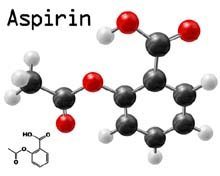
    It may work wonders for aches and pains but apparently the ‘wonder drug’ is no match for the asbestos-linked cancer, malignant mesothelioma. A number of previous studies have suggested a benefit from aspirin for some types of cancer. But Italian scientists testing the aspirin derivative [2-acetoxy-(2-propynyl) benzoate] hexacarbonyldicobalt (Co-ASS) and its analogue hexacarbonyl [μ-(2-ethylphenyl) methanol] dicobalt (Co-EPM) against malignant pleural mesothelioma cells found that both molecules function better as non-steroidal anti-inflammatory (NSAID) agents than as anti-tumor drugs. The researchers tested Co-ASS and Co-EPM against mesothelioma cells of both the more common epithelioid and rarer sarcomatoid types. The most encouraging results were seen with the sarcomatoid cells. Against this cell type, Co-ASS was found to be more potent than either Co-EPM or…

  • | |

    Could Statin Drugs Help Fight Mesothelioma?

    A new study suggests that some of the most popular drugs used to treat high cholesterol may also help combat deadly malignant mesothelioma. That finding comes from Japanese research, published recently in the medical journal, Cancer Letters. The study found a “synergistic effect” in mesothelioma cells between two statin drugs, atorvastatin (Lipitor) and simvastatin (Zocor) and gamma tocotrienol (y-T3), a form of Vitamin E. “Statin+y-T3 combinations induced greater cell growth inhibition more than each single treatment,” write the authors in the summary of their findings. The combination of statin drugs and gamma-tocotrienol appears to work by inhibiting an important metabolic pathway inside the mesothelioma cells, making it impossible for them to synthesize or utilize certain critical molecules. When the researchers…

  • | |

    Scientists Test New Skin Delivery for Mesothelioma Drug

    Researchers at Griffith University are working on a new kind of mesothelioma treatment – one that could be delivered through the skin. The report in the Courier Mail makes reference to animal research on “certain small molecules” that reportedly have the potential to penetrate the skin and target the mitochondria of mesothelioma cells. Mitochondria are one of the most important power sources for cells, producing adenosine triphosphate, a source of chemical energy. The Griffith University project, under the leadership of Medical Professor Jiri Neuzil, is focusing on a drug that would be applied to the skin as a patch or cream. The drug would enter the blood stream through the skin and would target only mesothelioma cells. Studies of the…

  • | |

    FDA Approval Could Mean New Choice for Mesothelioma Patients

    A newly-approved drug for late-stage lung cancer may have implications for people with malignant mesothelioma, as well. The FDA recently announced its approval of afatinib, a drug which blocks epidermal growth factor receptor (EGFR) expression in cancer cells. Many types of cancer, including about half mesothelioma cases, express a specific type of mutation on the EGFR gene that causes tumors to grow even faster. Because of this, EGFR has been a focus for biomarker research in mesothelioma, as well as in a number of other cancers. In clinical trials, afatinib (brand name Gilotrif), significantly extended progression-free survival in non-small cell lung cancer patients versus the more common pemetrexed/cisplatin chemotherapy combination. Over a 12-month period, the progression-free survival of lung cancer…

  • | |

    New Drugs May Be More Effective in Mesothelioma

    There is evidence that two novel mesothelioma medications may work better than some of the most commonly used drug treatments. Researchers in Stockholm, Sweden treated six mesothelioma cell lines with six different drugs, some of which are already commonly used to treat the asbestos-linked cancer.  The drugs tested include carboplatin, pemetrexed, doxorubicin and gemcitabine, all of which have been used to fight mesothelioma. The new drugs included in the tests were selenite (a form of selenium) and bortezomib (a proteasome inhibitor).  The researchers tested the drugs alone and in various combinations to see which were most effective. “As a single agent, selenite was effective on four out of six cell lines and, in combination with bortezomib, yielded the greatest response…

  • | |

    New Mesothelioma Drug Tests to Begin Soon

    A spokesman for the makers of a promising new mesothelioma drug says the company plans to begin enrolling its first clinical trial participants this summer. Dr. Joanna Horobin is Chief Medical Officer for Verastem, Inc.,  the developer of a drug that aims to treat malignant mesothelioma by targeting the stem cells that give rise to it. The company’s lead compound, an oral drug called VS-6063, inhibits a crucial signaling pathway inside stem cells called the Focal Adhesion Kinase (FAK) pathway. VS-6063 was approved by the FDA earlier this year as a ‘orphan drug’, a designation given to drugs designed to treat rare illnesses like mesothelioma. “We are moving quickly to bring new treatment options to patients with mesothelioma,” Dr. Horobin said…