| |

Tracking Local Mesothelioma Trends

Tracking Local Mesothelioma Trends

A Canadian study found that tracking trends in mesothelioma at the local level can help officials predict future mesothelioma cases.

Most mesothelioma tracking efforts focus on the national scale and monitor cases across a country or region.

This study, published in Cancer Causes and Control, looked at mesothelioma cases based on industrial sources of asbestos in Ontario and British Columbia.

Growing Number of Cases

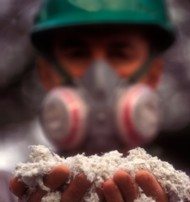
Asbestos is a toxic material that is used in many commercial and industrial products. It’s durability and heat resistance made it very popular in products like construction materials, textiles, and vehicles.

Mesothelioma is a deadly cancer caused by exposure to asbestos. It was first identified as a cancer-causing material in 1977 by the International Agency for Research on Cancer. Because of its toxic quality, asbestos is banned in many countries included the United States and Canada.

Canada has seen a growing trend in mesothelioma cases over the last few decades. This could be because Canada was a major exporter of asbestos during the 20th century. It was also used in building products within Canada.

The increasing number of mesothelioma cases in Canada has led the researchers of this study to explore the connection between asbestos mining and mesothelioma rates.

Tracking Regional Rates

The researchers used geographic information systems, or GIS, technology to map mesothelioma rates to asbestos mines and factories. They looked at data in Ontario and British Columbia from the 1960s to the present day.

The study was able to track the regional mesothelioma rates in both provinces over the last fifty years. The rate of mesothelioma has increased over that time, especially between 2009 and 2016.

The study also showed that certain occupations like construction workers were more likely to develop mesothelioma in these areas than other workers.

The researchers are hopeful that this study will encourage more local-level disease tracking for mesothelioma. They state that there is an “ongoing need to conduct surveillance of asbestos exposure and mesothelioma incidence rates in many places in Canada and beyond, where rates of mesothelioma are likely still increasing”.

Source

Slavik CE, Demers PA, Tamburic L, Warden H, McLeod C. Do patterns of past asbestos use and production reflect current geographic variations of cancer risk?: mesothelioma in Ontario and British Columbia, Canada [published online ahead of print, 2023 Feb 2]. Cancer Causes Control. 2023;10.1007/s10552-023-01672-4. doi:10.1007/s10552-023-01672-4. https://link.springer.com/article/10.1007/s10552-023-01672-4#Sec13

Similar Posts

  • |

    Mesothelioma Blood Test May Be Possible

    An international team of researchers is studying the proteins found on the surface of cancer cells in an effort to improve mesothelioma diagnosis. The team, made up of scientists from the US, Switzerland, Italy and Chile, has just published their findings on a new kind of test to identify protein-derived mesothelioma biomarkers in blood serum. Mesothelioma is an aggressive cancer of the membranes around organs. Because the most common mesothelioma biomarker, mesothelin, is also overproduced by other kinds of cancer cells, it has only limited diagnostic value. A test to identify a set of proteins produced specifically by mesothelioma cells could greatly improve diagnostic accuracy. Led by Ferdinando Cerciello and Bernd Wollscheid of the Institute of Molecular Systems Biology in…

  • |

    Mesothelioma Still Carries Heavy Mortality Burden in U.S.

    Asbestos exposure cost Americans more than 427,000 years of potential life in the first decade of the new millennium. That figure comes from a study on mesothelioma and asbestosis – the two most deadly asbestos-related diseases – conducted by the CDC’s National Institute for Occupational Safety and Health (NIOSH). Using National Center for Health Statistics mortality data, NIOSH researchers evaluated premature deaths and “loss of potentially productive years of life” attributable to either asbestosis or mesothelioma between 1999 and 2010. The data included only people 25 years or older with an underlying cause of death listed on their death certificate of either asbestosis or malignant mesothelioma. When the figures were calculated using the normal life expectancy for each asbestosis victim…

  • | |

    Needle Biopsy “Simple, Safe & Accurate” for Mesothelioma

    Mesothelioma researchers in China say a biopsy method that involves a single skin puncture can produce good diagnostic results for mesothelioma patients with little pain or risk. The study focused on percutaneous (through the skin) biopsy in patients who had unexplained fluid buildup or swelling in their abdomens. Abdominal distension and fluid buildup (called ascites) can be signs of peritoneal mesothelioma, a rare but aggressive cancer of the abdominal lining caused by exposure to asbestos. Peritoneal mesothelioma accounts for less than 30% of all mesothelioma cases. Because the symptoms may be vague and often develop many decades after asbestos exposure, peritoneal mesothelioma can be especially challenging to diagnose.  Misdiagnosis and under-diagnosis are not uncommon. In the newest study on percutaneous…

  • |

    Mesothelioma Case Shows Danger of Accidental Asbestos Exposure

    A mesothelioma case in Birmingham, England is a dramatic illustration of the very real danger of hidden asbestos. The widow of a physician who died of mesothelioma last year at the age of 51 claims her husband was exposed to asbestos just walking to and from his medical classes. Monisha Coelho believes that exposed asbestos insulation in the underground hallways that connect the University of Birmingham to buildings on the Queen Elizabeth Hospital campus triggered Dr. Ian Pardoe’s mesothelioma. In an article in the Birmingham Mail, Coelho explained how her husband decided how and where the deadly exposure had occurred. “Ian thought long and hard about where he might have come into contact with asbestos,” Coelho told the paper. “He…

  • | |

    Inflammation Both “Friend and Foe” in Mesothelioma

    An immune system response that causes mesothelioma symptoms such as fever, fatigue, and weight loss may also be helpful to clinicians as a way to find and treat the disease. Scientists with The Asbestos Diseases Research Institute in Sydney, Australia make that case that both systemic inflammation (throughout the body) and at the site of a tumor – has long been associated with mesothelioma and other cancers. Inflammation results when the body attempts to address the imbalances of cancer by producing more of certain immune system cells. Some inflammatory markers, such as CD+8 T-cells and C-reactive protein, have been linked to better prognosis in mesothelioma. Other inflammatory markers, such as certain macrophages and a high neutrophil-to-lymphocyte ratio, can signal the…

  • |

    Mesothelioma Rates Expected to Rise for Another Decade

    Most developed countries can expect another decade or more of rising mesothelioma rates before the incidence of the disease starts to wane. That is one of the major findings in a recent report from The Baird Institute for Applied Heart and Lung Surgical Research in Australia. The report, which looked at the causes, distribution and projected future incidence of malignant mesothelioma, contains both good and bad news for the U.S.. Mesothelioma is an aggressive and often fatal cancer caused by exposure to asbestos.  It is thought to be triggered by chronic inflammation and irritation in the lung tissue and the surrounding pleural membrane by the sharp asbestos fibers.   Mesothelioma often takes decades to develop. According to the Baird Institute report, the average…