| | |

Advocacy Groups Call for Asbestos Ban on Mesothelioma Awareness Day

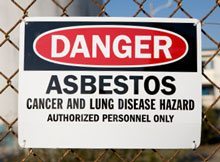
Today marks the annual Mesothelioma Awareness Day in the US and mesothelioma patient advocacy groups are once again using the day to call for a total ban on asbestos, the primary cause of of this rare and deadly cancer.

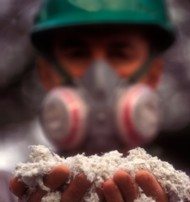
Asbestos is a carcinogenic mineral that was once commonly used in a variety of building, insulation, and household products. Since it was definitively linked to both pleural and peritoneal mesothelioma in the early part of the 20th century, fifty-five countries have banned it.

Even though asbestos is blamed for the mesothelioma deaths of an estimated 2,500 Americans every year (and as many as 40,000 deaths from other asbestos-related illnesses), the US has failed to institute a ban — a fact that still surprises many Americans.

Malignant mesothelioma is not curable but it is preventable. And yet asbestos can still be found in homes, schools, public buildings, and consumer products.

Mesothelioma Awareness Day offers a chance for patients, loved ones, survivors, advocates, and healthcare professionals to join together to highlight the disease and its cause.

Mesothelioma Risk May Rise Under New EPA Rule

Although malignant mesothelioma is more familiar than it used to be thanks, to advocacy groups and several high-profile legal cases in recent years, many people are still unaware that asbestos remains legal in the US and is the primary cause of most mesothelioma cases.

In fact, even as groups like the Asbestos Disease Awareness Organization (ADAO) converge on Washington today to petition for an asbestos ban, the EPA has plans to expand asbestos use in the US under a Significant New Use Rule announced in June.

The rule allows for new asbestos-containing products to be reviewed by the EPA without consideration of all of the ways the public might be exposed to the asbestos in them – such as through air or groundwater contamination when the product is disposed of.

As part of its Mesothelioma Awareness Day activities, ADAO will present Congress with their petition, which had more than 95,000 signatures at the end of August. The petition calls for an asbestos ban “without loopholes or exemptions.”

ADAO will also host a Congressional staff briefing entitled “TSCA and Asbestos: EPA’s Failure to Protect Public Health” which will include noted mesothelioma surgeon Raja Flores, MD, ADAO President Linda Reinstein, a former EPA Deputy Administrator, a mesothelioma patient, a member of the Environmental Working Group, and a representative from the International Association of Firefighters.

Other Mesothelioma Awareness Day Activities

In addition to the petition delivery and the Congressional briefing, the ADAO releases its annual video today to honor “mesothelioma warriors” who have died of the disease in the past year.

Mesothelioma patients, families, and other interested parties are also invited to participate in an #EndMeso Twitter chat from 12 and 1 pm Eastern time.

Source:

2018 Mesothelioma Awareness Month Events and Actions, August 30, 2018, ADAO website,
Similar Posts

  • |

    Mesothelioma Victims’ Victory in Pennsylvania

    Workers and their families have won a victory in Pennsylvania after the state Supreme Court ruled that they could sue former employers over late-manifesting industrial diseases like mesothelioma. The decision focused on a provision in Pennsylvania’s Workers’ Compensation Act that says workers cannot sue an employer if their occupational disease occurred more than 300 weeks after their on-the-job exposure. While many occupational injuries and diseases occur within weeks or months of exposure to a toxin, asbestos diseases like mesothelioma are a notable exception. Believed to be caused by chronic irritation from inhaled or ingested asbestos fibers, mesothelioma does not usually begin to cause symptoms until at least a decade after exposure. Expressing the opinion of the majority, Supreme Court Justice…

  • |

    Mesothelioma Still Carries Heavy Mortality Burden in U.S.

    Asbestos exposure cost Americans more than 427,000 years of potential life in the first decade of the new millennium. That figure comes from a study on mesothelioma and asbestosis – the two most deadly asbestos-related diseases – conducted by the CDC’s National Institute for Occupational Safety and Health (NIOSH). Using National Center for Health Statistics mortality data, NIOSH researchers evaluated premature deaths and “loss of potentially productive years of life” attributable to either asbestosis or mesothelioma between 1999 and 2010. The data included only people 25 years or older with an underlying cause of death listed on their death certificate of either asbestosis or malignant mesothelioma. When the figures were calculated using the normal life expectancy for each asbestosis victim…

  • |

    Last Man Sentenced in Asbestos Dumping Scheme

    The U.S. Justice Department has announced that a New Jersey man will spend 15 months in prison for his part in a scheme to illegally dump thousands of tons of asbestos-contaminated construction debris – putting others at risk for mesothelioma. He was the last person to be sentenced in the conspiracy. Asbestos is the cause of mesothelioma, a difficult to treat and aggressive cancer.  At the height of its popularity from the 1940s to the early 1970s, asbestos was common in building products ranging from floor and ceiling tiles to joint compound, concrete and shingles. It is still present in tens of thousands of older homes and buildings today. In an effort to protect workers and the public from mesothelioma…

  • |

    Mesothelioma Case Shows Danger of Accidental Asbestos Exposure

    A mesothelioma case in Birmingham, England is a dramatic illustration of the very real danger of hidden asbestos. The widow of a physician who died of mesothelioma last year at the age of 51 claims her husband was exposed to asbestos just walking to and from his medical classes. Monisha Coelho believes that exposed asbestos insulation in the underground hallways that connect the University of Birmingham to buildings on the Queen Elizabeth Hospital campus triggered Dr. Ian Pardoe’s mesothelioma. In an article in the Birmingham Mail, Coelho explained how her husband decided how and where the deadly exposure had occurred. “Ian thought long and hard about where he might have come into contact with asbestos,” Coelho told the paper. “He…

  • |

    Mesothelioma Rates Expected to Rise for Another Decade

    Most developed countries can expect another decade or more of rising mesothelioma rates before the incidence of the disease starts to wane. That is one of the major findings in a recent report from The Baird Institute for Applied Heart and Lung Surgical Research in Australia. The report, which looked at the causes, distribution and projected future incidence of malignant mesothelioma, contains both good and bad news for the U.S.. Mesothelioma is an aggressive and often fatal cancer caused by exposure to asbestos.  It is thought to be triggered by chronic inflammation and irritation in the lung tissue and the surrounding pleural membrane by the sharp asbestos fibers.   Mesothelioma often takes decades to develop. According to the Baird Institute report, the average…

  • |

    Short-term Asbestos Exposure Triggers Mesothelioma

    The recent death of a British man from mesothelioma is evidence of the destructive power of asbestos – even when exposure is short.  A British newspaper reports that Welwyn resident Roger Beale first began experiencing a classic symptom of mesothelioma, shortness of breath, nearly 4 years ago. Beale first noticed the problem while walking up stairs. After a chest X-ray, Beale’s symptoms were attributed to a chest infection.  But when his symptoms continued to worsen, Beale sought medical care again in January, 2010 and was diagnosed with pleural mesothelioma, an intractable cancer of the lung lining that is almost always caused by exposure to asbestos. By November of 2010, Beale’s shortness of breath had gotten worse, despite regular monitoring and…