Author: Alex Strauss

  • | | | | |

    Brief, Indirect Exposure Leads to Mesothelioma in Young Woman

    A new report contains some disturbing news about just how little asbestos exposure it may take to cause malignant mesothelioma. Radiologists in New Delhi, India have published details of a case of mesothelioma in a young woman who experienced only very limited asbestos exposure as a child. According to the article in the Journal of Clinical Imaging Science, the young woman was diagnosed with malignant pleural mesothelioma after complaining of chest pain and breathlessness. X-rays and CT scans revealed that, not only was she suffering from the asbestos cancer, but that it had also spread to her liver and lungs. A biopsy of one of the tumors confirmed the diagnosis. In addition to being much younger than most mesothelioma patients,…


  • | | | | |

    Mesothelioma Survival: Treatment Response May Not Be the Best Predictor

    How long it takes for a person’s mesothelioma to start growing again after chemotherapy may be a better indicator of their survival odds than their actual treatment response. That word comes from a new study published in the European Journal of Cancer. Doctors from France, Belgium, the UK, and the Netherlands developed models showing how progression-free survival could be used for prognosis. To independently validate these models, the researchers examined patient data from 10 European Organisation for Research and Treatment of Cancer (EORTC) studies of chemotherapy for malignant pleural mesothelioma. A total of 523 mesothelioma patients were included in the analysis. Researchers looked at the treatment response rate, progression-free survival at 9 and 18 weeks, and overall survival for each…

  • | | |

    Sodium Levels Predict Mesothelioma Survival

    Italian oncologists say an electrolyte imbalance called hyponatraemia could be a valuable way to predict treatment response in malignant pleural mesothelioma patients. Hyponatraemia is an abnormally low level of sodium in the blood. It can be caused by a range of factors, from an underlying medical condition to drinking too much water and diluting the blood. In people with mesothelioma, hyponatraemia can also be triggered by chemotherapy. By analyzing the cases of 62 consecutive mesothelioma patients on chemotherapy, researchers with the Marche Polytechnic University in Ancona, Italy determined that those who developed hyponatraemia were less likely to have good outcomes. All patients received pemetrexed-based chemotherapy as a first-line treatment for their mesothelioma between 2003 and 2013. Twenty-nine of the mesothelioma…

  • | | | |

    Light-based Diagnostic Tool May Find Early Mesothelioma

    Cancer researchers in Japan say technology that uses fluorescent light to detect cancer cells could be used to help find early evidence of malignant pleural mesothelioma. The technology is based on a phenomenon called autofluorescence, explained by the Japanese research team as “the spontaneous emission of light that occurs when mitochondria, lysosomes, and other intracellular organelles absorb light”. Normal cells produce green autofluorescence in response to a certain type of blue light. But in mesothelioma and other cancer cells, the green autofluorescence is reduced and the light emitted shifts to a red-violet. Doctors at the Department of Respiratory Center at Asahikawa Medical University in Hokkaido used this photodynamic diagnostic system to find tiny clusters of mesothelioma cells on the surface…

  • IMRT for Mesothelioma: Experience Impacts Outcomes

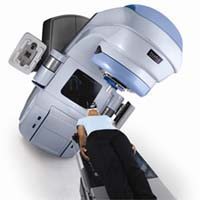
    A medical center’s level of experience with intensity modulated radiation therapy (IMRT) can have a significant impact on the outcomes of mesothelioma patients who undergo the treatment. That conclusion comes from a new study conducted by cancer experts at Memorial Sloan-Kettering Cancer Center in New York and published in the International Journal of Radiation Oncology, Biology, Physics. IMRT is a precision method for delivering radiation into a tumor while protecting healthy cells from overexposure. Controlled by a computerized device called a linear accelerator, IMRT delivers beams of radiation in short bursts which give it the ability to conform radiation dose to the shape of a tumor. This ability to accurately target even oddly-shaped tumors is the reason some believe IMRT…

  • | | | | | | |

    Australian Doctors Use Bacteria to Shrink Mesothelioma Tumors

    Could bacteria responsible for problems ranging from sinusitis to food poisoning be used as a weapon in the fight against malignant mesothelioma? The results of a new study conducted by mesothelioma researchers at the University of Western Australia suggest that it might. The researchers focused their study on a compound made up of proteins produced by the bacteria Staphylococcus aureus, also called ‘Staph’ bacteria. The compound has been used clinically to induce pleurodesis, a closing up of the pleural space around the lungs that can become fluid-filled in people with mesothelioma. Based on its success in pleurodesis, the Australian team wondered if the S. aureus protein compound could also shrink tumors. Scientists in the University’s Centre for Asthma, Allergy and…

  • Immune-Stimulating Vaccine “Cures” Mesothelioma in Mice

    Researchers from Hong Kong claim to have found a way eradicate mesothelioma in mice using a DNA vaccine. Microbiologists at the University of Hong Kong have even gone so far as to use the word “cure” in their recently-published paper in the journal Cancer Research. Like other types of cancer, asbestos-induced mesothelioma spreads, in part, by suppressing the body’s natural anti-cancer defenses. The Hong Kong team administered a vaccine based on PD-1, a protein known as “programmed cell death protein 1”, to effectively reprogram the DNA of the lab mice, turning those natural defenses back on. According to the report, the PD-1-based DNA vaccine conferred “complete and long-lasting protection” against “lethal mesothelioma challenge” in the mice. But the advantages did…

  • | | | | | |

    Repeat CRS/HIPEC Improves Survival for Peritoneal Mesothelioma

    One of the country’s top peritoneal mesothelioma surgeons has just published a study that may be good news for patients with this aggressive malignancy. Paul Sugarbaker, MD, and colleagues at the Program in Peritoneal Surface Oncology in Washington, DC studied patients with diffuse peritoneal mesothelioma who had repeated cytoreductive surgery and heated intraperitoneal chemotherapy. Their results indicate that patients with diffuse peritoneal mesothelioma can safely undergo these procedures more than once and may even improve their odds of survival. Cytoreductive surgery refers to a surgery designed to remove as much as possible of a mesothelioma tumor growing on the peritoneal lining that surrounds abdominal organs. Doctors have gotten good results by following the procedure with a wash of heated chemotherapy…

  • | | | | |

    Study Defends Use of Radical Surgery for Mesothelioma

    A new study says the controversial extrapleural pneumonectomy procedure for mesothelioma can be performed with “acceptable morbidity and mortality”, as long as certain guidelines are followed. Extrapleural pneumonectomy (EPP) is a large and complex procedure that involves removing a mesothelioma patient’s lung, lung lining, diaphragm and other tissues in an effort stop the spread of mesothelioma. Although some studies have indicated a mesothelioma survival benefit with EPP, the procedure has come under fire because of its high rate of death and complications. But the new EPP study suggests that it can be performed safely. The study evaluated the cases of 251 mesothelioma patients from three high-volume hospitals – University Hospital Zurich in Switzerland, Medical University Vienna in Austria, and Toronto…

  • Can Statins Enhance Mesothelioma Treatment?

    The cholesterol-lowering drug simvastatin may boost the cancer-killing power of the mesothelioma drug pemetrexed. That news, released by a team of Korean scientists, comes on the heels of another published study showing that the statin drug atorvastatin did not kill mesothelioma in either mice or humans. Although they are primarily used to lower high cholesterol, statin drugs have been shown to have pro-apoptotic properties, meaning they can trigger the dying process in certain cells. An Australian team that recently tested atorvastatin alone found no effect on mesothelioma. But the newest test of a statin for mesothelioma paired the drug simvastatin with the gold-standard chemotherapy drug pemetrexed with more promising results. “We found that the combination of pemetrexed and simvastatin induced more…