Author: Alex Strauss

  • | | | |

    Cholesterol Drugs Ineffective Against Mesothelioma

    A new study from the University of Western Australia has dealt a blow to the idea that the anti-cancer properties of statin drugs could help fight malignant pleural mesothelioma. Statins are a group of drugs that are typically used to lower high cholesterol and treat heart disease by blocking a substance the body needs to make cholesterol. Statins have been found to induce apoptosis (programmed cell death) in mesothelioma cells and epidemiological evidence has suggested that people on statins have a lower incidence of cancer. Based on these facts, researchers at Australia’s National Center for Asbestos Related Diseases hypothesized that statin drugs might be used to slow the progression of mesothelioma in patients who have it, and possibly even prevent mesothelioma development…

  • | | | | |

    Mesothelioma Management: Different Biomarkers Serve Different Functions

    Australian researchers have attempted to settle the debate about the value of the newly proposed mesothelioma biomarker fibulin-3 compared with the gold standard biomarker mesothelin.  According to their new report in the journal Thorax, mesothelin is still the best marker for diagnosing mesothelioma but fibulin-3 is better at predicting mesothelioma outcomes. The multi-center study included 153 patients – 82 with pleural mesothelioma, 36 with other types of malignancies causing pleural effusions (excess lung fluid), and 35 with benign effusions. For comparison, the team also measured biomarker levels in the blood plasma of 49 people with non-mesothelioma asbestos-related diseases. Researchers measured mesothelin and fibulin-3 levels in both pleural effusions and blood plasma and determined that mesothelin provides the best diagnostic accuracy,…

  • | | |

    Do Mesothelioma Doctors Rely Too Much on CT?

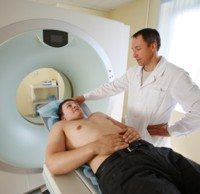
    A team of researchers in the UK say doctors may be relying too heavily on the results of CT scans to determine which patients should have invasive biopsies for suspected pleural mesothelioma. Examining tumor cells under a microscope is currently the only way to definitively diagnose malignant pleural mesothelioma. However, because getting a cell sample means that a patient has to undergo surgery, doctors typically use non-invasive tests like CT first. CT scans have become an important part of the diagnostic process for malignant pleural mesothelioma. To see how valuable these tests really are for respiratory patients, experts from the Oxford Centre for Respiratory Medicine and the Lancashire Chest Centre in Preston, UK analyzed the CT scans and final diagnoses…

  • | |

    Unexpected Mesothelioma Deaths in Fiberglass Workers Raise Questions

    A team of scientists with the National Institute for Occupational Safety and Health have good news and bad news for people exposed to styrene and fiberglass in the boatbuilding industry. The good news is that the workers tested do not appear to be at higher risk for the blood cancers leukemia or lymphoma.  The bad news is that, for reasons that are not fully understood, they do appear to have a higher chance of getting malignant pleural mesothelioma or ovarian cancer. The NIOSH team in Cincinnati examined the causes of death through 2008 of 5,203 workers at two boatbuilding plants in Washington state. The workers had all been exposed to styrene, fiberglass, and wood dust between 1959 and 1978. Styrene…

  • | | | | | |

    Enzyme Makes Mesothelioma More Aggressive, Less Responsive to Treatment

    There’s new evidence that a glycoprotein produced on the surface of some mesothelioma cells could have a major impact on disease progression and treatment outcomes – especially in patients with the biphasic form of the disease. Biphasic mesothelioma accounts for about 20 to 35 percent of mesothelioma cases and is generally considered even more difficult to treat than the more common epithelioid mesothelioma. Now, a team of Italian researchers from the University of Torino say they have discovered one of the factors that may influence the aggressiveness of biphasic mesothelioma. The focus of their new study is a molecule called CD157, an enzyme that has been associated with ovarian cancer. Because the epithelial cells of the ovaries and the cells…

  • | | | | |

    Albumin Levels May Help Predict Mesothelioma Survival

    People with the lowest levels of the blood protein albumin are less likely to live beyond a year with malignant pleural mesothelioma. That is the finding of a team of Chinese researchers who say this abundant protein may offer one of the simplest ways to predict mesothelioma prognosis. Serum albumin is a globular protein whose primary function is to carry steroids, fatty acids and thyroid hormones in the blood. It makes up about 60% of the total mass of protein in blood plasma.  Researchers in the Department of Respiratory Medicine at Shandong University Hospital in China have found that serum albumin levels prior to treatment appear to have a direct bearing on the odds of surviving mesothelioma. The study focused…

  • | | |

    New Blood Test May Improve Diagnostic Accuracy for Mesothelioma

    The developers of a new blood test for mesothelioma say it is much more accurate than previous tests and could improve diagnosis and disease monitoring. The new test is an enzyme-linked immunosorbent assay (ELISA) system designed to detect the protein N-ERC/mesothelin. N-ERC/mesothelin is overexpressed in mesothelioma and some other types of cancer. ELISA tests use antibodies that change color when they come in contact with a particular substance such as N-ERC/mesothelin. According to the Japanese researchers who developed and tested the new assay, the previous ELISA system developed in 2008 to detect N-ERC/mesothelin has been “unsatisfactory” and test results were difficult to reproduce. In contrast, the new 7-20 ELISA system produced more accurate positive mesothelioma diagnoses and fewer false negatives….

  • | | | |

    Man-Made Fiber May Compound Mesothelioma Risk from Asbestos

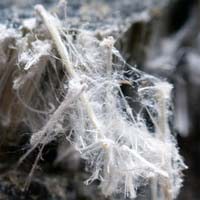
    Workers exposed to both asbestos and another insulation material called refractory ceramic fiber (RCF) are more than 4 times as likely to develop malignant pleural mesothelioma as are workers who were only exposed to asbestos. That is the conclusion of a new study from a team of French scientists at the University of Bordeaux. Asbestos, a fibrous mineral used in insulation and building materials, has been known for decades to increase the risk of mesothelioma. RCF is a manmade aluminum-silicate-based material that is also used for insulation, particularly in high-heat industrial applications. Although some animal studies on RCF have suggested that the material might also cause cancer, a 2012 study in Inhalation Toxicology found no increase in lung cancer or…

  • | | | | |

    Mesothelioma Cells Respond Better to Chemotherapy Drug When Pretreated with Two Compounds

    There’s new evidence that a transplant anti-rejection drug and a chemical compound similar to curcumin may both increase the mesothelioma-fighting power of chemotherapy with less harm to healthy cells. Chemotherapy with platinum-based drugs like cisplatin is the fist-line treatment for pleural mesothelioma, an asbestos-linked cancer that starts on the mesothelium  surrounding the lungs . One of the biggest challenges of chemotherapy is how to kill as many mesothelioma cells as possible without damaging normal cells on the mesothelium. Now, a team of cancer researchers in Turkey a say they have found two compounds that appear to make that challenge easier. The first compound is EF24, an analog of curcumin, the yellow pigment in the spice turmeric. Although curcumin has been…

  • | | |

    Using Cancer Statistics to Prioritize Mesothelioma Research

    New cancer statistics from Quebec, Canada suggest that mesothelioma should be a research priority for scientists looking into work-related illnesses. Quebec was once Canada’s heaviest producer and exporter of asbestos, the number one worldwide cause of deadly malignant pleural mesothelioma. In recent years, the number of asbestos-related diseases such as mesothelioma, asbestosis, lung cancer and pleural plaques have been steadily rising and some Canadian health experts warn that the country is poised for a health crisis because of its close ties with the asbestos industry. But exact numbers of work-related cancer cases are not easy to find. Researchers from the Canada School of Public Health at the University of Montreal attempted to estimate the number of work-related cancer cases and…