| | | | |

Maintenance Work Can Carry a High Mesothelioma Risk

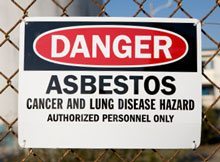
22191715_Maryland workerA CDC report out this week on the incidence of malignant mesothelioma in the US suggests that people who renovate or do repairs and maintenance work on older asbestos-containing buildings may have the highest risk for mesothelioma in the coming years.

The report, entitled “Malignant Mesothelioma Mortality – United States, 1999 – 2015” shows that mesothelioma diagnoses are still on the rise, despite regulations put in place to help minimize worker exposure to asbestos.

The Danger of Maintenance and Repair Work

In the first half of the 20th century, asbestos was widely used as an insulator and was added to a variety of materials from floor and ceiling tiles to roof shingles, wallboard, paint and concrete. It’s low cost, easy availability, and resistance to heat, flame, and corrosion made it popular for all kinds of uses.  

Even though asbestos is now understood to be the primary cause of malignant mesothelioma, an aggressive cancer with no known cure, tens of thousands of older homes and buildings in the US still contain the substance. The result is that men and women whose job it is to repair, renovate, or maintain these buildings are potentially putting themselves at risk for mesothelioma in the course of their work.

“Current exposures to commercial asbestos in the United States occur predominantly during maintenance operations and remediation of older buildings containing asbestos,” writes lead report author Jacek Mazurek, MD, PhD, of NIOSH.

The Link Between Asbestos and Mesothelioma

While untouched and intact asbestos poses no health threat, as soon as it is disturbed – such as when a repairman must open an old wall or the insulation around an old boiler must be moved to service the boiler – asbestos fibers can become airborne.

Once inhaled, they stay in the body, triggering a cascade of physiological responses that can result in pleural mesothelioma 20, 40, or even 70 years later.

The Occupational Safety and Health Administration (OSHA) and the Environmental Protection Agency (EPA) have established guidelines designed to help protect workers who could be at risk for mesothelioma because of asbestos exposure.

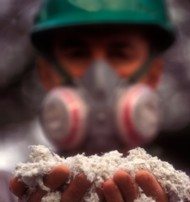
These include measures such as wearing protective gear, using a special kind of respirator in dusty places, and disposing of any removed asbestos in prescribed ways. Unlike many Western countries, the US has not instituted a ban on asbestos.

Despite these regulations, the CDC report indicates that malignant mesothelioma incidence is still not declining and warns against complacency when it comes to protecting workers against this and other asbestos-linked illnesses.

“The continuing occurrence of malignant mesothelioma deaths underscores the need for maintaining measures to prevent exposure to asbestos fibers and other causative EMPs [elongate mineral particles] and for ongoing surveillance to monitor temporal trends,” concludes the report.

The mesothelioma information was released as part of the CDC’s Morbidity and Mortality Weekly Report.

Sources:

Mazurek, J, et al, “Malignant Mesothelioma Mortality – United States, 1999-2015”, March 3, 2017, Centers for Disease Control and Prevention, pp. 214 – 218


Similar Posts

  • |

    Ape Virus Shrinks Mesothelioma Tumors in Lab

    A virus that causes leukemia in gibbon apes may have the power to help fight malignant mesothelioma in people. Gibbon ape leukemia virus (GALV) has been tested for years as a viral vector, a carrier of therapeutic genetic information, in the treatment of various human illnesses, including cancer. A new study in Japan compared GALV with a leukemia virus derived from mice to see which carrier communicated most efficiently with mesothelioma cells. While both types of viruses replicated in most of the mesothelioma cell lines tested, the mouse-derived virus was not effective in a mesothelioma cell line called ACC-MESO-1. In this cell line, only the GALV spread efficiently both in culture and in mice that had been given human mesothelioma…

  • |

    Teacher’s Diagnosis Highlights Mesothelioma Risk in Schools

    A recent mesothelioma diagnosis in the UK once again dramatically highlights the fact that even a small amount of asbestos can be deadly. Sixty-three-year-old school teacher Marion Potts of Brockenhurst died of mesothelioma in a Southampton hospital in June. According to an article in The Mirror, the Coroner recorded a verdict of “death from an industrial disease” after hearing evidence last week that Potts actually saw asbestos dust being released when she pinned work on the classroom walls. Most recently, Potts was head of the English department at Romsey School in Hampshire until her retirement two years ago. Mesothelioma is a growing threat among school teachers, administrators, maintenance workers, and even students in British schools. A government report released last…

  • |

    Study Confirms Firefighters at Elevated Risk for Mesothelioma

    A 5-year National Institute for Occupational Safety and Health (NIOSH) study of U.S. firefighters is the first to confirm what has long been suspected: Firefighters are definitely at higher risk for malignant mesothelioma. The study examined the mortality patterns and cancer incidence (including mesothelioma) among 30,000 firefighters in three major cities. The study subjects were all career firefighters who started their careers after 1950 and were followed through 2009. In order to get a diverse sample of firefighters from across the country, the study focused on firefighters from San Francisco, Chicago and Philadelphia. Comparing firefighters to a sampling of the general public, the study looked at 92 causes of death and 41 cancer incidence groupings, with a focus on 15…

  • | |

    Micro-RNAs May Offer New Way to Fight Mesothelioma

    Scientists at one of the world’s top mesothelioma research centers, the Asbestos Diseases Research institute in Sydney, Australia, say that restoring the expression of certain micro RNAs in the cells of mesothelioma patients may offer a new way to fight the disease. A microRNA is a small RNA molecule which is involved in the regulation of gene expression. According to a new report in the Annals of Oncology, the Australian scientists found reduced expression of the micro RNA-15 family (miR-15/16) in the cells of mice with mesothelioma. “When malignant pleural mesothelioma cell lines were compared with the normal mesothelial cell line MeT-5A, the downregulation of miR-15/16 was 2- to 10-fold,” they report. This finding is consistent with previous cancer research…

  • |

    Mesothelioma Still Carries Heavy Mortality Burden in U.S.

    Asbestos exposure cost Americans more than 427,000 years of potential life in the first decade of the new millennium. That figure comes from a study on mesothelioma and asbestosis – the two most deadly asbestos-related diseases – conducted by the CDC’s National Institute for Occupational Safety and Health (NIOSH). Using National Center for Health Statistics mortality data, NIOSH researchers evaluated premature deaths and “loss of potentially productive years of life” attributable to either asbestosis or mesothelioma between 1999 and 2010. The data included only people 25 years or older with an underlying cause of death listed on their death certificate of either asbestosis or malignant mesothelioma. When the figures were calculated using the normal life expectancy for each asbestosis victim…

  • |

    Mesothelioma Case Shows Danger of Accidental Asbestos Exposure

    A mesothelioma case in Birmingham, England is a dramatic illustration of the very real danger of hidden asbestos. The widow of a physician who died of mesothelioma last year at the age of 51 claims her husband was exposed to asbestos just walking to and from his medical classes. Monisha Coelho believes that exposed asbestos insulation in the underground hallways that connect the University of Birmingham to buildings on the Queen Elizabeth Hospital campus triggered Dr. Ian Pardoe’s mesothelioma. In an article in the Birmingham Mail, Coelho explained how her husband decided how and where the deadly exposure had occurred. “Ian thought long and hard about where he might have come into contact with asbestos,” Coelho told the paper. “He…