| | | | | |

Prophylactic Radiotherapy May Prevent Spread of Pleural Mesothelioma

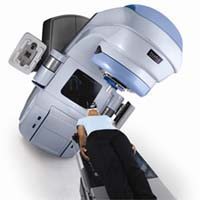
mesothelioma diagnosisIrradiating the sites where mesothelioma treatments are performed as a way to prevent new tumors is “effective, well tolerated, simple, fast and cost effective”.

According to French researchers this prophylactic radiotherapy has the potential to extend mesothelioma survival with few downsides.

Malignant Mesothelioma Can Spread After Intervention

A number of mesothelioma treatments involve the insertion of some kind of instrument into the tumor site. In some cases, these may be drains to remove fluid (called pleural effusions) that collects around the lungs as malignant mesothelioma tumors grow.

In other cases, they may be needles or other instruments for collecting cell samples during ultrasound-guided needle biopsies or mesothelioma tumor resection.

Any time an instrument is inserted into the tumor area and removed, there is the possibility of inadvertently “seeding” tiny new tumors along its tract. Because radiotherapy disturbs the DNA of cells along the insertion path, some studies have suggested that it may help keep pleural mesothelioma from gaining a foothold there.

Prophylactic Radiotherapy in Mesothelioma Patients

To test the theory, researchers with CHRU De Nancy hospital in northern France reviewed the cases of 91 pleural mesothelioma patients who underwent at least one kind of intervention followed by prophylactic radiotherapy. Patients were treated between 1990 and 2013 at the Cancer Institute of Lorraine in Nancy, France.

Most had some type of thoracoscopic procedure – either a biopsy or surgery – with video guidance. Seventeen patients had open-chest procedures called thoracotomies with chest drains. Twelve underwent needle biopsies under CT or ultrasound guidance.

Few New Mesothelioma Tumors After Radiation

At 12 months, only 8 percent of patients had experienced a recurrence of mesothelioma tumors at the intervention sites. In cases where tumors did form, it took a median of four months. Just as importantly, there were no serious (Grade II or higher) side effects as a result of these prophylactic mesothelioma treatments.

“Irradiation of pleural intervention sites with a single fraction of 10Gy is effective, well tolerated, simple, fast and cost effective,” concludes the report in Cancer Radiotherapie.

Unfortunately, this study is not the last word on the value of prophylactic radiotherapy after malignant mesothelioma procedures  A 2016 UK study of more than 200 pleural mesothelioma patients concluded that irradiating the procedure tracts was no more effective at preventing the spread of mesothelioma than just treating new tumors when they cropped up.

Sources:

Carette, H, et al, “[Prophylactic radiotherapy in a single fraction of 10Gy at intervention pleural site in patient with malignant pleural mesothelioma: A retrospective monocentric cohort study]”, November 2017, Cancer Radiotherapie, Epub ahead of print

Clive, AO, “Prophylactic radiotherapy for the prevention of procedure-tract metastases after surgical and large-bore pleural procedures in malignant pleural mesothelioma (SMART): a multicentre, open-label, phase 3, randomised controlled trial”, June 23, 2016, The Lancet Oncology


Similar Posts

  • | |

    Doctors Describe "Concrete Therapeutic Approach" for Mesothelioma

    A team of medical researchers in Italy have achieved what they are calling “excellent” tumor control and survival results in malignant pleural mesothelioma patients using a combination of surgery, chemotherapy, and radiotherapy. Caused by exposure to asbestos, mesothelioma typically spreads quickly across the lung-encasing membrane called the pleura. There is no known cure but treatments are improving. In the current prospective study, 20 malignant pleural mesothelioma patients underwent radical pleurectomy/decortication followed by high doses of radiation. After surgeons removed as much of the visible mesothelioma tumor and surrounding tissue as possible, patients received 50Gy of radiation to the effected side of their chest, delivered in 25 fractions. Regions of particular concern for mesothelioma regrowth got an extra radiation “boost” to…

  • |

    Mesothelioma Still Rising Despite Ban in Ireland

    A study in Ireland confirms that it can take many years for a ban on asbestos to have a measurable impact on a country’s rates of malignant mesothelioma. Mesothelioma is the most serious of a list of diseases – including lung cancer, pleural plaques, asbestosis, and others – linked with exposure to asbestos dust. Affecting the linings around the lungs and other organs, mesothelioma is often resistant to most cancer treatments and may be fatal within a year of diagnosis. According to the International Ban Asbestos Secretariat, Ireland is one of 55 countries that have enacted some type of asbestos ban. However, although Ireland banned asbestos in 2000, a new study published in Cancer Epidemiology shows that incidence of the…

  • | |

    Does Radiotherapy Reduce Mesothelioma Pain?

    A new study says there is not enough evidence to support the use of radiotherapy for the treatment of pain associated with malignant pleural mesothelioma. Researchers at the University of Edinburgh in Scotland reviewed a range of past studies on mesothelioma pain and radiotherapy by searching databases that date back as far as 1974. To be eligible to be included in their review, the study had to focus on malignant pleural mesothelioma and radiotherapy given “with the intent of improving pain”. The study also had to report doses and fractionation of the radiotherapy and how the pain responded. In all, the researchers found eight studies on mesothelioma pain and radiotherapy that met the criteria. Two of the studies were prospective…

  • |

    Website Aims to Protect Homeowners from Mesothelioma

    Australia’s Cancer Council is trying to educate home renovators about their risk for mesothelioma with a new e-learning course. Australia has one of the highest per capita rates of mesothelioma in the world, largely because of several asbestos mining operations that were once located there. Although asbestos has been banned from building products in Australia since 1989, asbestos-linked diseases like mesothelioma, lung cancer, and asbestosis continue to pose a serious health concern. While mesothelioma has traditionally occurred among people exposed to asbestos on the job, Australia is now bracing for another “wave” of mesothelioma victims among homeowners who encounter asbestos while doing their own renovation projects. Cancer Council Australia has launched “kNOw asbestos in your home” in an effort to…

  • |

    Ape Virus Shrinks Mesothelioma Tumors in Lab

    A virus that causes leukemia in gibbon apes may have the power to help fight malignant mesothelioma in people. Gibbon ape leukemia virus (GALV) has been tested for years as a viral vector, a carrier of therapeutic genetic information, in the treatment of various human illnesses, including cancer. A new study in Japan compared GALV with a leukemia virus derived from mice to see which carrier communicated most efficiently with mesothelioma cells. While both types of viruses replicated in most of the mesothelioma cell lines tested, the mouse-derived virus was not effective in a mesothelioma cell line called ACC-MESO-1. In this cell line, only the GALV spread efficiently both in culture and in mice that had been given human mesothelioma…

  • | |

    Radiotherapy for Mesothelioma: Better But Still Limited

    A form of highly-targeted radiation therapy for mesothelioma is better than it used to be, but is still risky. That is the message of a recent article on intensity-modulated radiation therapy (IMRT) in Seminars in Thoracic and Cardiovascular Surgery. Author Kenneth E. Rosenzweig, MD, a Radiation Oncologist with Mount Sinai Hospital in New York, reviewed recent studies on IMRT and mesothelioma. He concludes that, while the “troubling toxicity” associated with IMRT when it was first introduced has not been entirely eliminated, the fact that clinicians now have more experience with it is making a positive difference for mesothelioma patients. Before targeted therapies like IMRT were available, high-dose radiation was not usually a feasible option for mesothelioma since the irregular shape…