Search Results for: epithelioid

  • | | | | |

    NIH Grant May Help Validate Light-Based Therapy for Mesothelioma

    University of Pennsylvania researchers studying a promising mesothelioma treatment that kills cancer cells with light will get the opportunity to take their research to the next level thanks to a significant new grant. Penn’s Perelman School of Medicine has received $8 million from the National Cancer Institute to delve deeper into the effects of photodynamic therapy (PDT) in patients with malignant pleural mesothelioma. The team has been researching and using the treatment in patients for several years, but the grant will allow them to conduct a larger clinical trial to further validate their good results. “This trial represents a major step in understanding the combination of treatment modalities that will offer patients the best hope for survival and extended remission,”…


  • | |

    Mesothelioma Blood Test May Save Lives through Earlier Diagnosis

    There is new evidence that a blood test for a biomarker called N-ERC/mesothelin could help identify mesothelioma earlier and improve outcomes in people at risk for the disease. Cancer researchers with Juntendo University in Tokyo released a study in 2008 suggesting that N-ERC/mesothelin, a soluble protein released by certain kinds of cancer cells, was “a very promising tumor marker for mesothelioma, especially epithelioid mesothelioma”. In their newest study, the same group attempted to test the value of the biomarker as a warning tool for closer monitoring in populations at high mesothelioma risk. The new study included construction workers who were part of a large-scale, 5-year screening of people known to be exposed to asbestos, the primary cause of mesothelioma. The…

  • | |

    Long Term Survival Possible with CRS/HIPEC for Mesothelioma

    There’s hopeful news for peritoneal mesothelioma patients facing the prospect of surgery. A new study on the benefits of cytoreductive surgery and hyperthermic intraperitoneal chemotherapy (HIPEC) finds that both the process and outcomes have improved over time. Cytoreductive surgery refers to any surgery aimed at removing as much cancerous tissue as possible. With peritoneal cancers such as mesothelioma, the surgeons may follow the procedure with a wash of heated chemotherapy drugs into the open body cavity. The goal of HIPEC is to destroy any remaining mesothelioma cells and to help keep new mesothelioma cells from growing. A study of 1,000 cytoreductive surgery/HIPEC patients, 72 of whom had mesothelioma, found that complications have decreased and survival has increased for all of…

  • |

    Factors Predict Long-Term Survival After Mesothelioma Surgery

    Two thoracic surgeons from Glenfield Hospital in Leicester, England have come up with a list of factors they say can be used to predict long term survival in mesothelioma patients who undergo radical surgery. Noting that the factors predicting poor outcomes from mesothelioma surgery have already been determined, Drs. Apostolos Nakas and David Waller say their goal was to determine the predictors of positive surgical outcomes. The two retrospectively reviewed the records of 252 patients diagnosed with malignant pleural mesothelioma, a virulent form of cancer caused by asbestos inhalation. The epithelioid variety of mesothelioma was identified in 193 of the tested patients. The rest had the rarer biphasic type. There are two major types of radical surgery for pleural mesothelioma…

  • | |

    Test May Distinguish Mesothelioma from Benign Conditions

    One of the biggest challenges for patients and clinicians dealing with malignant pleural mesothelioma is just getting a definitive diagnosis. Although mesothelioma is closely associated with asbestos, symptoms may not show up until decades after exposure, making it difficult to link the cause and effect. When symptoms such as chest pain and shortness of breath do occur, they are often attributed to other, less serious causes. But a recent article in Lung Cancer focuses on a promising new way to help distinguish mesothelioma from other conditions with similar characteristics. Researchers at the University of Chicago and cancer centers in the UK, France, and Japan say a glucose transport protein called GLUT-1 was present in half of the epithelioid mesothelioma cells…

  • Malignant Mesothelioma

    Malignant mesothelioma is a type of cancer that develops from the thin layer of tissue that covers many of the body’s internal organs. These types include: pleural (covering the lungs and chest wall), peritoneal (covering the abdomen), testicular (lining of the testis), and cardiac (over the heart). While most mesothelioma cancers are malignant, there are some subtypes that are not. These benign types are typically treated with surgery alone. Type of Mesothelioma Malignant or Benign Pleural Malignant Peritoneal Malignant Testicular Malignant Cardiac Malignant Multicystic peritoneal Benign Well-differentiated papillary Benign Unfortunately, most mesothelioma cases are malignant. The most frequently encountered cases are pleural (about 2,000 cases a year in the U.S.) and peritoneal (less than 1,000 cases a year in the…

  • | |

    New Drugs May Be More Effective in Mesothelioma

    There is evidence that two novel mesothelioma medications may work better than some of the most commonly used drug treatments. Researchers in Stockholm, Sweden treated six mesothelioma cell lines with six different drugs, some of which are already commonly used to treat the asbestos-linked cancer.  The drugs tested include carboplatin, pemetrexed, doxorubicin and gemcitabine, all of which have been used to fight mesothelioma. The new drugs included in the tests were selenite (a form of selenium) and bortezomib (a proteasome inhibitor).  The researchers tested the drugs alone and in various combinations to see which were most effective. “As a single agent, selenite was effective on four out of six cell lines and, in combination with bortezomib, yielded the greatest response…

  • | |

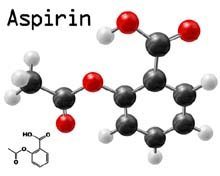
    Aspirin Derivative No Match for Mesothelioma

    It may work wonders for aches and pains but apparently the ‘wonder drug’ is no match for the asbestos-linked cancer, malignant mesothelioma. A number of previous studies have suggested a benefit from aspirin for some types of cancer. But Italian scientists testing the aspirin derivative [2-acetoxy-(2-propynyl) benzoate] hexacarbonyldicobalt (Co-ASS) and its analogue hexacarbonyl [μ-(2-ethylphenyl) methanol] dicobalt (Co-EPM) against malignant pleural mesothelioma cells found that both molecules function better as non-steroidal anti-inflammatory (NSAID) agents than as anti-tumor drugs. The researchers tested Co-ASS and Co-EPM against mesothelioma cells of both the more common epithelioid and rarer sarcomatoid types. The most encouraging results were seen with the sarcomatoid cells. Against this cell type, Co-ASS was found to be more potent than either Co-EPM or…

  • |

    New Prognostic Factor in Peritoneal Mesothelioma

    Malignant peritoneal mesothelioma is a rare form of mesothelioma that attacks the membrane that lines the abdomen and surrounds internal organs. The outlook for this rare malignancy, which affects fewer than 500 Americans annually, has been improved by the treatment combination of cytoreductive surgery (CRS) and hyperthermic intraperitoneal chemotherapy (HIPEC). The combination has produced 5-year overall survival rates ranging from 29% to 63%. But not all peritoneal mesothelioma patients are good candidates for CRS/HIPEC. The challenge, for clinicians, is identifying which patients are likely to benefit from the procedure (or even be cured) and which are not. In an effort to help answer that question, French researchers recently tested the prognostic value of the glucose transporter protein GLUT1 as well as…

  • | |

    NUMB Gene May Suppress Mesothelioma

    Researchers at Shandong University in China have pinpointed the connection between low levels of the protein NUMB and a poor mesothelioma prognosis. NUMB is known to act as an anticancer protein in part by binding to the tumor suppressor p53 and preventing its breakdown. Low levels of the NUMB protein have been linked to several types of cancer. In the latest study, published in Oncology Reports, researchers measured the expression of NUMB in 39 tissue samples of epithelioid mesothelioma. The results were compared using immunohistochemistry (protein testing) to 22 normal pleural tissues. NUMB was found to be significantly lower in the mesothelioma cells and the tissue samples with the lowest expression of NUMB were associated with the poorest prognosis. At the…