
Search Results for: epithelioid

  • |

    Using CT Scans in Surgical Decision-Making in Peritoneal Mesothelioma

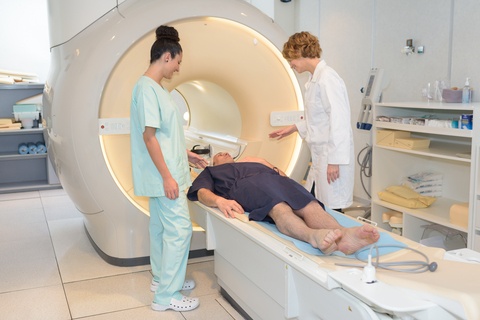
    Peritoneal mesothelioma is caused by asbestos. The peritoneum is the space in your abdomen that contains the intestines, the stomach, and the liver. The abdomen (peritoneum) is the second most common site of mesothelioma after the pleural (lungs and chest). Most doctors believe peritoneal mesothelioma is caused by the ingestion of asbestos fibers. Microscopic asbestos fibers become embedded in the abdomen (peritoneum). After about 20-50 years, these fibers can cause inflammation and mutations in the healthy mesothelial cells. These mutations may ultimately cause these cells to become cancerous. Thus, forming tumors in the peritoneum. Patients diagnosed with peritoneal mesothelioma may survive several or more years after diagnosis. There are long-term survivors, such as Paul Kraus. Using CT Scans to Avoid…

  • | | |

    Radiation Therapy for Mesothelioma Patients: Value and Timing

    The value and safety of radiation therapy for mesothelioma patients are promising. Oncologists from the Fox Chase Cancer Center released new data on radiotherapy. What are the options for radiation therapy? What is the best timing? Who should receive it? This guide shows the role of radiotherapy in the treatment of mesothelioma. Mesothelioma Radiosensitivity and Treatment Combinations Mesothelioma tumors are radiosensitive. This means they are sensitive to X-rays and radiant energy forms. In other words, mesothelioma tumors are treatable with radiation therapy. The use of a multi-modality treatment has also shown potential for mesothelioma patients. A tri-modality treatment uses three different treatment types. The combination of surgery, chemotherapy, and radiotherapy is most common. Understanding Timing and Adverse Effects There are…

  • | | | |

    Top Three Factors Predicting Mesothelioma Survival are Age, Histological Type, and Surgery Status

    Malignant pleural mesothelioma is a rare and aggressive malignancy with a dismal prognosis. A new study is predicting mesothelioma survival among male and female patients in the United States. Identifying factors “associated with mesothelioma mortality is important research given the poor prognosis” according to Dr. Bian Liu from the a Icahn School of Medicine at Mount Sinai in New York. A new study applied a machine-learning algorithm to 12,210 patients to predict survival. The top three factors were age, histological type, and cancer-directed surgery status. Analyzing Over 12,000 Mesothelioma Patients Scientists from the New York State Department of Health included 12,210 mesothelioma patients. They involved only malignant pleural mesothelioma patients. They excluded cases with unknown diagnostic confirmation and unknown survival…

  • | |

    Treatment Options Improving in the ‘New Era’ for Mesothelioma

    Calling it a “new era” for malignant pleural mesothelioma, doctors from four of the nation’s top cancer centers have just published an update on treatment options for this rare disease.  The article was prepared by mesothelioma experts at MD Anderson Cancer Center in Texas, NYU Langone Medical Center, Memorial Sloan Kettering Cancer Center in New York and the Mayo Clinic in Minnesota.  The article in the Journal of Clinical Oncology highlights the recent FDA approvals of a new medical device and a new immunotherapy combination for pleural mesothelioma. The authors say these and other advances are “generating momentum” to find better mesothelioma therapies.  Tumor Treating Fields Changing the Game Pleural mesothelioma is fast-growing and difficult to treat. Mesothelioma rarely responds…

  • Lung-Sparing Surgery and Mesothelioma Survival

    Italian researchers say lung-sparing surgery can lead to long-term mesothelioma survival, even if surgeons take a more conservative approach.  Lung-sparing surgery for mesothelioma is also known as pleurectomy with decortication (P/D). P/D surgery is less extensive than the other main surgical approach for mesothelioma but it is also less risky. Now, doctors at Venice-Mestre Hospital say that, as long as it is performed early enough and combined with other treatments, lung-sparing surgery saves lives. Their report in the Journal of Thoracic Disease details the outcomes of 155 mesothelioma surgery patients tracked for a median of a year-and-a-half.  Extrapleural Pneumonectomy & Lung-Sparing Surgery Extrapleural pneumonectomy (EPP) is the most radical operation for pleural mesothelioma. In addition to removing the mesothelioma tumor…

  • | |

    Expert Says Malignant Mesothelioma Research ‘Turned a Corner’ in 2021

    An internationally-known mesothelioma specialist says 2021 has been one of the best years yet for malignant mesothelioma research, giving patients and their families more reason than ever to be hopeful.  Hedy Lee Kindler, MD, is Director of the University of Chicago Medical Center’s Mesothelioma Program. In a commentary in JCO Oncology Practice, Dr. Kindler says the outlook for mesothelioma sufferers this year is “far brighter than it has been for a very long time.” Dr. Kindler points to several recent advances in malignant mesothelioma research and treatment as reasons for optimism. The FDA approved the second systemic therapy for mesothelioma in late 2020. This year saw five positive mesothelioma clinical trials.  Kindler says these advances suggest that the future may…

  • | | |

    New Mesothelioma Grading System: A Better Path to Prognosis?

    A team of Australian researchers have developed a new mesothelioma grading system they believe is a more accurate method for predicting outcomes. The system assigns weighted scores based on things like mesothelioma subtype, the shape of the nuclei, BAP1 loss and other parameters. A higher score suggests the patient’s mesothelioma case may be more challenging to treat. Tests of the system in more than 350 patients show that it is highly accurate.  The team lays out their new mesothelioma grading system in a recent issue of the American Journal of Surgical Pathology. In the article, they make the case for why this new prognostic tool could be a helpful supplement to the current, more widely-used WHO system.  The Importance of…

  • | | | |

    Surgery-Based Multimodal Treatment Improves Survival for Italian Mesothelioma Patients

    A new Italian report suggests that a surgery-based multimodal treatment approach to mesothelioma can help patients live longer with few serious side effects.  The new study comes from Careggi University Hospital in Florence. Thoracic oncologists tracked the outcomes of 12 of their mesothelioma patients since 2017. All of the patients had early-stage pleural mesothelioma of the epithelioid subtype. Results showed that none of them died within the first year after surgery-based multimodal treatment. More than half lived for at least three years.  These are considered very positive results for a cancer that often claims lives within months of diagnosis.  Understanding Surgery-Based Multimodal Treatment Some types of cancer can be successfully treated with just one type of therapy. Pleural mesothelioma is…

  • | | |

    Immunotherapy Drug Durvalumab Shines in Most Recent Mesothelioma Trial

    Another new study confirms what Johns Hopkins researchers have been banking on – that the immunotherapy drug durvalumab can make chemotherapy more effective for mesothelioma patients.  Durvalumab (IMFINZI) is an immune checkpoint inhibitor. It works by blocking the action of PD-1, a protein that mesothelioma cells use to protect themselves.  Researchers theorized that deactivating PD-1 with the immunotherapy drug durvalumab might make mesothelioma tumors more responsive to chemotherapy. The latest study results, published in Nature Medicine, suggest that they were right.  The findings could have implications for people around the world with inoperable malignant mesothelioma. How the Immunotherapy Drug Durvalumab Helps Fight Mesothelioma Durvalumab is one of several immune checkpoint inhibitors showing promise for mesothelioma in recent years. Keytruda (pembrolizumab)…

  • | | | |

    Mesothelioma Histology Impacts Response to Chemotherapy

    Response to chemotherapy for people with malignant mesothelioma may depend – at least in part – on the histology or subtype of their tumor. That is the finding of a new study from a team of Spanish doctors. The doctors analyzed the cases of 189 pleural mesothelioma patients treated at their hospital between 2002 and 2020.  Their study confirms what other studies have suggested: People with epithelioid tumors have better response to chemotherapy than those with non-epithelioid subtypes. These patients experienced both longer progression-free survival and longer overall survival.  Systemic Treatment for Pleural Mesothelioma The first chemotherapy drug for malignant pleural mesothelioma received FDA approval in 2004. Alimta was the only approved systemic (whole body) treatment for pleural mesothelioma until 2020. …