mesothelioma risk

  • |

    Volunteers Warned Against Mesothelioma Risk in OK

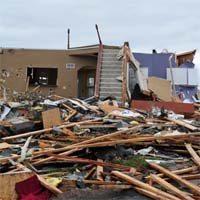
    As volunteers from across the country continue to head to tornado-ravaged Oklahoma for the cleanup effort, they are being warned about a potentially serious threat to their own health. The Environmental Protection Agency (EPA) says damage to homes and buildings in Moore, Oklahoma has exposed a host of toxins including asbestos, the primary cause of malignant mesothelioma. Although asbestos has been phased out of most new construction materials, it can still be found in the insulation, caulk and joint compound, floor and ceiling tiles, and shingles of many older homes and buildings. According to the Huffington Post, many of the houses destroyed in Moore had been built in the 1960s and 1970s when asbestos use in construction was at its peak….
  • |

    Wind and Weather Impacts Mesothelioma Rate

    People who live downwind from an industrial asbestos source are at much higher risk of developing pleural mesothelioma, according to a new study. Researchers in Barcelona, Spain analyzed 24 cases of pleural mesothelioma diagnosed between 2000 and 2009 near the town of Catalonia. For 90 years, this area of Barcelona was home to a fibrous cement factory where asbestos was used. Because asbestos dust is very light, it does not dissipate in the air quickly. When a person inadvertently inhales or ingests it, the tiny fibers lodge in the tissues and can cause health problems such as mesothelioma even decades later. Although the plant closed in 1997, the rate of mesothelioma in the region continues to be high. To test whether…

  • |

    Asbestos Bans Influenced by Mesothelioma ‘Visibility’

    Why have some countries banned asbestos while others have not? A team of Korean researchers studying the question says it is likely influenced by perception of mesothelioma risk as well as what neighboring countries are doing. Medical authorities around the world agree that the mineral asbestos is directly linked to development of mesothelioma, a virulent cancer of the linings around organs. Most often found in the pleura encasing the lungs, mesothelioma is usually the result of on-the-job exposure to asbestos dust. Asbestos was once widely used in a variety of construction materials, including wallboard, paint, floor and ceiling tiles and cement blocks. Even in countries where asbestos is now banned, the presence of the material in existing buildings can pose a mesothelioma…

  • | |

    European Buildings May Be Safer by 2028

    A British politician says the country should stand behind a new European Parliament report calling for the removal of asbestos from all public buildings by 2028. Asbestos is the number one cause of mesothelioma and Britain has the highest mesothelioma rate in the world, with a death occurring about every five hours. An estimated 4,000 British people die of mesothelioma each year, a full 1,000 more than are typically seen in the U.S.  At greatest risk are the many people who have worked with or around asbestos in construction and various industrial jobs. But Britain’s high number of quickly-built, inexpensive, post-WWII era buildings – many of which are now crumbling – has also been blamed for the high mesothelioma rate. In…

  • |

    Location Can Affect Mesothelioma Risk

    People who live close to ancient rock formations called ophiolites are at higher risk of mesotheliomaand other asbestos-related diseases. That is the conclusion reached by a team of researchers in the thoracic surgery department of a Turkish hospital. In a report published in the medical journal Respiratory Medicine, the team explained the findings of a study of 2,970 volunteers living near Turkish ophiolite formations. Ophiolites get their name from the words “snake stone” in Greek. They appear to be pieces of ancient ocean floor that have been pushed to the surface over time and are rich in asbestos and other types of rock and minerals. Approximately 85% of the world’s asbestos, a mineral closely-linked to mesothelioma and a range of other…

  • |

    Mesothelioma Rates Steady Despite Declining Asbestos Use

    Although asbestos use in the United States has been in decline for more than 30 years, the threat of mesothelioma is still very real. A new CDC analysis of data from the National Program for Cancer Registries and the Surveillance, Epidemiology and End Results program shows that mesothelioma rates in the U.S. remained steady from 2003 to 2008. The National Program for Cancer Registries is a national database of all cancer cases in the U.S. It allows the CDC to observe and track trends and find patterns in cancer occurrence. The newly-released CDC mesothelioma analysis was based on the theory that “the decline in asbestos use in the United States may impact mesothelioma incidence.”  But according to a summary of the…

  • |

    UN Group to Debate Asbestos/Mesothelioma Link

    The link between chrysotile asbestos and illnesses such as mesothelioma will be high on the agenda when the sixth UN Rotterdam Convention meets in Geneva, Switzerland in late April. The group, made up of representatives from around the world, will be considering whether or not chrysotile or white asbestos will finally be added to the list of Controlled Hazardous Substances. The Rotterdam Convention was assembled in 2002 with the goal of protecting people and the environment from toxic chemicals like asbestos. However, in order to include chrysotile asbestos on the list, the vote of all represented countries must be unanimous. In the past, countries that still export, import or use asbestos, including Canada, Brazil, Russia and India, have worked to keep chrysotile…

  • | |

    Mesothelioma Study: Taconite Link Appears Weak

    The long-awaited results of the Minnesota Taconite Workers Health Study are in but many questions remain about the link between the iron-based mineral taconite and malignant mesothelioma. The five-year study was commissioned by the Minnesota Department of Health and carried out by researchers at the University of Minnesota at a cost of $4.9 million. The goal of the study was to determine why 82 taconite workers have died of mesothelioma, a rare lung-related cancer normally associated with asbestos exposure, since 2010. Preliminary findings of the study, which focused on the 50,000 current and former taconite workers born since 1920, have been released every couple of years since the study began. But last week was the first time that iron workers and…

  • |

    Skin Growths May Point to Mesothelioma

    Could benign skin tumors be a warning sign for mesothelioma? One of the world’s leading authorities on mesothelioma says the same genetic mutation that predispose certain people to skin cancer may also put them at higher risk of malignant mesothelioma. Mesothelioma is a rare but serious cancer of the membranous tissue that surrounds and encases the lungs, heart and abdominal organs. Its primary cause is exposure to airborne asbestos. However, one of the great mysteries of this highly aggressive cancer is why it strikes some asbestos-exposed individuals and not others? Dr. Michele Carbone and colleagues at the University of Hawaii Cancer Center, home to one of the world’s leading mesothelioma research programs, have been working on the problem for years….

  • |

    Lawsuits Focus on Mesothelioma Construction Risks

    Two recent news stories highlight the fact that construction workers are often at higher risk for mesothelioma. The risk comes from exposure to asbestos, a toxic mineral once widely used as an insulator and building product additive. After asbestos dust was linked to malignant mesothelioma in the 1960s, workplaces began to implement protective measures. However, the long delay from time of asbestos exposure to development of mesothelioma means the measures came too late for some workers. A group of sick electricians and carpenters in New York is a case in point.   More than a hundred independent contractors are alleging that long-term asbestos exposure at the county-owned Nassau Coliseum in Uniondale, NY, caused them to develop mesothelioma and other asbestos illnesses….