Asbestos Type Influences Mesothelioma Development
Asbestos Type Influences Mesothelioma Development

A new report from South Korea shows that the type of asbestos exposure can influence the development of mesothelioma.

Asbestos is a naturally occurring mineral that has been found throughout the world. It was once called the “magic mineral” because of its seemingly magical properties.

All these properties pale in comparison to the fact that asbestos is toxic and causes cancer in humans. Asbestos causes mesothelioma and other asbestos-related diseases.

Asbestos is classified as a Class I Carcinogen by the International Agency for Research on Cancer (IARC). Sixty countries have bans on asbestos, but many developing countries still use this toxic material.

South Korea, where this study took place, was a major consumer of asbestos in the late 1900s. It was mostly used in building materials like insulation. The country passed the Asbestos Injury Relief Act in 2011 to provide compensation to people made ill by exposure to asbestos.

Asbestos and Mesothelioma

Mesothelioma is caused by asbestos exposure. It often takes a long time for mesothelioma symptoms to appear after exposure, sometimes up to forty or fifty years.

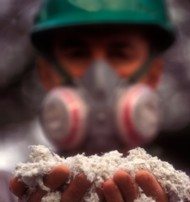
Asbestos is made up of billions of needle-like fibers. These fibers are so small that they are microscopic, and millions can fit on the head of a pin.

Because they are so sharp and small, they become embedded in different areas of the body. Somehow, they are either trapped or moved to the mesothelial layers of the body. This is the thin layer of lubricating tissue that surrounds most of the body’s organs.

There, it is believed, they create chronic inflammation. Over time, this inflammation may lead to mesothelioma in some people.

Asbestos Exposure Patterns

This study looked at almost 2,000 mesothelioma and asbestos-related lung cancer patients.

The time from exposure to having symptoms is called the latency period. For mesothelioma patients in this study, the latency period was about 34 years.

People who had worked in the production of asbestos-containing products or in asbestos factories had latency periods of about 33 years.

People who lived near asbestos mines and factories had longer latency periods of almost 36 years.

The study found that people who smoked usually had a shorter latency period.

Studies that look into asbestos exposure patterns, like this one, can help agencies and governments to develop better responses to asbestos-related diseases like mesothelioma.

Source

Huh, Da-An, Woo-Ri Chae, Yun-Hee Choi, Min-Sung Kang, Yong-Jin Lee, and Kyong-Whan Moon. “Disease Latency according to Asbestos Exposure Characteristics among Malignant Mesothelioma and Asbestos-Related Lung Cancer Cases in South Korea.” International Journal of Environmental Research and Public Health 19, no. 23 (2022): 15934.

Similar Posts

  • |

    Teacher’s Diagnosis Highlights Mesothelioma Risk in Schools

    A recent mesothelioma diagnosis in the UK once again dramatically highlights the fact that even a small amount of asbestos can be deadly. Sixty-three-year-old school teacher Marion Potts of Brockenhurst died of mesothelioma in a Southampton hospital in June. According to an article in The Mirror, the Coroner recorded a verdict of “death from an industrial disease” after hearing evidence last week that Potts actually saw asbestos dust being released when she pinned work on the classroom walls. Most recently, Potts was head of the English department at Romsey School in Hampshire until her retirement two years ago. Mesothelioma is a growing threat among school teachers, administrators, maintenance workers, and even students in British schools. A government report released last…

  • | |

    Micro-RNAs May Offer New Way to Fight Mesothelioma

    Scientists at one of the world’s top mesothelioma research centers, the Asbestos Diseases Research institute in Sydney, Australia, say that restoring the expression of certain micro RNAs in the cells of mesothelioma patients may offer a new way to fight the disease. A microRNA is a small RNA molecule which is involved in the regulation of gene expression. According to a new report in the Annals of Oncology, the Australian scientists found reduced expression of the micro RNA-15 family (miR-15/16) in the cells of mice with mesothelioma. “When malignant pleural mesothelioma cell lines were compared with the normal mesothelial cell line MeT-5A, the downregulation of miR-15/16 was 2- to 10-fold,” they report. This finding is consistent with previous cancer research…

  • |

    Mesothelioma Claims Another American Actor

    Another American actor has died of malignant mesothelioma. Veteran character actor Ed Lauter, who worked with such prominent names as Clint Eastwood, George C. Scott, Burt Reynolds and Tom Cruise, died this week in Los Angeles. According to the Associated Press, one of Lauter’s most notable roles was that of a prison guard in the 1974 Burt Reynolds film “The Longest Yard”. He also appeared in Alfred Hitchcock’s “The Family Plot”, “Born on the Fourth of July” with Tom Cruise, and most recently played a butler in the 2011 Oscar-winning film “The Artist”. Lauter’s television appearances included “The Office”, “ER”, “Murder She Wrote” and “The Rockford Files”. Although little is being said about the origin of Lauter’s mesothelioma, an aggressive…

  • |

    Last Man Sentenced in Asbestos Dumping Scheme

    The U.S. Justice Department has announced that a New Jersey man will spend 15 months in prison for his part in a scheme to illegally dump thousands of tons of asbestos-contaminated construction debris – putting others at risk for mesothelioma. He was the last person to be sentenced in the conspiracy. Asbestos is the cause of mesothelioma, a difficult to treat and aggressive cancer.  At the height of its popularity from the 1940s to the early 1970s, asbestos was common in building products ranging from floor and ceiling tiles to joint compound, concrete and shingles. It is still present in tens of thousands of older homes and buildings today. In an effort to protect workers and the public from mesothelioma…

  • |

    Mesothelioma Case Shows Danger of Accidental Asbestos Exposure

    A mesothelioma case in Birmingham, England is a dramatic illustration of the very real danger of hidden asbestos. The widow of a physician who died of mesothelioma last year at the age of 51 claims her husband was exposed to asbestos just walking to and from his medical classes. Monisha Coelho believes that exposed asbestos insulation in the underground hallways that connect the University of Birmingham to buildings on the Queen Elizabeth Hospital campus triggered Dr. Ian Pardoe’s mesothelioma. In an article in the Birmingham Mail, Coelho explained how her husband decided how and where the deadly exposure had occurred. “Ian thought long and hard about where he might have come into contact with asbestos,” Coelho told the paper. “He…

  • | |

    Aspirin Derivative No Match for Mesothelioma

    It may work wonders for aches and pains but apparently the ‘wonder drug’ is no match for the asbestos-linked cancer, malignant mesothelioma. A number of previous studies have suggested a benefit from aspirin for some types of cancer. But Italian scientists testing the aspirin derivative [2-acetoxy-(2-propynyl) benzoate] hexacarbonyldicobalt (Co-ASS) and its analogue hexacarbonyl [μ-(2-ethylphenyl) methanol] dicobalt (Co-EPM) against malignant pleural mesothelioma cells found that both molecules function better as non-steroidal anti-inflammatory (NSAID) agents than as anti-tumor drugs. The researchers tested Co-ASS and Co-EPM against mesothelioma cells of both the more common epithelioid and rarer sarcomatoid types. The most encouraging results were seen with the sarcomatoid cells. Against this cell type, Co-ASS was found to be more potent than either Co-EPM or…