Author: Alex Strauss

  • |

    Mesothelioma Rates Higher Near Exposed Asbestos

    Disturbing naturally occurring asbestos, whether for farming or building, can significantly raise the risk of mesothelioma and several other cancers. That is the conclusion of a Chinese study comparing the distribution of mortality rates of six kinds of cancer with land use patterns in the Dayao area of China. The study focused on mesothelioma, lung cancer, intestinal cancer, nasopharyngeal and laryngeal cancer, liver cancer and stomach cancer.  Rates were calculated using geographic information systems data. The study found that the mortality rates from mesothelioma and three of the other cancer types were “significantly associated” with outcropped asbestos, asbestos in the soil that was exposed by digging. Asbestos is a silicate mineral that occurs naturally in many parts of the world and…


  • | |

    Fighting Mesothelioma: Canada Lose a Battle, U.S. Gears for Another

    Canadian mesothelioma advocates have lost a major battle in their fight against asbestos, while their American counterparts gear up for another battle of their own in Washington. Despite months of protests by health organizations, mesothelioma activists, including the Canadian Cancer Society and the Canadian Medical Association, the Quebec government has agreed to extend a loan that will reopen Canada’s largest asbestos mine. The $58 million dollar loan has been on the table since the Jeffrey Mine in the town of Asbestos closed last year due to financial problems, laying off some 500 workers. The loan had been contingent on raising seed money from investors. The mine’s president estimates that the loan will keep the mine open for at least another 20 years. While…

  • | |

    Ultrasound: A Safer Way to Manage Mesothelioma?

    The same technology used by obstetricians to track pregnancies and by cardiologists to find blood clots may also play a valuable role in managing mesothelioma. An Indonesian mesothelioma doctor says ultrasound technology is not only safer than radiation, but also portable, non-invasive and relatively inexpensive to use. In a recent article published in an Indonesian medical journal, Dr. C.M. Rumende of the University of Indonesia Medical School says ultrasonography of the lungs allows clinicians to diagnose some abnormalities common in mesothelioma, including the buildup of lung fluid known as pleural effusion, more rapidly than they could with other imaging modalities. “In addition to pleural effusion,” observes Dr. Rumende, “other lung disorders can be diagnosed by ultrasound such as peripheral lung tumors,…

  • | |

    Second Treatment Effective for Peritoneal Mesothelioma

    There is some good news from the Wake Forest School of Medicine for patients with peritoneal mesothelioma. In many cases, after a mesothelioma patient has been treated with one therapy, that therapy is not used again.  This means that when a treatment fails, many mesothelioma patients often run out of treatment options. But researchers at Wake Forest have confirmed that, for patients whose peritoneal mesothelioma recurs after surgery and hyperthermic intraperitoneal chemotherapy (HIPEC), a second treatment may be just as effective at prolonging survival. Peritoneal mesothelioma occurs in the lining of the abdomen.  It is the result of ingestion or inhalation of asbestos fibers. Cytoreductive (CRS) surgery involved a scraping away of the tumor from the peritoneum. When it is followed …

  • |

    Protein May Predict Mesothelioma Treatment Response

    Malignant pleural mesothelioma is a rare but highly aggressive type of cancer.  Because it spreads so quickly, treatment success can hinge on predicting which treatments are likely to work and choosing the right treatment protocol early. Now, there may be a new way to improve survival by making that prediction even more accurate. Mesothelioma researchers at several medical centers across Austria say a cell protein, know as serum C-Reactive Protein (CRP), may hold the key. CRP is a type of protein produced in the liver when the body is experiencing acute inflammation or infection. CRP levels rise to help the body jump start its immune response. Test Method To test the relationship between CRP levels and mesothelioma, researchers analyzed the medical records…

  • |

    Immunotherapy for Mesothelioma Shows Promise

    Despite the continuing efforts of researchers around the world, there is currently no standardized cure for mesothelioma. The asbestos-linked cancer is fast-growing and often resistant to conventional therapies. But a growing number of studies have pointed to the value of unconventional treatments like immunotherapy for mesothelioma. Immunotherapy refers to any treatment protocol which aims to harness the body’s own immune system to fight cancer cells.  In a recent article in The Lancet Oncology, two National Cancer Institute researchers summarized some of the most promising immunotherapy approaches now being investigated for mesothelioma: In dendritic cell-based immunotherapy, dendritic cells are harvested from the patient. Outside the body, these cells are stimulated to activate a cytotoxic response against cancer cells.  When they are…

  • |

    Protease Imaging May Track Mesothelioma

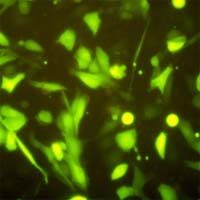
    A chemical that turns certain extracellular enzymes fluorescent may offer an effective, non-invasive method for tracking the progression of malignant pleural mesothelioma. Pleural mesothelioma is an aggressive cancer of the membrane around the lungs. Because mesothelioma tumors tend to be thin and spread out, they are more difficult to ‘see’ with standard imaging methods than some solid tumors. Sometimes, surgery is the only reliable way to determine how fast and how large a mesothelioma tumor is growing. But researchers at Penn State and the University of Pennsylvania, one of the country’s most active mesothelioma research centers, say they have successfully used an optical imaging agent called ProSense 680 to measure the size of mesothelioma tumors in living mice. ProSense 680 is…

  • |

    Maryland Asbestos Law: Beginning of a Trend?

    The state of Maryland is cracking down on asbestos removal companies that put their workers and the public at risk for mesothelioma by cutting corners. State lawmakers have raised the fine from $5,000 to $25,000 for companies that do not follow government guidelines for safe handling of asbestos. Asbestos is a toxic mineral that has been used in decades in insulation and thousands of other products.  By the time its link to mesothelioma was discovered, it was already too late for many workers and consumers who had inadvertently inhaled or ingested asbestos fibers and triggered the physiological changes that would lead to mesothelioma or other asbestos related diseases. Even second-hand exposure, such as coming into contact with asbestos-covered clothing, can raise…

  • | |

    Mesothelioma Study: Quality of Life “Acceptable” with Pneumonectomy

    Mesothelioma patients who undergo lung removal surgery (pneumonectomy) can still enjoy an acceptable quality of life, in spite of the risks associated with the surgery. That is the conclusion of a seven-year Italian study on patients who had pneumonectomy for either lung cancer or mesothelioma between January 2003 and March 2010.  A Total of 71 patients were enrolled in the study. Twenty-six of them had their right lung removed while 31 had left-sided pneumonectomy. Eleven patients had more extensive pneumonectomies that also involved removal of structures other than the lung, such as parts of the trachea, diaphragm or lung lining. At one-year, 93% of the mesothelioma and lung cancer patients who had undergone pneumonectomies were still alive, although all had begun…

  • | |

    Perifosine May Offer New Mesothelioma Treatment

    The makers of the anti-cancer drug perifosine say new research suggests the drug may offer a new way to fight malignant mesothelioma. The research article entitled “Perifosine as a Potential Novel Anti-Cancer Agent Inhibits EGFR/MET-AKT Axis in Malignant Pleural Mesothelioma” was recently published in the peer-reviewed online medical journal Plos One. The announcement has been picked up by other news outlets because of the rarity of new treatments for mesothelioma, the asbestos-linked cancer that is diagnosed in about 2,500 Americans every year. In the new study, perifosine was tested on human mesothelial cells and a variety of mesothelioma cell lines to demonstrate its effectiveness alone or in combination with other mesothelioma treatments. When given at a high enough dose, perifosine interfered…