Author: Alex Strauss

  • | | | |

    Radiation for Mesothelioma: Could Proton Therapy Be the Answer?

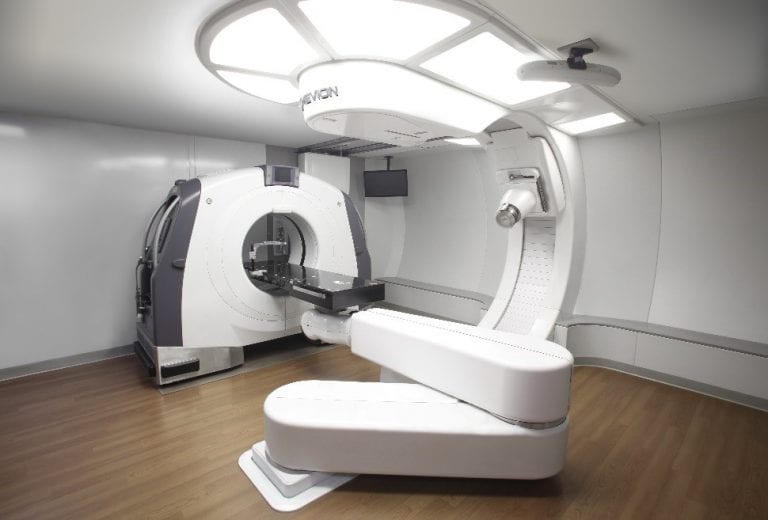
    Researchers at the Maryland Proton Therapy Treatment Center say a highly-targeted version of proton beam radiation could be the future of radiotherapy for malignant pleural mesothelioma. In a new journal article, doctors at the center detail the evolution of radiation treatment for pleural mesothelioma, from standard photon-based therapy to targeted proton therapy. “Radiation therapy has historically been used [for mesothelioma] only in the palliative setting or as adjuvant therapy after extrapleural pneumonectomy,” notes the report. But the researchers go on to say that radiotherapy advances such as intensity-modulated radiation therapy (IMRT) and a more precise form of proton beam therapy called pencil-beam scanning, are changing the value of radiotherapy for mesothelioma patients. Radiation’s Role in Pleural Mesothelioma Treatment Radiation works…


  • | | | | |

    New Study Examines Early Recurrence of Peritoneal Mesothelioma After Surgery

    There is some good news and some bad news this week for patients with malignant peritoneal mesothelioma, an aggressive form of cancer that occurs on the lining of the abdomen. Both come from a new article on peritoneal cancer published in the International Journal of Clinical Oncology. The good news is that most patients with peritoneal mesothelioma and other forms of cancer on the peritoneal membrane respond well to the multi-modal treatment regimen that has become the standard-of-care for this form of the asbestos cancer. A combination of cytoreductive surgery (CRS) and heated intraperitoneal chemotherapy (HIPEC) allows most peritoneal cancer patients to “achieve long-term disease-free survival”, according to the study from the National Cancer Centre Singapore. But the more disturbing…

  • | | |

    The Evolution of Asbestos and Mesothelioma in Pop Culture

    Today, most people with access to media are aware that asbestos is dangerous. Even people who are unfamiliar with the rare but deadly asbestos cancer, malignant mesothelioma, have heard that this once commonly-used mineral is toxic. But this was not always the case. In the 1930s, 40s, and 50s when asbestos was at the height of its popularity in the US and other Western countries, the media often portrayed it as something of a “miracle mineral”. A naturally-occurring mineral found all around the world, asbestos has high tensile strength and resists heat, fire and corrosion. For decades it was used in insulation, added to building products like floor tiles and concrete, and made into fireproof clothing, ironing board pads, hairdryer…

  • | | |

    Experimental Mesothelioma Drugs and the New Right-to-Try Law

    Legislation signed this week by President Trump could pave the way for mesothelioma patients to access promising experimental treatments—even years before they are approved by the FDA. But not everyone thinks it is a good idea. The “Right to Try” legislation gives patients with terminal illnesses like malignant mesothelioma the right to receive new treatments they would not normally be able to get because they haven’t gone through the FDA’s three-phase testing requirement. Controversy Over New Legislation Although the legislation could make it easier for some patients to access potentially life-saving mesothelioma treatments, it is also not without controversy. Some argue it could even be dangerous. Typically, the FDA requires that all proposed mesothelioma therapies go through three-phases of studies…

  • | |

    Remembering Veteran Victims of Mesothelioma

    On this day when the US honors its fallen heroes, it is important to remember that not all who lost their lives from military service died on the battlefield. In fact, many died decades later of the rare asbestos-linked cancer, mesothelioma, as a result of exposure to asbestos in the military. Others are still battling this aggressive and incurable malignancy. Scientists have suspected a link between the fibrous mineral asbestos and malignant mesothelioma since as early as the 1930s. That was when miners and those who processed asbestos for a variety of uses began to get sick from a mysterious lung-related disease. But many decades passed and many people died—both in and outside of the military—before the Armed Services recognized…

  • | |

    Updated Guidelines Aim to Advance Mesothelioma Research

    The criteria for measuring treatment response in malignant pleural mesothelioma is being revised—again. Researchers are hopeful that the new criteria will improve the quality and value of mesothelioma clinical trials and move researchers closer to a cure. Researchers at the University of Chicago and the National Centre for Asbestos Related Diseases in Australia are proposing new modifications to the “modified RECIST” criteria by which researchers currently assess the response of mesothelioma tumors. In order for mesothelioma clinical trials to be truly valuable—and have any chance of leading to a cure—researchers must be “on the same page” in how they assess the size of mesothelioma tumors and their response to treatment. Because malignant mesothelioma is so rare, there are fewer studies…

  • | | | | | |

    Immunotherapy Combo Shows Early Efficacy for Malignant Mesothelioma

    AstraZeneca’s immunotherapy drug tremelimumab may still have a chance as a novel mesothelioma treatment, even though an international clinical trial completed last year found that it did not extend mesothelioma survival. In a new study published in The Lancet Respiratory Medicine, Italian researchers report that combining the monoclonal antibody with another drug called durvalumab “appeared active” as a second-line mesothelioma treatment with “a good safety profile”. Tremelimumab’s Rocky Start as a Mesothelioma Treatment Hopes were initially high for tremelimumab, a monoclonal antibody that works by binding to the protein CTLA-4 on the surface of white blood cells and preventing it from inhibiting the cells’ cancer-fighting power. The US even granted tremelimumab “orphan drug” status in 2015, a designation designed to…

  • | | | | |

    Tea Leaf Cancer Treatment May Have Implications for Mesothelioma Patients

    A new type of nanoparticle derived from green tea leaves has been shown to kill lung cancer cells and may one day do the same for pleural mesothelioma. Scientists at Swansea University in Wales in collaboration with researchers at Bharathiar University in India discovered the power of the tea-based nanoparticles—called quantum dots—when attempting to create a less expensive tool for lung cancer imaging. “The main reason we started looking at tea leaves is that chemically synthesised quantum dots cost between £250 and £500 per microgram,” lead researcher Dr. Sudhagar Pitchaimuthu told the BBC. “Whereas organically-derived ones can be manufactured for £10 per microgram, and at the same time they don’t poison healthy cells surrounding the cancer.” Fluorescent Cancer Fighters Nanoparticles…

  • | | | |

    Study Highlights Risk of Malignant Mesothelioma From Naturally-Occurring Asbestos

    A new study is shining a spotlight on the disturbing fact that you don’t have to have worked in an asbestos industry to be exposed to asbestos and develop malignant pleural mesothelioma, one of the world’s deadliest cancers. A new study conducted in the Mount Pollino area of Southern Italy, where asbestos is found in abundance in the soil, finds a “significant excess” of mesothelioma diagnoses, hospitalizations, and deaths from asbestos-related conditions. Asbestos and Malignant Mesothelioma Asbestos is the name for a set of six naturally-occurring silicate minerals that were once prized for their high tensile strength and resistance to heat and corrosion. Asbestos was used in a variety of building products and insulation materials from as early as the…

  • | | | |

    Extending Mesothelioma Survival with Chemotherapy

    In the continued quest to improve the effectiveness of chemotherapy treatment for malignant pleural mesothelioma, two new studies have been published this week on the effectiveness of adding additional drugs to the standard combination. The majority of patients who receive a mesothelioma diagnosis will have treatment that includes chemotherapy. According to data from the National Cancer Institute’s SEER database, the chemotherapy regimen prescribed most often for mesothelioma is a combination of pemetrexed (Alimta) and cisplatin or carboplatin. Approximately 67 percent of mesothelioma patients who receive chemotherapy have this combination. Unfortunately, even the standard chemotherapy combination has not been shown to extend mesothelioma survival by more that a few months. Scientists are continually looking for ways to make it more effective….