| | |

Creating an American Mesothelioma Patient Registry

Creating an American Mesothelioma Patient Registry

Researchers from the University of Maryland are testing if the United States can create a mesothelioma patient registry.

Other countries like Australia and Italy have created mesothelioma registries. These databases help scientists to understand how common mesothelioma is in their country. It also identifies risk factors for developing the disease.

Tracking the Disease

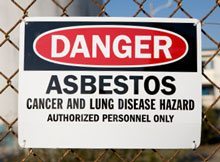
Mesothelioma is a rare cancer that affects the lining of organs such as the chest, lungs, heart, and abdomen. It is primarily caused by exposure to asbestos.

Asbestos is a fibrous mineral that is used in construction and manufacturing industries. Despite being a rare disease, it has been a big public health issue, especially in the United States. Nearly 3,000 individuals are diagnosed each year.

A mesothelioma patient registry would collect important clinical and exposure data. This would help with tracking the disease across the country and developing prevention strategies.

However, no national mesothelioma registry exists in the United States. This makes it difficult to estimate the disease burden and identify the populations at risk.

Balancing Confidentiality

In a study published in the International Journal of Environmental Research and Public Health, researchers testing a method to collect patient information for a mesothelioma registry.

They developed an online form to collect patient information. It includes questions about their diagnosis, any treatments a patient has received, and disease recurrence.

Collecting patient information using on online form is a possible solution to creating a registry, but there are concerns around confidentiality.

In the United States, employers may be held responsible for their employees’ exposure to asbestos. The registry would need to balance the need for accurate exposure data with the concerns of confidentiality and privacy.

The researchers are hopeful that this first test will lead to the development of a national mesothelioma registry. This will help identify high-risk populations, track disease trends, and evaluate prevention and treatment efforts.

Source

Gaitens JM, Culligan M, Friedberg JS, et al. Laying the Foundation for a Mesothelioma Patient Registry: Development of Data Collection Tools. Int J Environ Res Public Health. 2023;20(6):4950. Published 2023 Mar 11. doi:10.3390/ijerph20064950. https://www.ncbi.nlm.nih.gov/pmc/articles/PMC10049120/


Similar Posts

  • |

    Ape Virus Shrinks Mesothelioma Tumors in Lab

    A virus that causes leukemia in gibbon apes may have the power to help fight malignant mesothelioma in people. Gibbon ape leukemia virus (GALV) has been tested for years as a viral vector, a carrier of therapeutic genetic information, in the treatment of various human illnesses, including cancer. A new study in Japan compared GALV with a leukemia virus derived from mice to see which carrier communicated most efficiently with mesothelioma cells. While both types of viruses replicated in most of the mesothelioma cell lines tested, the mouse-derived virus was not effective in a mesothelioma cell line called ACC-MESO-1. In this cell line, only the GALV spread efficiently both in culture and in mice that had been given human mesothelioma…

  • |

    Teacher’s Diagnosis Highlights Mesothelioma Risk in Schools

    A recent mesothelioma diagnosis in the UK once again dramatically highlights the fact that even a small amount of asbestos can be deadly. Sixty-three-year-old school teacher Marion Potts of Brockenhurst died of mesothelioma in a Southampton hospital in June. According to an article in The Mirror, the Coroner recorded a verdict of “death from an industrial disease” after hearing evidence last week that Potts actually saw asbestos dust being released when she pinned work on the classroom walls. Most recently, Potts was head of the English department at Romsey School in Hampshire until her retirement two years ago. Mesothelioma is a growing threat among school teachers, administrators, maintenance workers, and even students in British schools. A government report released last…

  • | |

    Micro-RNAs May Offer New Way to Fight Mesothelioma

    Scientists at one of the world’s top mesothelioma research centers, the Asbestos Diseases Research institute in Sydney, Australia, say that restoring the expression of certain micro RNAs in the cells of mesothelioma patients may offer a new way to fight the disease. A microRNA is a small RNA molecule which is involved in the regulation of gene expression. According to a new report in the Annals of Oncology, the Australian scientists found reduced expression of the micro RNA-15 family (miR-15/16) in the cells of mice with mesothelioma. “When malignant pleural mesothelioma cell lines were compared with the normal mesothelial cell line MeT-5A, the downregulation of miR-15/16 was 2- to 10-fold,” they report. This finding is consistent with previous cancer research…

  • |

    Mesothelioma Claims Another American Actor

    Another American actor has died of malignant mesothelioma. Veteran character actor Ed Lauter, who worked with such prominent names as Clint Eastwood, George C. Scott, Burt Reynolds and Tom Cruise, died this week in Los Angeles. According to the Associated Press, one of Lauter’s most notable roles was that of a prison guard in the 1974 Burt Reynolds film “The Longest Yard”. He also appeared in Alfred Hitchcock’s “The Family Plot”, “Born on the Fourth of July” with Tom Cruise, and most recently played a butler in the 2011 Oscar-winning film “The Artist”. Lauter’s television appearances included “The Office”, “ER”, “Murder She Wrote” and “The Rockford Files”. Although little is being said about the origin of Lauter’s mesothelioma, an aggressive…

  • |

    Mesothelioma Still Carries Heavy Mortality Burden in U.S.

    Asbestos exposure cost Americans more than 427,000 years of potential life in the first decade of the new millennium. That figure comes from a study on mesothelioma and asbestosis – the two most deadly asbestos-related diseases – conducted by the CDC’s National Institute for Occupational Safety and Health (NIOSH). Using National Center for Health Statistics mortality data, NIOSH researchers evaluated premature deaths and “loss of potentially productive years of life” attributable to either asbestosis or mesothelioma between 1999 and 2010. The data included only people 25 years or older with an underlying cause of death listed on their death certificate of either asbestosis or malignant mesothelioma. When the figures were calculated using the normal life expectancy for each asbestosis victim…

  • |

    Last Man Sentenced in Asbestos Dumping Scheme

    The U.S. Justice Department has announced that a New Jersey man will spend 15 months in prison for his part in a scheme to illegally dump thousands of tons of asbestos-contaminated construction debris – putting others at risk for mesothelioma. He was the last person to be sentenced in the conspiracy. Asbestos is the cause of mesothelioma, a difficult to treat and aggressive cancer.  At the height of its popularity from the 1940s to the early 1970s, asbestos was common in building products ranging from floor and ceiling tiles to joint compound, concrete and shingles. It is still present in tens of thousands of older homes and buildings today. In an effort to protect workers and the public from mesothelioma…