| | | | |

Curcumin Supplement Delays Mesothelioma Tumor Growth in Mice
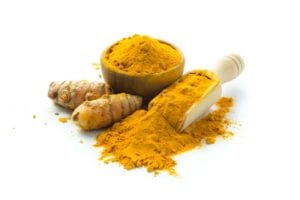
curcumin supplement

Italian researchers say a curcumin supplement containing a compound found in black pepper slowed the growth of mesothelioma tumors in mice.

The commercially available supplement is called Curcumin-C3complex/Bioperine. This is the first time this formulation has been studied for malignant mesothelioma. 

Lab-grown human mesothelioma cells stopped growing when scientists treated them with the curcumin supplement. The treatment did the same in live mice. 

The researchers suggest that the curcumin supplement may work synergistically with standard treatments. 

What is in Curcumin-C3complex/Bioperine?

Curcumin is the most bioactive compound in turmeric. Turmeric is the spice that gives curry its bright yellow color. 

Several scientific studies suggest that curcumin and other curcuminoid compounds in turmeric have powerful health benefits. These compounds are anti-inflammatory and may fight damaging oxidation caused by metabolism.  

The Curcumin-C3complex/Bioperine curcumin supplement is a standardized extract. It contains three different curcuminoids and piperine. Piperine is an alkaloid of black pepper. It improves the bioavailability of the curcumin by up to 2000 percent.

Curcumin Supplement Triggers Apoptosis in the Lab

The goal of the new study was to see if this standardized curcumin supplement could improve mesothelioma treatment. Mesothelioma is a rare but deadly cancer that is usually fatal within a year. Most standard treatments are not very effective by themselves. 

The Italian team put the curcumin supplement on different mesothelioma cell lines in the lab. 

“Curcumin-C3complex/Bioperine…induced growth inhibition in all mesothelioma cell lines analysed,” they write. 

The treatment triggered apoptosis, or programmed cell death in the treated cells. The cells also lost their ability to proliferate and to migrate to other areas. 

Higher doses of the curcumin supplement were more effective than lower doses. The longer mesothelioma cells were exposed to it, the better it worked. 

Lab Mice Respond to Alternative Mesothelioma Treatment

The next step was to try the treatment in live mice. Scientists implanted human mesothelioma tumors in the mice. In the mice that got the curcumin supplement, the tumors grew much more slowly. 

The researchers theorize that the curcumin supplement reduced the tumors’ ability to produce new blood vessels for themselves. It also increased cell death through apoptosis.

Previous studies have suggested that curcumin enhances the effectiveness of cancer drugs. The Italian team says this standardized supplement may do the same thing for mesothelioma patients. 

“Our results suggest that implementation of standard pharmacological therapies with novel compounds may pave the way to develop alternative approaches to mesothelioma,” they write.

Source:

Di Meo, F, et al, “Curcumin C3 complex®/Bioperine® has antineoplastic activity in mesothelioma: an in vitro and in vivo analysis”, August 16, 2019, Journal of Experimental and Clinical Cancer Research, https://jeccr.biomedcentral.com/articles/10.1186/s13046-019-1368-8


Similar Posts

  • |

    Mesothelioma Still Rising Despite Ban in Ireland

    A study in Ireland confirms that it can take many years for a ban on asbestos to have a measurable impact on a country’s rates of malignant mesothelioma. Mesothelioma is the most serious of a list of diseases – including lung cancer, pleural plaques, asbestosis, and others – linked with exposure to asbestos dust. Affecting the linings around the lungs and other organs, mesothelioma is often resistant to most cancer treatments and may be fatal within a year of diagnosis. According to the International Ban Asbestos Secretariat, Ireland is one of 55 countries that have enacted some type of asbestos ban. However, although Ireland banned asbestos in 2000, a new study published in Cancer Epidemiology shows that incidence of the…

  • |

    Website Aims to Protect Homeowners from Mesothelioma

    Australia’s Cancer Council is trying to educate home renovators about their risk for mesothelioma with a new e-learning course. Australia has one of the highest per capita rates of mesothelioma in the world, largely because of several asbestos mining operations that were once located there. Although asbestos has been banned from building products in Australia since 1989, asbestos-linked diseases like mesothelioma, lung cancer, and asbestosis continue to pose a serious health concern. While mesothelioma has traditionally occurred among people exposed to asbestos on the job, Australia is now bracing for another “wave” of mesothelioma victims among homeowners who encounter asbestos while doing their own renovation projects. Cancer Council Australia has launched “kNOw asbestos in your home” in an effort to…

  • |

    Ape Virus Shrinks Mesothelioma Tumors in Lab

    A virus that causes leukemia in gibbon apes may have the power to help fight malignant mesothelioma in people. Gibbon ape leukemia virus (GALV) has been tested for years as a viral vector, a carrier of therapeutic genetic information, in the treatment of various human illnesses, including cancer. A new study in Japan compared GALV with a leukemia virus derived from mice to see which carrier communicated most efficiently with mesothelioma cells. While both types of viruses replicated in most of the mesothelioma cell lines tested, the mouse-derived virus was not effective in a mesothelioma cell line called ACC-MESO-1. In this cell line, only the GALV spread efficiently both in culture and in mice that had been given human mesothelioma…

  • | | |

    Mesothelioma Nurses Ready for New Cases in Australia

    Australia is bracing for an expected new wave of mesothelioma cases in the next decade and the Lung Foundation of Australia is taking action now to get ready. The Foundation has paid for ten nurses from around the country to receive specialized training in helping patients and families cope with mesothelioma. The nurses, who have recently completed the training, are now equipped to lead treatment planning for these complex cancer patients and to help other nurses do the same. Pleural mesothelioma is an aggressive cancer that occurs in the lining around the lungs. It is caused by exposure to asbestos dust, a toxin that was once alarmingly prevalent in Australia where it was mined and heavily used in construction. Because…

  • |

    Chemical in Wine May Improve Mesothelioma Treatment

    There’s new evidence that a compound found in red wine may help improve the effectiveness of chemotherapy treatment for malignant pleural mesothelioma. Last year, a team of Korean researchers released the world’s first study on the mesothelioma-fighting power of resveratrol, a natural phenol derived from the skin of red grapes and found in red wine and grape juice. Now, the same team says resveratrol also appears to enhance the chemosensitivity of malignant mesothelioma cells. Study author Yoon-Jin Lee and colleagues discovered  a synergistic cancer-fighting effect in mesothelioma cells treated with both resveratrol and clofarabine, a prescription drug often used to treat acute lymphoblastic leukemia. Together, resveratrol and clofarabine “induced a strong cytotoxic effect” by influencing levels of the tumor suppressor,…

  • | |

    Spanish Mesothelioma Deaths Likely to Continue for Decades

    New research in Spain suggests that mesothelioma deaths will continue in the country until the “last surviving member” of the group of people exposed to occupational asbestos succumbs to the disease. Like many countries, Spain used asbestos heavily in the first half of the 20th century, especially in construction, where the mineral was prized for its durability, low cost, and resistance to fire and corrosion.  Asbestos was banned in Spain in 2002. Observing that more than 2.5 million metric tons of asbestos were imported into Spain from 1906 to 2002, researchers say deaths from mesothelioma have risen steadily. Between 1976 and 1980, a total of 491 Spanish people died of mesothelioma. By the 5-year period from 2006 to 2010, that…