International Mesothelioma Risk for Workers with Asbestos Exposure

Mesothelioma, A Most Difficult Diagnosis

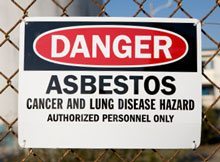
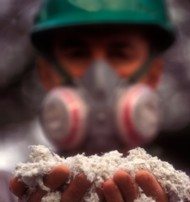
Workers around the world are still at risk for asbestos exposure, finds a study conducted by a team of researchers from Brazil.

This is concerning because asbestos is very toxic to humans. It can cause mesothelioma and other related diseases in people who inhale or ingest the small fibers. Mesothelioma is an aggressive cancer that can take decades to appear after a person is exposed to asbestos.

Asbestos has been used since ancient times. It is fire-proof, nearly impossible to corrode, and can be woven into other materials. In modern times, asbestos is often used in manufacturing and construction.

Because it is so toxic, many countries around the world have banned the use of asbestos. But there are still other countries that allow asbestos to be used in places where it can make people sick.

Jobs and Workers at Risk

The researchers in this study wanted to find out what types of jobs and activities could cause people to get sick with asbestos-related diseases like mesothelioma.

They looked at data from 23 studies from 2015 to 2020. The data came from many countries, including Italy, the United States, South Korea, China, France, Germany, Belgium, Great Britain, Japan, and Spain.

They found that the jobs with the most illness were asbestos workers, miners, and textile workers. Other jobs that could cause sickness included naval, automotive, carpentry, doll-making, construction, and upholstery workers.

Even workers who helped with rescue, recovery, and restoration activities for the World Trade Center after the 9/11 attacks could get sick from asbestos.

The most common sickness from asbestos was malignant mesothelioma. Other asbestos-related diseases were lung cancer and respiratory diseases.

The studies that the researchers looked at stress the importance of telling workers who are exposed to asbestos about how dangerous it can be for their health. Governments and employers can take steps to create safer work conditions and support better health surveillance.

Source

Vicari K, Ribeiro IM, Aguiar BF, Brey C, Boller S, Miranda FMD. Occupational characterization of workers exposed to asbestos: an integrative review. Rev Bras Med Trab. 2023;20(4):650-658. Published 2023 Feb 13. doi:10.47626/1679-4435-2022-733. https://www.ncbi.nlm.nih.gov/pmc/articles/PMC10124803/

 

Similar Posts

  • |

    Mesothelioma Still Rising Despite Ban in Ireland

    A study in Ireland confirms that it can take many years for a ban on asbestos to have a measurable impact on a country’s rates of malignant mesothelioma. Mesothelioma is the most serious of a list of diseases – including lung cancer, pleural plaques, asbestosis, and others – linked with exposure to asbestos dust. Affecting the linings around the lungs and other organs, mesothelioma is often resistant to most cancer treatments and may be fatal within a year of diagnosis. According to the International Ban Asbestos Secretariat, Ireland is one of 55 countries that have enacted some type of asbestos ban. However, although Ireland banned asbestos in 2000, a new study published in Cancer Epidemiology shows that incidence of the…

  • |

    Mesothelioma Victims’ Victory in Pennsylvania

    Workers and their families have won a victory in Pennsylvania after the state Supreme Court ruled that they could sue former employers over late-manifesting industrial diseases like mesothelioma. The decision focused on a provision in Pennsylvania’s Workers’ Compensation Act that says workers cannot sue an employer if their occupational disease occurred more than 300 weeks after their on-the-job exposure. While many occupational injuries and diseases occur within weeks or months of exposure to a toxin, asbestos diseases like mesothelioma are a notable exception. Believed to be caused by chronic irritation from inhaled or ingested asbestos fibers, mesothelioma does not usually begin to cause symptoms until at least a decade after exposure. Expressing the opinion of the majority, Supreme Court Justice…

  • |

    Mesothelioma Still Carries Heavy Mortality Burden in U.S.

    Asbestos exposure cost Americans more than 427,000 years of potential life in the first decade of the new millennium. That figure comes from a study on mesothelioma and asbestosis – the two most deadly asbestos-related diseases – conducted by the CDC’s National Institute for Occupational Safety and Health (NIOSH). Using National Center for Health Statistics mortality data, NIOSH researchers evaluated premature deaths and “loss of potentially productive years of life” attributable to either asbestosis or mesothelioma between 1999 and 2010. The data included only people 25 years or older with an underlying cause of death listed on their death certificate of either asbestosis or malignant mesothelioma. When the figures were calculated using the normal life expectancy for each asbestosis victim…

  • |

    Mesothelioma Case Shows Danger of Accidental Asbestos Exposure

    A mesothelioma case in Birmingham, England is a dramatic illustration of the very real danger of hidden asbestos. The widow of a physician who died of mesothelioma last year at the age of 51 claims her husband was exposed to asbestos just walking to and from his medical classes. Monisha Coelho believes that exposed asbestos insulation in the underground hallways that connect the University of Birmingham to buildings on the Queen Elizabeth Hospital campus triggered Dr. Ian Pardoe’s mesothelioma. In an article in the Birmingham Mail, Coelho explained how her husband decided how and where the deadly exposure had occurred. “Ian thought long and hard about where he might have come into contact with asbestos,” Coelho told the paper. “He…

  • |

    Short-term Asbestos Exposure Triggers Mesothelioma

    The recent death of a British man from mesothelioma is evidence of the destructive power of asbestos – even when exposure is short.  A British newspaper reports that Welwyn resident Roger Beale first began experiencing a classic symptom of mesothelioma, shortness of breath, nearly 4 years ago. Beale first noticed the problem while walking up stairs. After a chest X-ray, Beale’s symptoms were attributed to a chest infection.  But when his symptoms continued to worsen, Beale sought medical care again in January, 2010 and was diagnosed with pleural mesothelioma, an intractable cancer of the lung lining that is almost always caused by exposure to asbestos. By November of 2010, Beale’s shortness of breath had gotten worse, despite regular monitoring and…

  • |

    Mesothelioma: Surveillance May Reveal Unexpected Exposure Risks

    Researchers say continual surveillance for incidents of mesothelioma in the population can turn up some unexpected sources of asbestos exposure, including the home. Asbestos is the primary cause of mesothelioma, a virulent cancer that attacks the linings around organs and can quickly become debilitating. Most mesothelioma patients were first exposed to asbestos on the job, either in construction or in an industrial setting. For decades, asbestos was used in multiple building products and various insulating materials for its strength and heat resistance. But the job site is not the only place where people might encounter asbestos, as Italian researchers found out when they analyzed nationwide mesothelioma data.  Their study, the results of which were recently published in the medical journal Epidemiology and…