| | | | |

PET Beats CT in Study of Mesothelioma Staging Tools
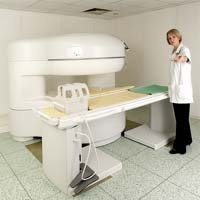
PET ScanWhen it comes to accurately assessing the extent of an individual case of malignant pleural mesothelioma, Positron Emission Tomography (PET) may be more effective than Computed Tomography (CT). A combination of the two is even better.

That conclusion comes from researchers at the University of Toronto who analyzed the cases of more than 100 mesothelioma patients being considered for multimodality therapy at Princess Margaret Cancer Centre in Toronto.

Researchers compared the accuracy of PET and CT separately and together to determine how effective each was at identifying 1) the extent to which mesothelioma had spread to the lymph nodes (N stage) and 2) the number and location of metastatic mesothelioma tumors (M stage).

Both N and M staging are used to help choose candidates for surgery and for multimodality mesothelioma treatment.

PET Versus CT for Mesothelioma Staging

PET is an imaging test that measures the health of tissues and organs by measuring their metabolic rate. It is used in conjunction with a tracer that collects in areas of the body with higher metabolic activity, such as mesothelioma tumors.

CT scans use X-rays to produce a series of cross-sectional images of parts of the body which can be used to generate 3 dimensional models. Often, PET and CT are combined to increased diagnostic accuracy.


Identifying Mesothelioma Spread to the Lymph Nodes

Among the 101 pleural mesothelioma cases analyzed for the new study, the average age of the patients was 66. Most patients were men with epithelioid mesothelioma, which is the most common subtype of the disease.

Sixty percent of patients underwent surgery and most of these patients also had chemotherapy and/or radiation.

In 63 percent of patients, there was concurrence between the N stage as identified by PET and the N stage confirmed during mesothelioma surgery. CT scans got the N stage right in only 45 percent of cases.

For patients with N stage classifications higher than N1 (meaning there were mesothelioma cells in more lymph nodes), accuracy fell to 40 percent on PET scans but it was still better than CT, which correctly identified the higher N stage in only 21 percent of patients.

Staging Metastatic Mesothelioma

The accuracy of PET scanning was even better when it came to identifying distant mesothelioma tumors.

PET accurately found metastases in more than 91 percent of patients. When CT was used to find these distant tumors, it was accurate in only a third of patients. Used in combination, the two were even more effective.

Writing in the British Journal of Radiology, the University of Toronto researchers conclude, “PET identifies significantly more patients with nodal or distant metastatic disease than CT and may contribute to more appropriate selection of patients with malignant pleural mesothelioma for surgery or multimodality therapy.”

The availability of high-end diagnostic imaging equipment such as combination FDG-PET/CT is another reason that mesothelioma patients tend to have better outcomes when they are treated at larger tertiary medical centers.

Source:

Elliott, H St. A, et al, “18F-FDG PET/CT in the management of patients with malignant pleural mesothelioma being considered for multimodality therapy: experience of a tertiary referral center”, March 2018, British Journal of Cancer, Epub ahead of print


Similar Posts

  • | |

    Doctors Describe "Concrete Therapeutic Approach" for Mesothelioma

    A team of medical researchers in Italy have achieved what they are calling “excellent” tumor control and survival results in malignant pleural mesothelioma patients using a combination of surgery, chemotherapy, and radiotherapy. Caused by exposure to asbestos, mesothelioma typically spreads quickly across the lung-encasing membrane called the pleura. There is no known cure but treatments are improving. In the current prospective study, 20 malignant pleural mesothelioma patients underwent radical pleurectomy/decortication followed by high doses of radiation. After surgeons removed as much of the visible mesothelioma tumor and surrounding tissue as possible, patients received 50Gy of radiation to the effected side of their chest, delivered in 25 fractions. Regions of particular concern for mesothelioma regrowth got an extra radiation “boost” to…

  • |

    Mesothelioma Still Rising Despite Ban in Ireland

    A study in Ireland confirms that it can take many years for a ban on asbestos to have a measurable impact on a country’s rates of malignant mesothelioma. Mesothelioma is the most serious of a list of diseases – including lung cancer, pleural plaques, asbestosis, and others – linked with exposure to asbestos dust. Affecting the linings around the lungs and other organs, mesothelioma is often resistant to most cancer treatments and may be fatal within a year of diagnosis. According to the International Ban Asbestos Secretariat, Ireland is one of 55 countries that have enacted some type of asbestos ban. However, although Ireland banned asbestos in 2000, a new study published in Cancer Epidemiology shows that incidence of the…

  • | |

    Does Radiotherapy Reduce Mesothelioma Pain?

    A new study says there is not enough evidence to support the use of radiotherapy for the treatment of pain associated with malignant pleural mesothelioma. Researchers at the University of Edinburgh in Scotland reviewed a range of past studies on mesothelioma pain and radiotherapy by searching databases that date back as far as 1974. To be eligible to be included in their review, the study had to focus on malignant pleural mesothelioma and radiotherapy given “with the intent of improving pain”. The study also had to report doses and fractionation of the radiotherapy and how the pain responded. In all, the researchers found eight studies on mesothelioma pain and radiotherapy that met the criteria. Two of the studies were prospective…

  • |

    Website Aims to Protect Homeowners from Mesothelioma

    Australia’s Cancer Council is trying to educate home renovators about their risk for mesothelioma with a new e-learning course. Australia has one of the highest per capita rates of mesothelioma in the world, largely because of several asbestos mining operations that were once located there. Although asbestos has been banned from building products in Australia since 1989, asbestos-linked diseases like mesothelioma, lung cancer, and asbestosis continue to pose a serious health concern. While mesothelioma has traditionally occurred among people exposed to asbestos on the job, Australia is now bracing for another “wave” of mesothelioma victims among homeowners who encounter asbestos while doing their own renovation projects. Cancer Council Australia has launched “kNOw asbestos in your home” in an effort to…

  • | |

    Radiotherapy for Mesothelioma: Better But Still Limited

    A form of highly-targeted radiation therapy for mesothelioma is better than it used to be, but is still risky. That is the message of a recent article on intensity-modulated radiation therapy (IMRT) in Seminars in Thoracic and Cardiovascular Surgery. Author Kenneth E. Rosenzweig, MD, a Radiation Oncologist with Mount Sinai Hospital in New York, reviewed recent studies on IMRT and mesothelioma. He concludes that, while the “troubling toxicity” associated with IMRT when it was first introduced has not been entirely eliminated, the fact that clinicians now have more experience with it is making a positive difference for mesothelioma patients. Before targeted therapies like IMRT were available, high-dose radiation was not usually a feasible option for mesothelioma since the irregular shape…

  • | | |

    Mesothelioma Nurses Ready for New Cases in Australia

    Australia is bracing for an expected new wave of mesothelioma cases in the next decade and the Lung Foundation of Australia is taking action now to get ready. The Foundation has paid for ten nurses from around the country to receive specialized training in helping patients and families cope with mesothelioma. The nurses, who have recently completed the training, are now equipped to lead treatment planning for these complex cancer patients and to help other nurses do the same. Pleural mesothelioma is an aggressive cancer that occurs in the lining around the lungs. It is caused by exposure to asbestos dust, a toxin that was once alarmingly prevalent in Australia where it was mined and heavily used in construction. Because…