mesothelioma treatments

  • | |

    Surgery is Inappropriate for Some Mesothelioma Patients

    Patients with non-epithelial mesothelioma and lymph node involvement are poor candidates for the extensive surgical procedure known as extrapleural pneumonectomy (EPP), according to a new study. That’s the finding of a new article published in the Annals of Surgical Oncology. Researchers from the Baird Institute for Applied Heart and Lung Surgical Research in Sydney, Australia analyzed the current literature on EPP for malignant pleural mesothelioma. They examined the patient selection process and overall survival of surgical patients in major referral centers where EPP is performed. The most serious of the asbestos cancers, mesothelioma tends to spread quickly and is notoriously resistant to standard treatments. Clinical trials across the globe have confirmed that the best mesothelioma outcomes are seen in patients…


  • | |

    Still No Generic Form of Common Mesothelioma Drug

    It will be at least another five years before a generic version of one of the most popular drugs used to treat mesothelioma becomes available. Eli Lilly owns the patent on the chemical makeup of pemetrexed disodium, known by the brand name Alimta, which was approved by the FDA in 2004 to treat mesothelioma. Lilly’s patent on Alimta was set to expire in March 2011 but was extended to 2016 after the U.S. Patent and Trademark Office decided that it had taken an unusually long time for the FDA to approve it. In spite of the extension, late last year, generic drug company Teva Pharmaceuticals Industries, Ltd. challenged the mesothelioma drug’s patent in an effort to win the rights to…

  • | |

    Longer Mesothelioma Survival Possible with Aggressive Treatment

    A “significant proportion” of patients diagnosed with mesothelioma can expect to live three years or longer with the right treatment protocol. That’s the conclusion of one of the nation’s leading mesothelioma experts. Reporting in the European Journal of Cardiothoracic Surgery, Dr. David Sugarbaker writes that, although many patients diagnosed with mesothelioma are told they have less than a year to live, his latest research confirms that, when properly selected and given aggressive multimodality treatment, it is possible to survive mesothelioma for much longer. Numerous studies have shown that cytoreductive surgery through extrapleural pneumonectomy along with adjuvant chemotherapy and radiation can be effective at battling mesothelioma. However, because the surgery itself is so invasive and carries its own health risks, proper…

  • | |

    Experimental Mesothelioma Drug Enters Phase 2 Trial

    An experimental enzyme-based therapy for malignant mesothelioma has now moved into the second phase of testing in England. The manufacturer of ADI-PEG 20 says the first patient has been enrolled in the Phase 2 clinical trial of the drug under the direction of scientists at the Centre for Experimental Cancer Medicine, Barts Cancer Institute, Queen Mary University of London. The treatment is based on the idea that certain tumor cells are unable to produce a metabolic enzyme that normal cells already have. Cells need the enzyme, called argininosuccinate synthetase, to produce the amino acid arginine, which is necessary for growth and replication. In a previous study, 63 percent of patients with malignant mesothelioma were found to have little or no…

  • | |

    Computer Evaluation May Help Guide Mesothelioma Treatment

    A computer program designed to help doctors analyze tumors in three dimensions could be a valuable tool for guiding treatment of malignant pleural mesothelioma. Malignant pleural mesothelioma is a virulent cancer that attacks the membrane surrounding the lungs.  Because it is highly resistant to conventional treatments, an effective method for evaluating the efficacy of a given treatment is vital.  Diagnostic scans that can measure the volume of the tumor over three dimensions are an improvement over measures that only examine two dimensions. Currently, doctors often use a one- or two-dimensional linear method to examine and measure mesothelioma tumors for treatment response.  But a team from the radiology department at the University of Chicago calls that method “insufficient” for mesothelioma and has…

  • | |

    Study Advises Caution For Mesothelioma Blood Test

    Australian researchers are warning that a blood test used to help diagnose mesothelioma could indicate the presence of another disease instead. Mesothelin is a protein that occurs naturally in cells of the mesothelium, the membrane that surrounds and protects internal organs. The recent finding that blood levels of mesothelin are elevated in mesothelioma patients was a breakthrough for the asbestos-linked cancer that can be difficult to diagnose.  More than half of the mesothelioma patients tested had significantly elevated serum mesothelin at diagnosis, prompting doctors to begin using serum mesothelin as a diagnostic tool. But now a new study suggests that serum mesothelin can also be significantly elevated in people with kidney disease and recommends that doctors take that into consideration when looking…

  • | |

    PET Valuable for Diagnosing and Staging Mesothelioma

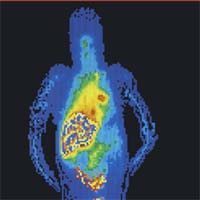
    Positron Emission Tomography (PET) scans are one of the most effective tools for predicting how well a mesothelioma patient will respond to treatment, and for planning that treatment. That’s the conclusion of a team of British researchers who analyzed 15 different studies comparing PET to other types of tools for diagnosing and staging mesothelioma and for predicting survival and mortality. Eleven of the studies evaluated the role of FDG-PET (PET scanning using a fluorodeoxyglucose marker). Several of those studies found that malignant mesothelioma cells absorbed more of the FDG marker than healthy cells, making FDG-PET a good method for determining the extent of the mesothelioma. In these studies, patients whose bodies were seen on FDG-PET scan to absorb the most…

  • |

    Blood Protein Predicts Treatment Response in Mesothelioma

    A blood protein that is overexpressed in mesothelioma tumor cells may be one of the best ways to predict how well a patient will respond to treatment. is a serious malignancy of the mesothelium, or tissue that surrounds and encases the lungs, abdomen or heart.  It is almost always caused by exposure to the mineral asbestos.  A protein called mesothelin, which is present in all mesothelial cells, is produced in greater amounts by cancerous mesothelial cells.  Scientists have long believed that this protein may be an important way to gain information about a patient’s mesothelioma cancer. A study recently published in the journal Clinical Cancer Research appears to confirm that idea.  A group of Australian researchers enrolled 97 mesothelioma patients…

  • | |

    Second-Line Chemotherapy May Benefit Mesothelioma Patients

    Mesothelioma patients whose cancer shows at least a partial response to pemetrexed-based chemotherapy may benefit from the same drug again if their cancer relapses, according to a new study. Caused by exposure to asbestos, mesothelioma is a fast-growing cancer of the mesothelial tissue that encases internal organs. Pemetrexed-based chemotherapy has been shown to be effective for some mesothelioma patients. To date, no drugs have been approved for second-line treatment of mesothelioma, when the diseases continues to progress after first line chemotherapy. Now, a study conducted by a group of Italian researchers and published in the medical journal Lung Cancer tested the effectiveness of pemetrexed-based chemotherapy as a second-line treatment for mesothelioma patients. The researchers observed the responses of 31 patients…

  • | |

    Orphan Drug May Help Shrink Mesothelioma Tumors

    The developers of an FDA-designated ‘orphan drug’ for mesothelioma are recruiting patients for a new Phase II clinical trial on soft tissue sarcomas. The drug, called NGR-hTNF is a vascular targeting agent that appears to be able to seek out tumor cells in the body and disrupt their blood vessel formation. An orphan drug is a medicine that has been developed specifically to treat a rare medical condition, such as mesothelioma or liver cancer. The new clinical trial will test NGR-hTNF’s effectiveness against certain soft tissue sarcomas alone or in combination with the drug doxorubicin. In addition to the newly-announced clinical trial, the drug’s manufacturer, Italy-based MolMed S.p.A, has also been conducting Phase III clinical trials specifically in malignant pleural…