mesothelioma treatments

  • | |

    Mesothelioma Patients May Benefit from Second Line Chemotherapy

    Multiple rounds of chemotherapy, administered several months apart, might do more to help slow the progression of malignant pleural mesothelioma than a single round of chemotherapy, according to a new study. Mesothelioma, also known as ‘asbestos cancer’ attacks the membrane that surrounds the lungs and other organs. Patients with pleural mesothelioma gradually lose breathing capacity as the pleural membrane stiffens and fluid buildup inhibits the ability of the lungs to expand. Most patients diagnosed with the disease will be treated with chemotherapy as part of a multi-modality treatment approach. Cisplatin and pemetrexed (Alimta) are the most commonly used chemo drugs used in the U.S. to treat mesothelioma. But a recent French study suggests that mesothelioma patients may benefit from a…


  • | |

    New Drug Combination May Improve Mesothelioma Treatment

    A mesothelioma drug approved for use in several European countries has received the backing of the international scientific community. The drug called raltitrexed, whose brand name is Tomudex, was the subject of discussion at the 35th annual European Society for Medical Oncology congress in Milan, Italy. When combined with the chemotherapy drug cisplatin, Tomudex appears to increase the survival rates of mesothelioma patients. That conclusion was backed by studies conducted in 2003 and 2005 by the Netherlands Cancer Institute, the European Organization for Research and Treatment of Cancer, the Lung Cancer Group and the National Cancer Institute of Canada. Malignant pleural mesothelioma is the most common form of an aggressive lung cancer caused by exposure to asbestos. It can take…

  • | |

    Mesothelioma Diagnosis Improved With New Biomarkers

    As scientists continue to look for less invasive ways to diagnose the devastating asbestos-linked cancer mesothelioma, three important biomarkers have emerged in recent months. One of the biggest challenges with mesothelioma is obtaining an accurate diagnosis so that appropriate treatments can be started as soon as possible.  Because mesothelioma symptoms tend to be ambiguous and can mimic the symptoms of other diseases, this is rarely simple.  Many mesothelioma patients are not diagnosed until the disease is in its later stages and most patients survive only 6 to 18 months after diagnosis. But a study conducted at Oxford University and published in the American Journal of Respiratory and Critical Care Medicine may help to improve those odds.  The English researchers studied levels…

  • |

    Predicting Mesothelioma Outcomes Based on New Research

    Certain clinical and laboratory results can help doctors predict which patients are likely to do better than others in their battle against malignant pleural mesothelioma.  That’s the conclusion of a group of researches in Turkey who evaluated the medical charts of 363 malignant pleural mesothelioma patients who had been diagnosed over a span of 20 years. Malignant pleural mesothelioma is a rare but aggressive cancer of the lining around the lungs, also called the pleura.  While it is always a serious health challenge, understanding an individual patient’s prognosis can help doctors with treatment and palliative planning – without having to perform invasive procedures. For this latest study, to be published in the peer-reviewed journal Respiration, The Turkish researchers looked at…

  • |

    Peritoneal Mesothelioma Gene Expression May Predict Survival

    Scientists in Baltimore believe they may have found a way to predict – and eventually improve – survival in people with malignant peritoneal mesothelioma (MPM). Peritoneal mesothelioma is a rare cancer of the membranes that line the abdominal cavity.  Like other forms of mesothelioma, it is caused by exposure to fibers of the mineral asbestos.  While it is almost always fatal, people with peritoneal mesothelioma tend to exhibit very different responses to the disease.  Writing in the journal Cancer, the Maryland researchers note, “There is marked variability in its clinical behavior.  Some patients die rapidly, and others survive for many years.” The researchers set out to determine reasons for this variability and believe the answer may lie in signaling pathways that…

  • | |

    New Treatment for Mesothelioma Highlighted at Conference

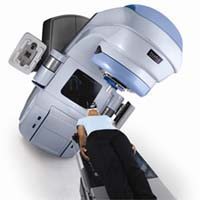
    Experts from around the globe will be meeting in Barcelona, Spain this month to discuss the benefits of a targeted type of radiation therapy that has shown promise in the treatment of malignant mesothelioma. TomoTherapy is the brand name for an Intensity Modulated Radiation Therapy system designed to deliver high doses of radiation directly into tumor cells, while minimizing the damage to surrounding healthy tissues. The developers of the technology will present 82 new studies of its impact on various cancers, including mesothelioma, at the conference sponsored by the European Society for Therapeutic Radiology and Oncology (ESTRO). Mesothelioma, which involves the lining of the lungs and chest wall, is notoriously difficult to treat with radiation therapy because of the size…

  • | |

    For Select Mesothelioma Patients EPP Improves Survival

    A new study has confirmed the value of the surgical approach known as extrapleural pneumonectomy (EPP) for the treatment of malignant pleural mesothelioma in select patients. The pleural membrane separates the lungs from other internal organs. Pleural mesothelioma starts in the pleural tissue where it can cause the membrane to thicken and stiffen, restricting the ability of the lungs to expand. Eventually, the pleural cancer may metastasize into the lungs and other internal membranes. Extrapleural pneumonectomy attempts to prevent the mesothelioma cancer from further spreading to other parts of the body cavity by removing the tissues most likely to be effected. During an extrapleural pneumonectomy, the surgeon removes part of the parietal pleura, or lung lining, as well as part…

  • |

    Mesothelioma Treatment Provides Survival Advantage to Women

    A new study suggests that women have a survival advantage over men when it comes to treatment for the most common type of malignant pleural mesothelioma. Although as many as 90 percent of people who contract the asbestos-linked cancer are men, women who contract the disease in its most common form are more likely to respond well to aggressive treatment.  The study published in the Annals of Thoracic Surgery reviewed 702 cases of malignant pleural mesothelioma.  Of those, 145 were women. The researchers found a definite difference in survival for men and women with one type of mesothelioma but they found no gender difference with the other type. Among the 450 men and women with the most common histological type…

  • | |

    IMRT Multimodality Therapy for Mesothelioma Appears Safe

    Pleural mesothelioma, a malignancy of the lung lining caused by breathing asbestos, is notoriously difficult to treat. While they can improve quality of life, traditional cancer therapies, including chemotherapy, radiation and surgical intervention have not been shown to improve survival rates in most mesothelioma patients beyond a few months. Researchers around the world are experimenting with advanced treatment options that may give mesothelioma patients new hope. A new study on Intensity Modulated Radiation Therapy (IMRT) as part of a multi-modality treatment protocol appears to show improved safety over earlier studies that incorporated the same technology. IMRT is an advanced method of radiotherapy that uses a linear accelerator to deliver precise high doses of radiation directly into a tumor. One of…

  • New Guidelines for Diagnosis and Treatment of Mesothelioma

    Malignant pleural mesothelioma, a virulent form of cancer caused by exposure to asbestos, is difficult to diagnose and to treat. Now, a European medical group is hoping to help oncologists streamline the process with a set of newly released clinical practice guidelines. The guidelines from the European Society for Medical Oncology (ESMO) state that most mesothelioma patients first present with shortness of breath (in the early stages of the disease) or chest pain (at a more advanced stage). While X-ray can detect the tell-tale thickening of the chest wall surrounding the lungs, a test of the built-up lung fluid and an occupational history are also necessary to make a diagnosis. If examination of the lung fluid is not conclusive, the…