| |

Taiwan EPA to Phase Out Asbestos to Reduce Mesothelioma and Other Diseases
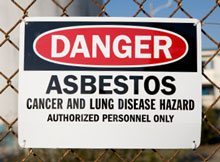
1885229_asbestos-sign

After decades of asbestos related illnesses and tens of thousands of deaths from mesothelioma, an official with Taiwan’s Environmental Protection Agency (EPA) says plans are in the works to ban the substance by the year 2020.

Asbestos was widely used for more than 50 years as an inexpensive and superior insulator and building material additive. It is resistant to heat and flame, resists corrosion, and is made of rock-like fibers that add strength to products like brake pads and concrete. But those same fibers can become deadly when lodged in the lungs. Industrial workers who have inadvertently disturbed and then inhaled the substance have contracted serious illnesses ranging from lung scarring to lung cancer, autoimmune disorders, and malignant mesothelioma.

Although all members of the European Union have already banned chrysotile asbestos (the most common type) because of its association with mesothelioma, asbestosis and other diseases, the U.S. has resisted and companies that manufacture asbestos for industry have fought hard against it. The U.S. EPA did manage to ban the substance in 1989, but the ban was overturned two years later when a company called ‘Corrosion Proof Fittings’ successfully argued that the EPA’s classification of asbestos as hazardous was unfounded. Although the substance was not banned, both the EPA and the Occupational Safety and Health Administration (OSHA) have instituted guidelines for anyone working with or around asbestos.

Now, Taiwan’s EPA’s director of the Department of Environmental Sanitation and Toxic Substance Management, Lin Chien-hui, says the EPA will phase out asbestos in two stages, beginning in 2015. According to Chien-hui, as of July 1, 2015, asbestos will no longer be allowed in sealants and sealing materials. As of July 1, 2020, asbestos will also be banned from construction materials, such as floor and ceiling tiles, wall board, and concrete.

The World Health Organization estimates that one in every three deaths from occupational cancer is caused by asbestos. Asbestos related diseases kill an estimated 10,000 people in the U.S., and more than 107,000 worldwide, every year. In the U.S., 2,000 to 3,000 people are diagnosed with mesothelioma annually. The question must be asked – if Taiwan can ban asbestos, a known human carcinogen, than why can’t the U.S.?

Despite any asbestos ban, the number of mesothelioma cases will continue for years to come due to its long latency period. The time from asbestos exposure to the onset of mesothelioma can be decades. Such a latency period would make it that much more timely to phase in a ban now.

Sources:

Asbestos: elimination of asbestos-related diseases, July 2010. World Health Organization Fact Sheet.
Asbestos Ban and Phase Out, U.S. Environmental Protection Agency. Accessed August 15, 2010.
Mesothelioma-Causing Asbestos May be Banned in the United States. July 27, 2010. Asbestos.com.
Hsien-fong, Lee. “Asbestos to be banned in 10 years”, July 26, 2010. Focus Taiwan News Channel.

Similar Posts

  • | |

    Mesothelioma survivor Paul Kraus, alive and well 19 years after writing “Surviving Mesothelioma and Other Cancers

    Paul Kraus is considered the longest documented mesothelioma survivor in the world. He was diagnosed in 1997 with mesothelioma so widespread that he was given little hope of survival. Not willing to give up, he worked with a team of doctors to create his own tailored treatment protocol. This protocol included dramatic life style change, experimental therapies, dietary changes, mind-body medicine, and other modalities. Paul was fortunate. The protocol he and his doctors created helped him keep the mesothelioma in check. His book “Surviving Mesothelioma and Other Cancers: A Patient’s Guide” details his cancer voyage, the decisions he made, and his philosophies about health and healing. This book is now the best-selling mesothelioma book in the world and has inspired…

  • | |

    Doctors Describe "Concrete Therapeutic Approach" for Mesothelioma

    A team of medical researchers in Italy have achieved what they are calling “excellent” tumor control and survival results in malignant pleural mesothelioma patients using a combination of surgery, chemotherapy, and radiotherapy. Caused by exposure to asbestos, mesothelioma typically spreads quickly across the lung-encasing membrane called the pleura. There is no known cure but treatments are improving. In the current prospective study, 20 malignant pleural mesothelioma patients underwent radical pleurectomy/decortication followed by high doses of radiation. After surgeons removed as much of the visible mesothelioma tumor and surrounding tissue as possible, patients received 50Gy of radiation to the effected side of their chest, delivered in 25 fractions. Regions of particular concern for mesothelioma regrowth got an extra radiation “boost” to…

  • |

    Mesothelioma Still Rising Despite Ban in Ireland

    A study in Ireland confirms that it can take many years for a ban on asbestos to have a measurable impact on a country’s rates of malignant mesothelioma. Mesothelioma is the most serious of a list of diseases – including lung cancer, pleural plaques, asbestosis, and others – linked with exposure to asbestos dust. Affecting the linings around the lungs and other organs, mesothelioma is often resistant to most cancer treatments and may be fatal within a year of diagnosis. According to the International Ban Asbestos Secretariat, Ireland is one of 55 countries that have enacted some type of asbestos ban. However, although Ireland banned asbestos in 2000, a new study published in Cancer Epidemiology shows that incidence of the…

  • | |

    Does Radiotherapy Reduce Mesothelioma Pain?

    A new study says there is not enough evidence to support the use of radiotherapy for the treatment of pain associated with malignant pleural mesothelioma. Researchers at the University of Edinburgh in Scotland reviewed a range of past studies on mesothelioma pain and radiotherapy by searching databases that date back as far as 1974. To be eligible to be included in their review, the study had to focus on malignant pleural mesothelioma and radiotherapy given “with the intent of improving pain”. The study also had to report doses and fractionation of the radiotherapy and how the pain responded. In all, the researchers found eight studies on mesothelioma pain and radiotherapy that met the criteria. Two of the studies were prospective…

  • |

    Website Aims to Protect Homeowners from Mesothelioma

    Australia’s Cancer Council is trying to educate home renovators about their risk for mesothelioma with a new e-learning course. Australia has one of the highest per capita rates of mesothelioma in the world, largely because of several asbestos mining operations that were once located there. Although asbestos has been banned from building products in Australia since 1989, asbestos-linked diseases like mesothelioma, lung cancer, and asbestosis continue to pose a serious health concern. While mesothelioma has traditionally occurred among people exposed to asbestos on the job, Australia is now bracing for another “wave” of mesothelioma victims among homeowners who encounter asbestos while doing their own renovation projects. Cancer Council Australia has launched “kNOw asbestos in your home” in an effort to…

  • |

    Ape Virus Shrinks Mesothelioma Tumors in Lab

    A virus that causes leukemia in gibbon apes may have the power to help fight malignant mesothelioma in people. Gibbon ape leukemia virus (GALV) has been tested for years as a viral vector, a carrier of therapeutic genetic information, in the treatment of various human illnesses, including cancer. A new study in Japan compared GALV with a leukemia virus derived from mice to see which carrier communicated most efficiently with mesothelioma cells. While both types of viruses replicated in most of the mesothelioma cell lines tested, the mouse-derived virus was not effective in a mesothelioma cell line called ACC-MESO-1. In this cell line, only the GALV spread efficiently both in culture and in mice that had been given human mesothelioma…