| |

Outdoor Recreation Could Pose Mesothelioma Risk in California
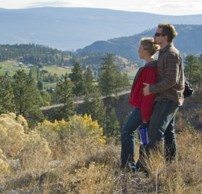
28162831_Hiking

Outdoor enthusiasts are being warned to steer clear of the trails around abandoned gold mines in California’s Sierra Nevada foothills, or risk mesothelioma and other asbestos related diseases.

A study by The Sierra Fund (TSF) says mountain bikers, hikers and horseback riders in these areas could be in danger of serious health hazards including mesothelioma because of high levels of toxic minerals in the soil around the old mines.  The study, called The Gold Country Recreational Trails and Abandoned Mines Assessment, found many of these public lands to be contaminated with lead, arsenic and asbestos.

According to Elizabeth Martin, CEO of The Sierra Fund, “More than 100 years after the end of the Gold Rush era, the environmental, cultural and health impacts of that time have still not been assessed or addressed. Our study documents that these abandoned mines pose a toxic health threat on public lands that are widely used for recreational activities. The time has come for a serious assessment of abandoned mines, and the public needs to be informed about potential exposure to toxic heavy metals and asbestos in areas with abandoned mines.”

To conduct the study, Sierra Fund researchers collected soil samples from areas around Downieville, Nevada City and Foresthill where the recreational trails intersect abandoned mine sites, mine tailings, and waste rock piles.  Toxins were found in several areas at high enough levels to severely impact human health.  At the Foresthill ‘Off Highway Vehicle’ riding area, soil samples showed asbestos in 40 percent of the soil samples and lead levels nearly 18 times higher than state and federal safe levels.

Asbestos is a naturally-occurring component of the serpentine rock found throughout California. Used for years in industrial applications, in its dust form it has been shown to cause lung cancer, mesothelioma, asbestosis and a host of other health problems. Although industrial workers now follow strict safety precautions when working around asbestos, casual recreation enthusiasts may be unaware of the danger.  Because off-road vehicles, bikes and hiking boots can stir up dust, The Sierra Fund warns that asbestos can be freely inhaled by people hoping to enjoy the ‘fresh air’.  The greater and more frequent the exposure, the greater the statistical likelihood of one day being diagnosed with mesothelioma or another asbestos related disease.

The Sierra Fund announced the results of the study on the steps of the California state capitol building in Sacramento.  The group says additional assessment of California’s many outdoor recreational areas is ‘urgently needed’. A spokesman for the Central California division of the Bureau of Land Management says the mining areas would be nearly impossible to clean up because there are so many of them and because the minerals are so abundant in the soil. The Sierra Fund is pushing for warning signs and, in some cases, restricted public access.

Sources:

“TSF study reveals potential for health exposure while recreating on Sierra Nevada public lands”, June 22, 2010. The Sierra Fund website. Accessed July 21, 2010.
Zito, Kelly. “Several Sierra trails are toxic, group says”, June 23, 2010.  The San Francisco Chronicle.

Similar Posts

  • | |

    Mesothelioma survivor Paul Kraus, alive and well 19 years after writing “Surviving Mesothelioma and Other Cancers

    Paul Kraus is considered the longest documented mesothelioma survivor in the world. He was diagnosed in 1997 with mesothelioma so widespread that he was given little hope of survival. Not willing to give up, he worked with a team of doctors to create his own tailored treatment protocol. This protocol included dramatic life style change, experimental therapies, dietary changes, mind-body medicine, and other modalities. Paul was fortunate. The protocol he and his doctors created helped him keep the mesothelioma in check. His book “Surviving Mesothelioma and Other Cancers: A Patient’s Guide” details his cancer voyage, the decisions he made, and his philosophies about health and healing. This book is now the best-selling mesothelioma book in the world and has inspired…

  • | |

    Doctors Describe "Concrete Therapeutic Approach" for Mesothelioma

    A team of medical researchers in Italy have achieved what they are calling “excellent” tumor control and survival results in malignant pleural mesothelioma patients using a combination of surgery, chemotherapy, and radiotherapy. Caused by exposure to asbestos, mesothelioma typically spreads quickly across the lung-encasing membrane called the pleura. There is no known cure but treatments are improving. In the current prospective study, 20 malignant pleural mesothelioma patients underwent radical pleurectomy/decortication followed by high doses of radiation. After surgeons removed as much of the visible mesothelioma tumor and surrounding tissue as possible, patients received 50Gy of radiation to the effected side of their chest, delivered in 25 fractions. Regions of particular concern for mesothelioma regrowth got an extra radiation “boost” to…

  • |

    Mesothelioma Still Rising Despite Ban in Ireland

    A study in Ireland confirms that it can take many years for a ban on asbestos to have a measurable impact on a country’s rates of malignant mesothelioma. Mesothelioma is the most serious of a list of diseases – including lung cancer, pleural plaques, asbestosis, and others – linked with exposure to asbestos dust. Affecting the linings around the lungs and other organs, mesothelioma is often resistant to most cancer treatments and may be fatal within a year of diagnosis. According to the International Ban Asbestos Secretariat, Ireland is one of 55 countries that have enacted some type of asbestos ban. However, although Ireland banned asbestos in 2000, a new study published in Cancer Epidemiology shows that incidence of the…

  • | |

    Does Radiotherapy Reduce Mesothelioma Pain?

    A new study says there is not enough evidence to support the use of radiotherapy for the treatment of pain associated with malignant pleural mesothelioma. Researchers at the University of Edinburgh in Scotland reviewed a range of past studies on mesothelioma pain and radiotherapy by searching databases that date back as far as 1974. To be eligible to be included in their review, the study had to focus on malignant pleural mesothelioma and radiotherapy given “with the intent of improving pain”. The study also had to report doses and fractionation of the radiotherapy and how the pain responded. In all, the researchers found eight studies on mesothelioma pain and radiotherapy that met the criteria. Two of the studies were prospective…

  • |

    Website Aims to Protect Homeowners from Mesothelioma

    Australia’s Cancer Council is trying to educate home renovators about their risk for mesothelioma with a new e-learning course. Australia has one of the highest per capita rates of mesothelioma in the world, largely because of several asbestos mining operations that were once located there. Although asbestos has been banned from building products in Australia since 1989, asbestos-linked diseases like mesothelioma, lung cancer, and asbestosis continue to pose a serious health concern. While mesothelioma has traditionally occurred among people exposed to asbestos on the job, Australia is now bracing for another “wave” of mesothelioma victims among homeowners who encounter asbestos while doing their own renovation projects. Cancer Council Australia has launched “kNOw asbestos in your home” in an effort to…

  • |

    Ape Virus Shrinks Mesothelioma Tumors in Lab

    A virus that causes leukemia in gibbon apes may have the power to help fight malignant mesothelioma in people. Gibbon ape leukemia virus (GALV) has been tested for years as a viral vector, a carrier of therapeutic genetic information, in the treatment of various human illnesses, including cancer. A new study in Japan compared GALV with a leukemia virus derived from mice to see which carrier communicated most efficiently with mesothelioma cells. While both types of viruses replicated in most of the mesothelioma cell lines tested, the mouse-derived virus was not effective in a mesothelioma cell line called ACC-MESO-1. In this cell line, only the GALV spread efficiently both in culture and in mice that had been given human mesothelioma…