Author: Alex Strauss

  • | |

    Mesothelioma Study Cites Risks & Benefits of Second Surgery

    Peritoneal mesothelioma patients who have cytoreductive surgery (CRS) and heated chemotherapy can sometimes benefit from a second surgery, but it may be harder the second time around. Researchers in France have recently published their findings in a study of patients with mesothelioma and other peritoneal cancers who experienced recurrence after  cytoreductive surgery (CRS) and hyperthermic intraperitoneal chemotherapy (HIPEC). Peritoneal mesothelioma is an asbestos-related malignancy that spreads across the peritoneum, the membrane that lines the abdomen. For patients who are healthy enough to undergo it, cytoreductive surgery to remove as much of the cancer as possible, followed by a solution of heated chemotherapy drugs, has been shown to improve survival. But the French team wanted to examine the possible options for people…


  • | |

    Mesothelioma Report Suggests Clinical Trials Better Than Surgery

    Doctors in the Department of Respiratory medicine at York Teaching Hospital in the UK are taking a hard stance against the surgical treatment of malignant pleural mesothelioma. In a recent article in the journal Thorax, the group contends that the research surrounding mesothelioma surgery is largely flawed and that the majority of mesothelioma patients would be better served if their doctors suggested alternatives. “Belief that the modest survival times reported after radical surgery, whether alone or as part of multimodal therapy, are longer than they would have been without surgery relies on data from highly selected, uncontrolled, retrospectively analyzed case series,” they write. They point out that the only randomized study, the Mesothelioma and Radical Surgery (MARS) trial showed no measurable…

  • | |

    FDG PET-CT Results Could Lead to Improved Mesothelioma Treatment

    In a recent study, researchers say a better understanding of certain diagnostic criteria could result in more targeted treatments for malignant mesothelioma. In a recent published report, doctors from the medical school at Dicle University in Diyarbakir, Turkey measured the relationship between PET-CT scan results and survival in 177 patients with malignant pleural mesothelioma. The patients were diagnosed between April 2007 and April 2011. They had a mean age of 55.4 and most (56%) were male. Patients in the study all had FDG PET-CT scans before beginning their mesothelioma treatment. FDG PET-CT scanning is a powerful imaging tool for mesothelioma and other cancers that combines a radioactive tracer with a combination of positron emission tomography and computed tomography scanning.  Because…

  • | |

    New Mesothelioma Drug Tests to Begin Soon

    A spokesman for the makers of a promising new mesothelioma drug says the company plans to begin enrolling its first clinical trial participants this summer. Dr. Joanna Horobin is Chief Medical Officer for Verastem, Inc.,  the developer of a drug that aims to treat malignant mesothelioma by targeting the stem cells that give rise to it. The company’s lead compound, an oral drug called VS-6063, inhibits a crucial signaling pathway inside stem cells called the Focal Adhesion Kinase (FAK) pathway. VS-6063 was approved by the FDA earlier this year as a ‘orphan drug’, a designation given to drugs designed to treat rare illnesses like mesothelioma. “We are moving quickly to bring new treatment options to patients with mesothelioma,” Dr. Horobin said…

  • | |

    Mesothelioma Lung-Sparing Proponents Increase

    A distinguished group of experts in lung-sparing mesothelioma treatment techniques say there is more reason than ever for patients with this deadly cancer to be hopeful. Robert Cameron, MD, Director of the UCLA Mesothelioma Comprehensive Research Program and Chief of Thoracic Surgery at West Los Angeles VA Medical Center recently led the 3rd annual International Symposium on Lung-Sparing Therapies for Malignant Pleural Mesothelioma in Santa Monica. Hosted by UCLA and the Pacific Heart, Lung and Blood Institute, the symposium made international news two years ago when its participants declared there was “no place” for extrapleural pneumonectomy (EPP – a lung-removing surgery) in the treatment of mesothelioma. Despite its high mortality rate, EPP is still supported by some mesothelioma experts for its…

  • |

    Mesothelioma: Surveillance May Reveal Unexpected Exposure Risks

    Researchers say continual surveillance for incidents of mesothelioma in the population can turn up some unexpected sources of asbestos exposure, including the home. Asbestos is the primary cause of mesothelioma, a virulent cancer that attacks the linings around organs and can quickly become debilitating. Most mesothelioma patients were first exposed to asbestos on the job, either in construction or in an industrial setting. For decades, asbestos was used in multiple building products and various insulating materials for its strength and heat resistance. But the job site is not the only place where people might encounter asbestos, as Italian researchers found out when they analyzed nationwide mesothelioma data.  Their study, the results of which were recently published in the medical journal Epidemiology and…

  • |

    States Wrestle with Mesothelioma Laws & Violations

    The city of Paterson, New Jersey is facing hundreds of thousands of dollars in fines for putting city workers at risk for deadly mesothelioma and other asbestos related diseases. A state labor department inspection determined that Paterson had committed 43 OSHA safety violations, including 13 “serious” violations related to asbestos removal. The labor department says the city failed to properly supervise, train or monitor employees charged with removing asbestos ceiling tiles from a city building. They’re also charged with failing to provide the workers with the proper safety equipment. Asbestos is the primary cause of malignant mesothelioma, an aggressive cancer. Workers exposed to the asbestos now face an increased lifetime risk of developing mesothelioma. Paterson could face fines of $4,500 per day…

  • |

    Volunteers Warned Against Mesothelioma Risk in OK

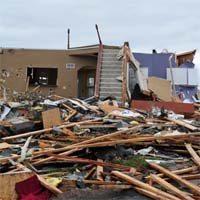
    As volunteers from across the country continue to head to tornado-ravaged Oklahoma for the cleanup effort, they are being warned about a potentially serious threat to their own health. The Environmental Protection Agency (EPA) says damage to homes and buildings in Moore, Oklahoma has exposed a host of toxins including asbestos, the primary cause of malignant mesothelioma. Although asbestos has been phased out of most new construction materials, it can still be found in the insulation, caulk and joint compound, floor and ceiling tiles, and shingles of many older homes and buildings. According to the Huffington Post, many of the houses destroyed in Moore had been built in the 1960s and 1970s when asbestos use in construction was at its peak….

  • | |

    Macrophages May Hold Key to Fighting Mesothelioma

    Researchers in Western Australia are investigating new ways of bolstering the immune system in an effort to fight cancers like mesothelioma. Like most types of cancer, malignant mesothelioma occurs primarily in people over 65. That is also the time in life when the immune system typically weakens. Researchers from Curtin University and the University of Western Australia say it is no coincidence that people become more susceptible to mesothelioma as their immunity wanes. In addition to age-related immune dysfunction, mesothelioma patients experience a further decline in immunity caused by the growing tumor itself. To better understand the connection between declining immunity and the onset of mesothelioma, the researchers are focusing on a particular type of immune system cell called a macrophage….

  • |

    Wind and Weather Impacts Mesothelioma Rate

    People who live downwind from an industrial asbestos source are at much higher risk of developing pleural mesothelioma, according to a new study. Researchers in Barcelona, Spain analyzed 24 cases of pleural mesothelioma diagnosed between 2000 and 2009 near the town of Catalonia. For 90 years, this area of Barcelona was home to a fibrous cement factory where asbestos was used. Because asbestos dust is very light, it does not dissipate in the air quickly. When a person inadvertently inhales or ingests it, the tiny fibers lodge in the tissues and can cause health problems such as mesothelioma even decades later. Although the plant closed in 1997, the rate of mesothelioma in the region continues to be high. To test whether…