| | | |

Cancer Biomarker Test Could Detect Mesothelioma Earlier
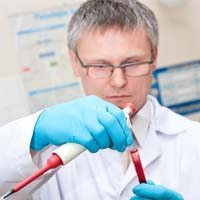
cancer biomarker testA new cancer biomarker test that promises to identify cancer in patients with “non-specific symptoms” could be the key to detecting mesothelioma earlier. 

Malignant mesothelioma is a deadly cancer caused by asbestos. The early symptoms of mesothelioma are usually vague and similar to other conditions. As a result, mesothelioma is frequently diagnosed in a late stage.

But a cancer biomarker test developed in the UK could change that. The test looks for small molecules called metabolites in the blood. Its developers say it has the potential to find cancer earlier than other blood-based cancer tests. 

Non-Specific Symptoms Make Mesothelioma a Diagnostic Challenge

Mesothelioma is a rare cancer. It is most common in people who worked or lived around asbestos in the past. Mesothelioma can take decades to develop. By the time people start experiencing symptoms, they may not make the connection with asbestos. 

Early symptoms of pleural mesothelioma include coughing, fatigue, and shortness of breath. People with peritoneal mesothelioma may experience stomach pain, bloating, and fatigue.  

Mesothelioma is so rare that many doctors have never even seen a case. Without a cancer biomarker test, the doctor may assume the patient has a chest cold or digestive problem. This leads to a “wait and see” approach that may waste valuable treatment time. 

How a Cancer Biomarker Test Could Change Things

The new test uses magnetic resonance spectroscopy to find metabolites in the blood. Metabolites are substances formed through metabolism. People with mesothelioma or another type of cancer have a different metabolic profile from healthy people. 

Dr. James Larkin, a medical oncologist at Oxford University, helped conduct a study of the new cancer biomarker test. The study included 300 patients with symptoms similar to people with early mesothelioma. Patients complained of non-specific problems such as weight loss and fatigue.

The researchers found that the test correctly detected cancer in 19 out of every 20 people with cancer. It was also 94 percent accurate at distinguishing between people with localized or metastatic (spread from another area) cancer. 

Next Steps Toward Earlier Mesothelioma Detection

The new test is not able to identify a specific cancer such as mesothelioma. But, in an interview with The Guardian newspaper, Dr. Larkin said the test will help doctors know which patients should be referred for further testing. 

“The moment you can say ‘you have a cancer’, it provides a strong incentive to send that patient for an imaging investigation to see if you can find that cancer,” Larkin said. 

Another diagnostic test still in development looks for bits of cancer DNA in the blood. But the new cancer biomarker test could potentially find mesothelioma even earlier. Metabolic changes are some of the earliest changes to happen in patients with mesothelioma. 

Dr. Larkin hopes to confirm the efficacy of the new test in a larger group of 2,000 to 3,000 patients within the next two years. 

Source:

Larkin, et al, “Blood test could help detect cancer in people with nonspecific symptoms”, January 4, 2022, Clinical Cancer Research, Online ahead of print, https://clincancerres.aacrjournals.org/content/early/2021/12/16/1078-0432.CCR-21-2855


 

Similar Posts

  • |

    Mesothelioma Still Rising Despite Ban in Ireland

    A study in Ireland confirms that it can take many years for a ban on asbestos to have a measurable impact on a country’s rates of malignant mesothelioma. Mesothelioma is the most serious of a list of diseases – including lung cancer, pleural plaques, asbestosis, and others – linked with exposure to asbestos dust. Affecting the linings around the lungs and other organs, mesothelioma is often resistant to most cancer treatments and may be fatal within a year of diagnosis. According to the International Ban Asbestos Secretariat, Ireland is one of 55 countries that have enacted some type of asbestos ban. However, although Ireland banned asbestos in 2000, a new study published in Cancer Epidemiology shows that incidence of the…

  • |

    Website Aims to Protect Homeowners from Mesothelioma

    Australia’s Cancer Council is trying to educate home renovators about their risk for mesothelioma with a new e-learning course. Australia has one of the highest per capita rates of mesothelioma in the world, largely because of several asbestos mining operations that were once located there. Although asbestos has been banned from building products in Australia since 1989, asbestos-linked diseases like mesothelioma, lung cancer, and asbestosis continue to pose a serious health concern. While mesothelioma has traditionally occurred among people exposed to asbestos on the job, Australia is now bracing for another “wave” of mesothelioma victims among homeowners who encounter asbestos while doing their own renovation projects. Cancer Council Australia has launched “kNOw asbestos in your home” in an effort to…

  • |

    Teacher’s Diagnosis Highlights Mesothelioma Risk in Schools

    A recent mesothelioma diagnosis in the UK once again dramatically highlights the fact that even a small amount of asbestos can be deadly. Sixty-three-year-old school teacher Marion Potts of Brockenhurst died of mesothelioma in a Southampton hospital in June. According to an article in The Mirror, the Coroner recorded a verdict of “death from an industrial disease” after hearing evidence last week that Potts actually saw asbestos dust being released when she pinned work on the classroom walls. Most recently, Potts was head of the English department at Romsey School in Hampshire until her retirement two years ago. Mesothelioma is a growing threat among school teachers, administrators, maintenance workers, and even students in British schools. A government report released last…

  • | | |

    Mesothelioma Nurses Ready for New Cases in Australia

    Australia is bracing for an expected new wave of mesothelioma cases in the next decade and the Lung Foundation of Australia is taking action now to get ready. The Foundation has paid for ten nurses from around the country to receive specialized training in helping patients and families cope with mesothelioma. The nurses, who have recently completed the training, are now equipped to lead treatment planning for these complex cancer patients and to help other nurses do the same. Pleural mesothelioma is an aggressive cancer that occurs in the lining around the lungs. It is caused by exposure to asbestos dust, a toxin that was once alarmingly prevalent in Australia where it was mined and heavily used in construction. Because…

  • |

    Mesothelioma Blood Test May Be Possible

    An international team of researchers is studying the proteins found on the surface of cancer cells in an effort to improve mesothelioma diagnosis. The team, made up of scientists from the US, Switzerland, Italy and Chile, has just published their findings on a new kind of test to identify protein-derived mesothelioma biomarkers in blood serum. Mesothelioma is an aggressive cancer of the membranes around organs. Because the most common mesothelioma biomarker, mesothelin, is also overproduced by other kinds of cancer cells, it has only limited diagnostic value. A test to identify a set of proteins produced specifically by mesothelioma cells could greatly improve diagnostic accuracy. Led by Ferdinando Cerciello and Bernd Wollscheid of the Institute of Molecular Systems Biology in…

  • | |

    Spanish Mesothelioma Deaths Likely to Continue for Decades

    New research in Spain suggests that mesothelioma deaths will continue in the country until the “last surviving member” of the group of people exposed to occupational asbestos succumbs to the disease. Like many countries, Spain used asbestos heavily in the first half of the 20th century, especially in construction, where the mineral was prized for its durability, low cost, and resistance to fire and corrosion.  Asbestos was banned in Spain in 2002. Observing that more than 2.5 million metric tons of asbestos were imported into Spain from 1906 to 2002, researchers say deaths from mesothelioma have risen steadily. Between 1976 and 1980, a total of 491 Spanish people died of mesothelioma. By the 5-year period from 2006 to 2010, that…