| | |

The Ongoing Effort to Downplay the Dangers of Asbestos
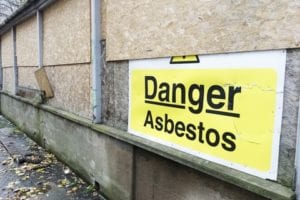
dangers of asbestosA pair of occupational medicine experts say the dangers of asbestos – particularly its ability to cause cancers like malignant mesothelioma – are still being downplayed by those who mine and sell it. 

The report appears in a recent issue of the Journal of Occupational Medicine and Toxicology. The authors are experts in the field from Hamburg University in Germany and Drexel University School of Public Health in Philadelphia.

Scientists around the world have warned about the dangers of asbestos for decades. Asbestos is responsible for tens of thousands of mesothelioma deaths every year. In the US, about 2,500 people die of mesothelioma annually because of asbestos exposure.

Early Recognition of the Dangers of Asbestos

Asbestos is a fibrous mineral found in the ground. It has many properties that made it ideal for industry. Asbestos fibers are strong, lightweight, resistant to corrosion, and fireproof. It can even be made into fabric. 

Companies did not always know about the dangers of asbestos. For decades, they used it in a variety of building products, vehicle parts, cement, insulation, and fire-proofing materials.

But asbestos workers started getting sick with malignant mesothelioma in the 1940s and 1950s. This disease was virtually unheard of before then. Doctors found out that asbestos fibers stay in the body if a person breathes them in. Over time, they make people sick.

Even after the dangers of asbestos became clear, many companies still used it. Some tried to hide the risks from workers. Many of those workers contracted pleural mesothelioma decades later. Some negligent companies have had to compensate sick workers.

Today, the EPA and OSHA have rules aimed at protecting people from the dangers of asbestos. Fifty-five countries have banned asbestos. But it is still legal in the US.

Some Industries Still Denying the Risks

The World Health Organization says almost all mesothelioma cases are preventable. They are trying to get all countries to ban asbestos. 

But the authors of the new report say big asbestos producers try to stop them. The largest asbestos producers are in Russia, Kazakhstan and China. Along with the International Chrysotile Association (ICA), they downplay the dangers of asbestos. They use false information and pseudo-science to confuse people. 

“They systematically use inappropriate science produced by their own and/or by industry-affiliated researchers,” write the authors. Some of the same shady researchers also defend the tobacco industry.

Meanwhile, malignant mesothelioma is still one of the biggest dangers of asbestos. There is no cure for this aggressive cancer. It is almost 100 percent fatal. 

The new report urges scientists and the media to help counter false information about asbestos with reliable data. 

“The persisting strong influence of vested asbestos-related interests in workers and public health issues including regulations and compensation necessitate ongoing alertness, corrections and appropriate reactions in scientific as well as public media and policy advisory bodies,” they write.

Source:

Baur, X and Frank, AL, “Ongoing downplaying of the carcinogenicity of chrysotile asbestos by vested interests”, February 23, 2021, Journal of Occupational medicine and Toxicology, https://occup-med.biomedcentral.com/articles/10.1186/s12995-021-00295-2


Similar Posts

  • |

    Mesothelioma Still Rising Despite Ban in Ireland

    A study in Ireland confirms that it can take many years for a ban on asbestos to have a measurable impact on a country’s rates of malignant mesothelioma. Mesothelioma is the most serious of a list of diseases – including lung cancer, pleural plaques, asbestosis, and others – linked with exposure to asbestos dust. Affecting the linings around the lungs and other organs, mesothelioma is often resistant to most cancer treatments and may be fatal within a year of diagnosis. According to the International Ban Asbestos Secretariat, Ireland is one of 55 countries that have enacted some type of asbestos ban. However, although Ireland banned asbestos in 2000, a new study published in Cancer Epidemiology shows that incidence of the…

  • |

    Website Aims to Protect Homeowners from Mesothelioma

    Australia’s Cancer Council is trying to educate home renovators about their risk for mesothelioma with a new e-learning course. Australia has one of the highest per capita rates of mesothelioma in the world, largely because of several asbestos mining operations that were once located there. Although asbestos has been banned from building products in Australia since 1989, asbestos-linked diseases like mesothelioma, lung cancer, and asbestosis continue to pose a serious health concern. While mesothelioma has traditionally occurred among people exposed to asbestos on the job, Australia is now bracing for another “wave” of mesothelioma victims among homeowners who encounter asbestos while doing their own renovation projects. Cancer Council Australia has launched “kNOw asbestos in your home” in an effort to…

  • |

    Teacher’s Diagnosis Highlights Mesothelioma Risk in Schools

    A recent mesothelioma diagnosis in the UK once again dramatically highlights the fact that even a small amount of asbestos can be deadly. Sixty-three-year-old school teacher Marion Potts of Brockenhurst died of mesothelioma in a Southampton hospital in June. According to an article in The Mirror, the Coroner recorded a verdict of “death from an industrial disease” after hearing evidence last week that Potts actually saw asbestos dust being released when she pinned work on the classroom walls. Most recently, Potts was head of the English department at Romsey School in Hampshire until her retirement two years ago. Mesothelioma is a growing threat among school teachers, administrators, maintenance workers, and even students in British schools. A government report released last…

  • | | |

    Mesothelioma Nurses Ready for New Cases in Australia

    Australia is bracing for an expected new wave of mesothelioma cases in the next decade and the Lung Foundation of Australia is taking action now to get ready. The Foundation has paid for ten nurses from around the country to receive specialized training in helping patients and families cope with mesothelioma. The nurses, who have recently completed the training, are now equipped to lead treatment planning for these complex cancer patients and to help other nurses do the same. Pleural mesothelioma is an aggressive cancer that occurs in the lining around the lungs. It is caused by exposure to asbestos dust, a toxin that was once alarmingly prevalent in Australia where it was mined and heavily used in construction. Because…

  • | |

    Spanish Mesothelioma Deaths Likely to Continue for Decades

    New research in Spain suggests that mesothelioma deaths will continue in the country until the “last surviving member” of the group of people exposed to occupational asbestos succumbs to the disease. Like many countries, Spain used asbestos heavily in the first half of the 20th century, especially in construction, where the mineral was prized for its durability, low cost, and resistance to fire and corrosion.  Asbestos was banned in Spain in 2002. Observing that more than 2.5 million metric tons of asbestos were imported into Spain from 1906 to 2002, researchers say deaths from mesothelioma have risen steadily. Between 1976 and 1980, a total of 491 Spanish people died of mesothelioma. By the 5-year period from 2006 to 2010, that…

  • | |

    Micro-RNAs May Offer New Way to Fight Mesothelioma

    Scientists at one of the world’s top mesothelioma research centers, the Asbestos Diseases Research institute in Sydney, Australia, say that restoring the expression of certain micro RNAs in the cells of mesothelioma patients may offer a new way to fight the disease. A microRNA is a small RNA molecule which is involved in the regulation of gene expression. According to a new report in the Annals of Oncology, the Australian scientists found reduced expression of the micro RNA-15 family (miR-15/16) in the cells of mice with mesothelioma. “When malignant pleural mesothelioma cell lines were compared with the normal mesothelial cell line MeT-5A, the downregulation of miR-15/16 was 2- to 10-fold,” they report. This finding is consistent with previous cancer research…