| |

New Treatment for Mesothelioma Highlighted at Conference
10191911_lungs small

Experts from around the globe will be meeting in Barcelona, Spain this month to discuss the benefits of a targeted type of radiation therapy that has shown promise in the treatment of malignant mesothelioma.

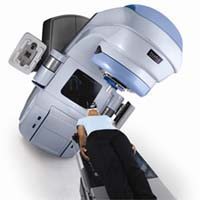
TomoTherapy is the brand name for an Intensity Modulated Radiation Therapy system designed to deliver high doses of radiation directly into tumor cells, while minimizing the damage to surrounding healthy tissues. The developers of the technology will present 82 new studies of its impact on various cancers, including mesothelioma, at the conference sponsored by the European Society for Therapeutic Radiology and Oncology (ESTRO).

Mesothelioma, which involves the lining of the lungs and chest wall, is notoriously difficult to treat with radiation therapy because of the size and irregular shape of the tumor. The cancer’s proximity to healthy tissues, including a potentially healthy second lung, also makes radiation therapy for mesothelioma complex and risky. But a number of mesothelioma studies have also pointed to the value of incorporating radiation therapy into a multi-modality treatment plan that typically also includes surgery and chemotherapy.

The mesothelioma study being highlighted at the ESTRO conference was performed by a group of researchers at the San Raffaele Scientific Institute in Milan. In the study, researchers compared the treatment response of two sets of patients, both of which had been treated with the TomoTherapy platform. One set of mesothelioma patients also received a ‘Simultaneous Integrated Boost’ or SIB during their radiation treatment. SIB allows physicians to administer an extra ‘boost’ of radiation directly into the regions that were shown on PET scans to have the highest concentration of tumor cells.

The results were promising for mesothelioma patients and their physicians. According to the research, TomoTherapy utilizing the SIB technique appears to offer some significant survival benefits. Patients who received the SIB during therapy saw their one-year survival rate increase to 72 percent, compared to 43 percent for the non-SIB group. Researchers also found that the patients who had received the SIB dose did not have a relapse of their cancer for an average of 16 months, versus just six months for the non-SIB group.

The research was published in the International Journal of Radiation Oncology, Biology, and Physics.

Sources:

“Benefits of TomoTherapy® Radiation Therapy Highlighted in 82 Studies to be Presented at ESTRO 29”, September 8, 2010. TomoTherapy Inc. Press Release, Fodor, A. “Hemithoracic Helical TomoTherapy (HT) for Malignant Pleural Mesothelioma (MPM): Early Results of a Dose Escalation Experience”, Nov. 1, 2009, International Journal of Radiation Oncology Biology Physics. Volume 75, Issue 3, Supplement, Pg. S475.


Similar Posts

  • | |

    Mesothelioma survivor Paul Kraus, alive and well 19 years after writing “Surviving Mesothelioma and Other Cancers

    Paul Kraus is considered the longest documented mesothelioma survivor in the world. He was diagnosed in 1997 with mesothelioma so widespread that he was given little hope of survival. Not willing to give up, he worked with a team of doctors to create his own tailored treatment protocol. This protocol included dramatic life style change, experimental therapies, dietary changes, mind-body medicine, and other modalities. Paul was fortunate. The protocol he and his doctors created helped him keep the mesothelioma in check. His book “Surviving Mesothelioma and Other Cancers: A Patient’s Guide” details his cancer voyage, the decisions he made, and his philosophies about health and healing. This book is now the best-selling mesothelioma book in the world and has inspired…

  • | |

    Doctors Describe "Concrete Therapeutic Approach" for Mesothelioma

    A team of medical researchers in Italy have achieved what they are calling “excellent” tumor control and survival results in malignant pleural mesothelioma patients using a combination of surgery, chemotherapy, and radiotherapy. Caused by exposure to asbestos, mesothelioma typically spreads quickly across the lung-encasing membrane called the pleura. There is no known cure but treatments are improving. In the current prospective study, 20 malignant pleural mesothelioma patients underwent radical pleurectomy/decortication followed by high doses of radiation. After surgeons removed as much of the visible mesothelioma tumor and surrounding tissue as possible, patients received 50Gy of radiation to the effected side of their chest, delivered in 25 fractions. Regions of particular concern for mesothelioma regrowth got an extra radiation “boost” to…

  • |

    Mesothelioma Still Rising Despite Ban in Ireland

    A study in Ireland confirms that it can take many years for a ban on asbestos to have a measurable impact on a country’s rates of malignant mesothelioma. Mesothelioma is the most serious of a list of diseases – including lung cancer, pleural plaques, asbestosis, and others – linked with exposure to asbestos dust. Affecting the linings around the lungs and other organs, mesothelioma is often resistant to most cancer treatments and may be fatal within a year of diagnosis. According to the International Ban Asbestos Secretariat, Ireland is one of 55 countries that have enacted some type of asbestos ban. However, although Ireland banned asbestos in 2000, a new study published in Cancer Epidemiology shows that incidence of the…

  • | |

    Does Radiotherapy Reduce Mesothelioma Pain?

    A new study says there is not enough evidence to support the use of radiotherapy for the treatment of pain associated with malignant pleural mesothelioma. Researchers at the University of Edinburgh in Scotland reviewed a range of past studies on mesothelioma pain and radiotherapy by searching databases that date back as far as 1974. To be eligible to be included in their review, the study had to focus on malignant pleural mesothelioma and radiotherapy given “with the intent of improving pain”. The study also had to report doses and fractionation of the radiotherapy and how the pain responded. In all, the researchers found eight studies on mesothelioma pain and radiotherapy that met the criteria. Two of the studies were prospective…

  • |

    Website Aims to Protect Homeowners from Mesothelioma

    Australia’s Cancer Council is trying to educate home renovators about their risk for mesothelioma with a new e-learning course. Australia has one of the highest per capita rates of mesothelioma in the world, largely because of several asbestos mining operations that were once located there. Although asbestos has been banned from building products in Australia since 1989, asbestos-linked diseases like mesothelioma, lung cancer, and asbestosis continue to pose a serious health concern. While mesothelioma has traditionally occurred among people exposed to asbestos on the job, Australia is now bracing for another “wave” of mesothelioma victims among homeowners who encounter asbestos while doing their own renovation projects. Cancer Council Australia has launched “kNOw asbestos in your home” in an effort to…

  • |

    Ape Virus Shrinks Mesothelioma Tumors in Lab

    A virus that causes leukemia in gibbon apes may have the power to help fight malignant mesothelioma in people. Gibbon ape leukemia virus (GALV) has been tested for years as a viral vector, a carrier of therapeutic genetic information, in the treatment of various human illnesses, including cancer. A new study in Japan compared GALV with a leukemia virus derived from mice to see which carrier communicated most efficiently with mesothelioma cells. While both types of viruses replicated in most of the mesothelioma cell lines tested, the mouse-derived virus was not effective in a mesothelioma cell line called ACC-MESO-1. In this cell line, only the GALV spread efficiently both in culture and in mice that had been given human mesothelioma…