chemotherapy

  • | | | |

    Faster Mesothelioma Chemotherapy Deemed “Safe and Feasible”

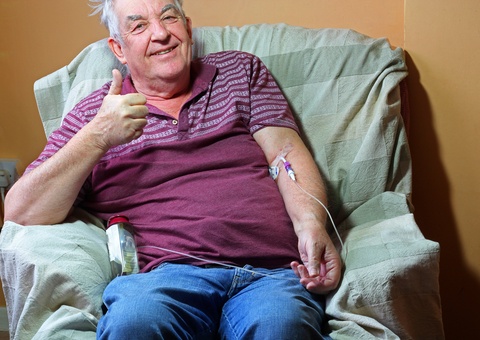
    Researchers in The Netherlands say it may be possible to deliver faster mesothelioma chemotherapy without doing any additional damage to the kidneys. If they are right, it could make mesothelioma treatment more accessible and convenient for patients. Most malignant mesothelioma patients will have chemotherapy. The most common type of chemotherapy is by infusion. Each session takes several hours. Every mesothelioma patient undergoing chemotherapy faces the possibility of kidney damage. That possibility can even limit how much medicine doctors can use. But a new Dutch study finds that faster mesothelioma chemotherapy may be as safe for the kidneys as standard chemotherapy. Analyzing Faster Mesothelioma Chemotherapy The study included 230 lung cancer patients who had chemotherapy. Some of the study subjects had…


  • Belgian Mesothelioma Survival Study

    A new Belgian mesothelioma survival study contains important insights for patients and doctors. Cancer center researchers did the study with data from the Belgian Cancer Registry. It includes more than 1400 patients. They received mesothelioma diagnosis between 2004 and 2012. The analysis is similar to past mesothelioma research. It shows the longest-surviving patients are the ones who have chemotherapy. Surgery patients also live longer. The third longer-living group are patients treated at experienced cancer centers. Mesothelioma Survival and Treatment The mesothelioma survival study asks what kinds of patients live longest and why. Researchers had to first see what treatments most patients receive. They found that most mesothelioma patients have chemotherapy. Chemotherapy usually includes pemetrexed (Alimta) and cisplatin. This is the…

  • More Support for Novel Mesothelioma Drug Delivery System

    Pharmaceutical researchers working on a way to make the most popular mesothelioma drug more effective have found more evidence that fat may be the answer. The team at Zagazig University in Egypt and Tokushima University in Japan have developed a fat-based coating for the antifolate drug pemetrexed (Alimta) that may help improve outcomes for patients. Pemetrexed is currently the only drug approved specifically to treat malignant mesothelioma and most patients will receive it at some point. Even so, like most mesothelioma therapies, pemetrexed is only marginally effective, in part because the dose has to be limited to avoid serious side effects. The new drug delivery system was designed to get around this problem by encapsulating molecules of pemetrexed in tiny…

  • | | | | | |

    Scrubbed Trial May Not Be the End for Mesothelioma Drug

    The makers of the once-promising experimental mesothelioma drug defactinib have announced that they will stop a clinical trial of the drug early because, by itself, it does not appear to help. But this may not be the end of the road for defactinib in mesothelioma treatment. Defactinib (VS-6063) had been the leading compound for its manufacturer, Boston-based Verastem. While standard mesothelioma chemotherapy drugs like pemetrexed, cisplatin, gemcitabine and vinorelbine can sometimes shrink mesothelioma tumors, they also increase the percentage of stem cells which can give rise to new cancer. Defactinib was designed to help keep malignant mesothelioma patients from relapsing by inhibiting a crucial signaling pathway (FAK) inside the stem cells. Early studies were encouraging, but a recent review of…

  • | | | | | | | | |

    Long Term Mesothelioma Survival with Immune System Activation

    A small group of Australian mesothelioma patients have reportedly lived more than twice as long as expected with a combination of standard chemotherapy and immune system manipulation with the CD40 protein. The CD40 protein plays a role in a broad range of immune and inflammatory responses in the body. Studies in mice have found that activating CD40 with an activating antibody may work “synergistically” with chemotherapy drugs to fight cancer. To see whether CD40 activation could produce a similar response in human patients, researchers with the University of Western Australia and Sir Charles Gairdner Hospital in Perth recruited 15 malignant pleural mesothelioma patients in the early stages of the disease. The patients all received both standard chemotherapy (pemetrexed and cisplatin)…

  • | | | | | | | |

    Clinical Trial May be Best Second-Line Approach for Mesothelioma

    The best second-line treatment for mesothelioma patients who fail to respond to standard chemotherapy is probably to enroll in a clinical trial. The authors of a newly-published paper on the subject reached that conclusion after reviewing the results of 29 studies on potential second- or third-line mesothelioma treatments. Most patients who are diagnosed with mesothelioma, an aggressive malignancy associated with asbestos exposure, will undergo chemotherapy, either as a stand-alone treatment or as part of a multimodal approach. Unfortunately, only a small percentage of mesothelioma patients treated with standard pemetrexed/cisplatin chemotherapy will show a response. Even those who respond to chemotherapy often relapse again later. Scientists around the world are searching for new drugs and drug combinations to offer mesothelioma patients…

  • | | | | | | | |

    Making Mesothelioma Cells More Susceptible to Chemotherapy

    A potential new mesothelioma drug may have moved a step closer to gaining mainstream acceptance for use in sick patients. Doctors studying the drug say they have found a way to make cells more susceptible to its damaging effects. GDC-0980, also known as Apitolisib, is a class I inhibitor of two cell signaling pathways – P13 and mTOR – both of which play critical roles in regulating the life cycle of cells, including mesothelioma cells. Because mesothelioma is so difficult to treat with standard chemotherapy drugs, researchers around the world are exploring ways to improve treatment by manipulating the vital signaling pathways inside mesothelioma cells. Now, doctors at cancer research centers in the US, the UK, and Switzerland say they…

  • | | | | | | |

    Elderly Mesothelioma Patients Need “Less Toxic” Treatment Options

    A new study of more than 9,000 people suggests that elderly mesothelioma patients would likely live longer if treatments could be found that are “less toxic” than current chemotherapy. A European team of cancer researchers analyzed mesothelioma treatment trends by location and by age group and found that younger patients are more likely to have – and to benefit from – chemotherapy for mesothelioma. Although older mesothelioma patients often have chemotherapy, too, they are more likely to die from treatment-related complications. The study focused on three countries with high mesothelioma rates – Belgium, the Netherlands, and England. It included a total of 900 mesothelioma patients from the Belgian Cancer Registry, 2309 from the Netherlands Cancer Registry, and 5808 from the…

  • New Regimen May Help Mesothelioma Patients Avoid Chemotherapy Skin Rash

    A single dose of medicine prior to chemotherapy may be enough to ward off an uncomfortable side effect for mesothelioma patients, giving them one less thing to worry about prior to treatment. Doctors from four different US medical centers just released their findings on a new and potentially easier protocol for preventing pemetrexed-related skin rash. Pemetrexed (Alimta) is the most popular drug for malignant pleural mesothelioma and remains the only drug approved specifically for this rare cancer.  It is also used to treat non-small cell lung cancer. Most patients on pemetrexed experience side effects, one of which is an itchy, blistering skin rash. While the rash is not usually serious, in some rare cases it can progress and even be…

  • | | | | |

    HIPEC Variation May Benefit Frail Mesothelioma Patients

    A method of delivering heated chemotherapy drugs to the abdomen after the surgical wound has been closed may produce better outcomes than an open technique for fragile or elderly mesothelioma patients. The study was conducted by surgery departments at three different Greek hospitals. Study subjects included 105 patients with either mesothelioma or another peritoneal malignancy. All of the patients were recommended for cytoreductive surgery to remove as much of their cancer as possible followed by a rinse of heated chemotherapy drugs at the site of the surgery (HIPEC) to kill any residual cancer cells and prevent recurrence. Sixty of the patients with mesothelioma or another cancer received HIPEC using an open abdomen technique. In this technique, the chemotherapy solution is…