| | | | |

Tea Leaf Cancer Treatment May Have Implications for Mesothelioma Patients
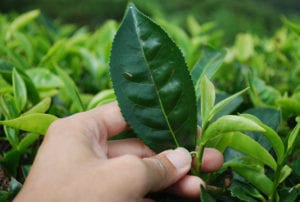
A new type of nanoparticle derived from green tea leaves has been shown to kill lung cancer cells and may one day do the same for pleural mesothelioma.

Scientists at Swansea University in Wales in collaboration with researchers at Bharathiar University in India discovered the power of the tea-based nanoparticles—called quantum dots—when attempting to create a less expensive tool for lung cancer imaging.

“The main reason we started looking at tea leaves is that chemically synthesised quantum dots cost between £250 and £500 per microgram,” lead researcher Dr. Sudhagar Pitchaimuthu told the BBC. “Whereas organically-derived ones can be manufactured for £10 per microgram, and at the same time they don’t poison healthy cells surrounding the cancer.”

Fluorescent Cancer Fighters

Nanoparticles are man-made particles so tiny that they can penetrate the tiny pores in the wall of cancer cells like malignant mesothelioma. Nanoparticles are playing an increasingly important role in materials science, as well as in healthcare.

In the new study, the tea-derived quantum dots, which are 4,000th of the width of a human hair, did prove to be highly fluorescent, just as the researchers had hoped. But the “icing on the cake”, according to the team, was the fact that the lung cancer cells into which the quantum dots were inserted began to die.

Further research using flow cytometry showed that the lung cancer cells were unable to complete their cycle of replication, but were instead being stopped in the “S phase”, during which the DNA is supposed to split to form a new cell.


“We now need to identify an enzyme which can deliver them to cancers in living creatures, without affecting surrounding healthy tissues,” says Dr. Pitchaimuthu.

This is not the first time that green tea has been used to kill cancer cells. Numerous studies have suggested that the polyphenols in green tea can help support the treatment of mesothelioma and other cancers by reducing inflammation, fighting oxidation, and boosting the immune system.

Animal and Human Trials to Follow

The next step for the potential green-tea quantum dots cancer treatment is to test it in animals, which the research team hopes to start doing shortly. If all goes well and the treatment can be shown to be safe, human trials could follow.

The research couldn’t come too soon for the thousands of mesothelioma patients around the world.

Like lung cancer, malignant pleural mesothelioma is an aggressive and deadly cancer with few viable treatment options. Unlike lung cancer, which can have a variety of different causes, pleural mesothelioma is almost always caused by exposure to asbestos. Most people diagnosed with this cancer do not survive beyond a year.

Source:

Shivaji, K, et al, “Green-Synthesis-Derived CdS Quantum Dots Using Tea Leaf Extract: Antimicrobial, Bioimaging, and Therapeutic Applications in Lung Cancer Cells”, March 9, 2018, ACS Applied Non Materials

Prior, Neil, “Nanoparticles from tea leaves ‘destroy lung cancer cells’”, May 21, 2018

Similar Posts

  • | |

    Doctors Describe "Concrete Therapeutic Approach" for Mesothelioma

    A team of medical researchers in Italy have achieved what they are calling “excellent” tumor control and survival results in malignant pleural mesothelioma patients using a combination of surgery, chemotherapy, and radiotherapy. Caused by exposure to asbestos, mesothelioma typically spreads quickly across the lung-encasing membrane called the pleura. There is no known cure but treatments are improving. In the current prospective study, 20 malignant pleural mesothelioma patients underwent radical pleurectomy/decortication followed by high doses of radiation. After surgeons removed as much of the visible mesothelioma tumor and surrounding tissue as possible, patients received 50Gy of radiation to the effected side of their chest, delivered in 25 fractions. Regions of particular concern for mesothelioma regrowth got an extra radiation “boost” to…

  • |

    Mesothelioma Still Rising Despite Ban in Ireland

    A study in Ireland confirms that it can take many years for a ban on asbestos to have a measurable impact on a country’s rates of malignant mesothelioma. Mesothelioma is the most serious of a list of diseases – including lung cancer, pleural plaques, asbestosis, and others – linked with exposure to asbestos dust. Affecting the linings around the lungs and other organs, mesothelioma is often resistant to most cancer treatments and may be fatal within a year of diagnosis. According to the International Ban Asbestos Secretariat, Ireland is one of 55 countries that have enacted some type of asbestos ban. However, although Ireland banned asbestos in 2000, a new study published in Cancer Epidemiology shows that incidence of the…

  • | |

    Does Radiotherapy Reduce Mesothelioma Pain?

    A new study says there is not enough evidence to support the use of radiotherapy for the treatment of pain associated with malignant pleural mesothelioma. Researchers at the University of Edinburgh in Scotland reviewed a range of past studies on mesothelioma pain and radiotherapy by searching databases that date back as far as 1974. To be eligible to be included in their review, the study had to focus on malignant pleural mesothelioma and radiotherapy given “with the intent of improving pain”. The study also had to report doses and fractionation of the radiotherapy and how the pain responded. In all, the researchers found eight studies on mesothelioma pain and radiotherapy that met the criteria. Two of the studies were prospective…

  • |

    Website Aims to Protect Homeowners from Mesothelioma

    Australia’s Cancer Council is trying to educate home renovators about their risk for mesothelioma with a new e-learning course. Australia has one of the highest per capita rates of mesothelioma in the world, largely because of several asbestos mining operations that were once located there. Although asbestos has been banned from building products in Australia since 1989, asbestos-linked diseases like mesothelioma, lung cancer, and asbestosis continue to pose a serious health concern. While mesothelioma has traditionally occurred among people exposed to asbestos on the job, Australia is now bracing for another “wave” of mesothelioma victims among homeowners who encounter asbestos while doing their own renovation projects. Cancer Council Australia has launched “kNOw asbestos in your home” in an effort to…

  • |

    Ape Virus Shrinks Mesothelioma Tumors in Lab

    A virus that causes leukemia in gibbon apes may have the power to help fight malignant mesothelioma in people. Gibbon ape leukemia virus (GALV) has been tested for years as a viral vector, a carrier of therapeutic genetic information, in the treatment of various human illnesses, including cancer. A new study in Japan compared GALV with a leukemia virus derived from mice to see which carrier communicated most efficiently with mesothelioma cells. While both types of viruses replicated in most of the mesothelioma cell lines tested, the mouse-derived virus was not effective in a mesothelioma cell line called ACC-MESO-1. In this cell line, only the GALV spread efficiently both in culture and in mice that had been given human mesothelioma…

  • | |

    Radiotherapy for Mesothelioma: Better But Still Limited

    A form of highly-targeted radiation therapy for mesothelioma is better than it used to be, but is still risky. That is the message of a recent article on intensity-modulated radiation therapy (IMRT) in Seminars in Thoracic and Cardiovascular Surgery. Author Kenneth E. Rosenzweig, MD, a Radiation Oncologist with Mount Sinai Hospital in New York, reviewed recent studies on IMRT and mesothelioma. He concludes that, while the “troubling toxicity” associated with IMRT when it was first introduced has not been entirely eliminated, the fact that clinicians now have more experience with it is making a positive difference for mesothelioma patients. Before targeted therapies like IMRT were available, high-dose radiation was not usually a feasible option for mesothelioma since the irregular shape…