| | | |

Uninformed Asbestos Workers Face Higher Mesothelioma Risk
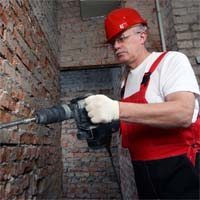
A new survey conducted among asbestos workers in the UK finds that too many do not fully understand the laws about asbestos exposure and how to reduce their risk of deadly malignant mesothelioma.

The survey was commissioned by the Institution of Occupational Safety and Health (IOSH), the British equivalent of the US National Institute for Occupational Safety and Health.

The goal was to determine how much construction workers know about the risks and regulations regarding asbestos, the primary cause of pleural mesothelioma in the UK and around the world.

Too Many Don’t Know How to Manage Mesothelioma Risk

Most people have heard that asbestos—once a common component of many building products—is associated with the risk of mesothelioma, lung cancer, asbestos and other diseases. The surveyed construction workers were no exception.

However, when it came to what exactly what they should be doing to reduce their risk or what to do if they encountered asbestos on the job, many were unclear.

  • According to the report, fifteen percent of surveyed construction workers had never been informed of the mesothelioma risk from asbestos exposure and had not been given any training in how to manage that risk.
  • Almost a quarter of respondents said they had been exposed to asbestos.
  • Although the UK requires every company to maintain a record (called a register) of the presence and state of asbestos in their buildings, a third of the workers surveyed had not checked the register before starting a project. Nearly half did not know such a record existed.
  • One in five of the construction workers surveyed said, if they did encounter asbestos on the job, they would have no idea what to do.

“This is particularly the case among small companies, sole traders, and older workers,” Dr. Lesley Rushton, the new Chair of the UK’s Industrial Injuries Advisory Council, told the UK trade journal Planning and Building Control Today. “Uncertainty and ignorance surrounding how to prevent workers from breathing in the fibres is deeply worrying.”


US Asbestos Law and Malignant Mesothelioma

Asbestos is the top worldwide cause of malignant mesothelioma, in both its pleural and peritoneal forms. The World Health Organization estimates that more than 100,000 people die of mesothelioma and other asbestos-related illnesses every year, many of them construction workers.

Although 62 countries, including the UK, have now banned asbestos, asbestos is still legal in the US. Multiple attempts have been made to pass federal legislation which would ban the carcinogen, but they have continually been blocked by corporations with an interest in asbestos.

However, there are strict regulations on asbestos handling and removal (called abatement) intended to minimize mesothelioma risk to US workers and the public. The US Environmental Protection Agency (EPA) and the Occupational Safety and Health Administration (OSHA) are the primary entities charged with enforcing these laws.

Among other things, they require employers to supply workers with protective gear and to train them in its use and in proper asbestos handling. Independent contractors are expected to know the asbestos regulations and abide by them.

According to the American Cancer Society, more than a million American employees in construction and other industries “face significant asbestos exposure on the job.”

Sources:

“Survey reveals ‘uncertainty and ignorance’ over exposure to asbestos”, April 9, 2018, Planning & Building Control Today

“Asbestos and Cancer Risk”, September 15, 2015, American Cancer Society

OSHA Asbestos Overview

Similar Posts

  • |

    Mesothelioma Still Rising Despite Ban in Ireland

    A study in Ireland confirms that it can take many years for a ban on asbestos to have a measurable impact on a country’s rates of malignant mesothelioma. Mesothelioma is the most serious of a list of diseases – including lung cancer, pleural plaques, asbestosis, and others – linked with exposure to asbestos dust. Affecting the linings around the lungs and other organs, mesothelioma is often resistant to most cancer treatments and may be fatal within a year of diagnosis. According to the International Ban Asbestos Secretariat, Ireland is one of 55 countries that have enacted some type of asbestos ban. However, although Ireland banned asbestos in 2000, a new study published in Cancer Epidemiology shows that incidence of the…

  • |

    Website Aims to Protect Homeowners from Mesothelioma

    Australia’s Cancer Council is trying to educate home renovators about their risk for mesothelioma with a new e-learning course. Australia has one of the highest per capita rates of mesothelioma in the world, largely because of several asbestos mining operations that were once located there. Although asbestos has been banned from building products in Australia since 1989, asbestos-linked diseases like mesothelioma, lung cancer, and asbestosis continue to pose a serious health concern. While mesothelioma has traditionally occurred among people exposed to asbestos on the job, Australia is now bracing for another “wave” of mesothelioma victims among homeowners who encounter asbestos while doing their own renovation projects. Cancer Council Australia has launched “kNOw asbestos in your home” in an effort to…

  • |

    Teacher’s Diagnosis Highlights Mesothelioma Risk in Schools

    A recent mesothelioma diagnosis in the UK once again dramatically highlights the fact that even a small amount of asbestos can be deadly. Sixty-three-year-old school teacher Marion Potts of Brockenhurst died of mesothelioma in a Southampton hospital in June. According to an article in The Mirror, the Coroner recorded a verdict of “death from an industrial disease” after hearing evidence last week that Potts actually saw asbestos dust being released when she pinned work on the classroom walls. Most recently, Potts was head of the English department at Romsey School in Hampshire until her retirement two years ago. Mesothelioma is a growing threat among school teachers, administrators, maintenance workers, and even students in British schools. A government report released last…

  • | | |

    Mesothelioma Nurses Ready for New Cases in Australia

    Australia is bracing for an expected new wave of mesothelioma cases in the next decade and the Lung Foundation of Australia is taking action now to get ready. The Foundation has paid for ten nurses from around the country to receive specialized training in helping patients and families cope with mesothelioma. The nurses, who have recently completed the training, are now equipped to lead treatment planning for these complex cancer patients and to help other nurses do the same. Pleural mesothelioma is an aggressive cancer that occurs in the lining around the lungs. It is caused by exposure to asbestos dust, a toxin that was once alarmingly prevalent in Australia where it was mined and heavily used in construction. Because…

  • | |

    Spanish Mesothelioma Deaths Likely to Continue for Decades

    New research in Spain suggests that mesothelioma deaths will continue in the country until the “last surviving member” of the group of people exposed to occupational asbestos succumbs to the disease. Like many countries, Spain used asbestos heavily in the first half of the 20th century, especially in construction, where the mineral was prized for its durability, low cost, and resistance to fire and corrosion.  Asbestos was banned in Spain in 2002. Observing that more than 2.5 million metric tons of asbestos were imported into Spain from 1906 to 2002, researchers say deaths from mesothelioma have risen steadily. Between 1976 and 1980, a total of 491 Spanish people died of mesothelioma. By the 5-year period from 2006 to 2010, that…

  • |

    Study Confirms Firefighters at Elevated Risk for Mesothelioma

    A 5-year National Institute for Occupational Safety and Health (NIOSH) study of U.S. firefighters is the first to confirm what has long been suspected: Firefighters are definitely at higher risk for malignant mesothelioma. The study examined the mortality patterns and cancer incidence (including mesothelioma) among 30,000 firefighters in three major cities. The study subjects were all career firefighters who started their careers after 1950 and were followed through 2009. In order to get a diverse sample of firefighters from across the country, the study focused on firefighters from San Francisco, Chicago and Philadelphia. Comparing firefighters to a sampling of the general public, the study looked at 92 causes of death and 41 cancer incidence groupings, with a focus on 15…