| | |

Global Call for Asbestos Hazardous Waste Management Strategies
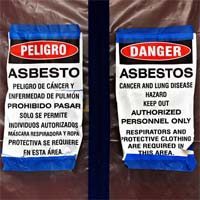
Global Call for Asbestos Hazardous Waste Management StrategiesA new report in the Journal of Environmental Management warns that asbestos-bans should be supported by coordinated asbestos hazardous waste management strategies. Asbestos is classified as a Class I Carcinogen by the International Agency for Research on Cancer (IARC). Sixty countries have bans on asbestos. The US, China, India, and Russia are not among them.

Nonetheless, asbestos is still part of the daily life of the population as asbestos-containing materials (ACMs) are still present in many buildings constructed and renovated before the 1990s. Asbestos has been used by many automobile, construction, manufacturing, power, and chemical industries for many years. Asbestos was a popular insulator because it resists heat and flame. The identification and coordinated management of asbestos hazardous waste is still a considerable challenge.

Asbestos is still responsible for severe human diseases. This is particularly true in areas where there is a lack of coordinated asbestos management plans. Or where there is a reduced awareness about asbestos health risks or a delay in the implementation of asbestos-ban. These issues are more prevalent in developing countries.

Occupational Asbestos Exposure and Mesothelioma

Mesothelioma is one of the world’s deadliest cancers. It is caused by breathing in or swallowing asbestos dust. This usually happens at work.

The dust may look harmless enough. But microscopic asbestos fibers are like shards of cancer-causing glass. They become embedded in the tissue and wreak havoc over time. It can take decades for mesothelioma to develop after occupational asbestos exposure. But once it does, patients usually have less than a year to live.

Some jobs are known to pose a mesothelioma risk. Asbestos miners and manufacturing workers, Naval veterans, shipbuilders, firefighters, electricians, pipefitters, boiler makers, and other construction trades are jobs with a history of occupational asbestos exposure.

But teachers, actors, and textile workers have also developed mesothelioma after encountering asbestos on the job. This includes handling asbestos hazardous waste. Most had no idea they were even near the deadly toxin.

Conclusions

Many countries still use asbestos, including the United States. And few have a coordinated asbestos hazardous waste strategy.

The international team led by Dr. Liseane Thives identified three significant global challenges regarding asbestos. “First, asbestos is still present in the existing buildings constructed or renovated before asbestos-bans. Second, the development of methods to recover soil contaminated by asbestos-containing products. Last, the asbestos disposal and its impact on the environment.”

Asbestos mining is still ongoing in some developing countries. The team warns that asbestos-bans should be supported by coordinated asbestos hazardous waste management strategies.  This support is critical to preventing public health risks.

Asbestos is still a global problem in the world, particularly where asbestos-bans as coordinated management plans have not been implemented.

Source:

Thives, Liseane P., Enedir Ghisi, Juarez J. Thives Júnior, and Abel Silva Vieira. “Is asbestos still a problem in the world? A current review.” Journal of Environmental Management 319 (2022): 115716. https://doi.org/10.1016/j.jenvman.2022.115716

Similar Posts

  • |

    Mesothelioma Still Rising Despite Ban in Ireland

    A study in Ireland confirms that it can take many years for a ban on asbestos to have a measurable impact on a country’s rates of malignant mesothelioma. Mesothelioma is the most serious of a list of diseases – including lung cancer, pleural plaques, asbestosis, and others – linked with exposure to asbestos dust. Affecting the linings around the lungs and other organs, mesothelioma is often resistant to most cancer treatments and may be fatal within a year of diagnosis. According to the International Ban Asbestos Secretariat, Ireland is one of 55 countries that have enacted some type of asbestos ban. However, although Ireland banned asbestos in 2000, a new study published in Cancer Epidemiology shows that incidence of the…

  • |

    Website Aims to Protect Homeowners from Mesothelioma

    Australia’s Cancer Council is trying to educate home renovators about their risk for mesothelioma with a new e-learning course. Australia has one of the highest per capita rates of mesothelioma in the world, largely because of several asbestos mining operations that were once located there. Although asbestos has been banned from building products in Australia since 1989, asbestos-linked diseases like mesothelioma, lung cancer, and asbestosis continue to pose a serious health concern. While mesothelioma has traditionally occurred among people exposed to asbestos on the job, Australia is now bracing for another “wave” of mesothelioma victims among homeowners who encounter asbestos while doing their own renovation projects. Cancer Council Australia has launched “kNOw asbestos in your home” in an effort to…

  • |

    Teacher’s Diagnosis Highlights Mesothelioma Risk in Schools

    A recent mesothelioma diagnosis in the UK once again dramatically highlights the fact that even a small amount of asbestos can be deadly. Sixty-three-year-old school teacher Marion Potts of Brockenhurst died of mesothelioma in a Southampton hospital in June. According to an article in The Mirror, the Coroner recorded a verdict of “death from an industrial disease” after hearing evidence last week that Potts actually saw asbestos dust being released when she pinned work on the classroom walls. Most recently, Potts was head of the English department at Romsey School in Hampshire until her retirement two years ago. Mesothelioma is a growing threat among school teachers, administrators, maintenance workers, and even students in British schools. A government report released last…

  • | | |

    Mesothelioma Nurses Ready for New Cases in Australia

    Australia is bracing for an expected new wave of mesothelioma cases in the next decade and the Lung Foundation of Australia is taking action now to get ready. The Foundation has paid for ten nurses from around the country to receive specialized training in helping patients and families cope with mesothelioma. The nurses, who have recently completed the training, are now equipped to lead treatment planning for these complex cancer patients and to help other nurses do the same. Pleural mesothelioma is an aggressive cancer that occurs in the lining around the lungs. It is caused by exposure to asbestos dust, a toxin that was once alarmingly prevalent in Australia where it was mined and heavily used in construction. Because…

  • |

    Mesothelioma Victims’ Victory in Pennsylvania

    Workers and their families have won a victory in Pennsylvania after the state Supreme Court ruled that they could sue former employers over late-manifesting industrial diseases like mesothelioma. The decision focused on a provision in Pennsylvania’s Workers’ Compensation Act that says workers cannot sue an employer if their occupational disease occurred more than 300 weeks after their on-the-job exposure. While many occupational injuries and diseases occur within weeks or months of exposure to a toxin, asbestos diseases like mesothelioma are a notable exception. Believed to be caused by chronic irritation from inhaled or ingested asbestos fibers, mesothelioma does not usually begin to cause symptoms until at least a decade after exposure. Expressing the opinion of the majority, Supreme Court Justice…

  • | |

    Spanish Mesothelioma Deaths Likely to Continue for Decades

    New research in Spain suggests that mesothelioma deaths will continue in the country until the “last surviving member” of the group of people exposed to occupational asbestos succumbs to the disease. Like many countries, Spain used asbestos heavily in the first half of the 20th century, especially in construction, where the mineral was prized for its durability, low cost, and resistance to fire and corrosion.  Asbestos was banned in Spain in 2002. Observing that more than 2.5 million metric tons of asbestos were imported into Spain from 1906 to 2002, researchers say deaths from mesothelioma have risen steadily. Between 1976 and 1980, a total of 491 Spanish people died of mesothelioma. By the 5-year period from 2006 to 2010, that…