| | |

Mesothelioma in Seafarers: Cancer Risk at Sea
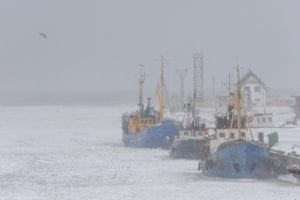
mesothelioma in seafarers

New research has revealed a higher risk for mesothelioma in seafarers and fisherman in Nordic countries. A seafarer is someone who makes their living at sea.

The study conducted by the Danish Cancer Society found an elevated risk in most types of cancer among Nordic seafarers. Mesothelioma was one of just three cancers whose cause was not difficult to guess.

The research included tens of thousands of seamen and fisherman and spanned more than 40 years. The authors say malignant mesothelioma in seafarers is the result of on-the-job asbestos exposure.

Asbestos at Sea

Asbestos is a toxic mineral. It causes malignant mesothelioma and several other types of cancer. Before scientists made the connection between asbestos and cancer, it was a popular insulator and building component around the world. Asbestos is strong, cheap, and resistant to heat and fire. 

One place where asbestos was used heavily was in shipbuilding. People who live or work on ships are in danger of inhaling or swallowing microscopic asbestos fibers. These fibers become embedded in the tissue, raising the risk for mesothelioma and other cancers.  

Previous studies have found higher rates of mesothelioma among shipbuilders, shipbreakers and sailors. The new study found that the risk for mesothelioma in seafarers and fishermen in five Nordic countries is also higher than it is for other people. The culprit is almost certainly the asbestos on their ships. 

“While the majority of cancers could not be linked to specific occupational factors, increases in mesothelioma, lip and non-melanoma-skin cancer indicate previous exposure to asbestos, ultraviolet radiation and potentially also chemicals with dermal carcinogenic properties at sea,” states the report. 

The new study tracked cases of mesothelioma in seafarers and fishermen between 1961 and 2005. It included 81,740 male seafarers and 66,926 male fishermen. The researchers used cancer data from Denmark, Finland, Iceland, Norway and Sweden to determine cancer rates in the general public. 

Mesothelioma in Seafarers and Shipbuilders

Any job that requires workers to work around asbestos carries the risk for mesothelioma. Many past studies have highlighted the danger inherent in working on ships. 

But the news about mesothelioma in seafarers and other ship workers is not all bad. In late 2019, the UK learned that it’s high rates of asbestos cancer in shipbuilders was finally declining. 

Shipbuilding was once a major industry in the UK just as fishing is a major industry in Nordic countries. But the National Heart and Lung Institute at Imperial College London says the number of mesothelioma deaths in districts with shipyards has gone down. 

Most new ships are built without asbestos. But workers who dismantle decommissioned ships (called shipbreaking) still face a higher mesothelioma risk.

Source:

Ugelvig Petersen, K, et al, “Cancer incidence among seafarers and fishermen in the Nordic countries”, January 9, 2020, Scandanavia Journal of Work, Environment, and Health, Epub ahead of print, https://www.sjweh.fi/show_abstract.php?abstract_id=3879

Reynolds, CJ, et al “Mesothelioma mortality in Great Britain: how much longer will dockyards dominate?”, October 29, 2019, Occupational and Environmental Medicine, https://oem.bmj.com/content/76/12/908


Similar Posts

  • |

    Mesothelioma Still Rising Despite Ban in Ireland

    A study in Ireland confirms that it can take many years for a ban on asbestos to have a measurable impact on a country’s rates of malignant mesothelioma. Mesothelioma is the most serious of a list of diseases – including lung cancer, pleural plaques, asbestosis, and others – linked with exposure to asbestos dust. Affecting the linings around the lungs and other organs, mesothelioma is often resistant to most cancer treatments and may be fatal within a year of diagnosis. According to the International Ban Asbestos Secretariat, Ireland is one of 55 countries that have enacted some type of asbestos ban. However, although Ireland banned asbestos in 2000, a new study published in Cancer Epidemiology shows that incidence of the…

  • |

    Website Aims to Protect Homeowners from Mesothelioma

    Australia’s Cancer Council is trying to educate home renovators about their risk for mesothelioma with a new e-learning course. Australia has one of the highest per capita rates of mesothelioma in the world, largely because of several asbestos mining operations that were once located there. Although asbestos has been banned from building products in Australia since 1989, asbestos-linked diseases like mesothelioma, lung cancer, and asbestosis continue to pose a serious health concern. While mesothelioma has traditionally occurred among people exposed to asbestos on the job, Australia is now bracing for another “wave” of mesothelioma victims among homeowners who encounter asbestos while doing their own renovation projects. Cancer Council Australia has launched “kNOw asbestos in your home” in an effort to…

  • |

    Teacher’s Diagnosis Highlights Mesothelioma Risk in Schools

    A recent mesothelioma diagnosis in the UK once again dramatically highlights the fact that even a small amount of asbestos can be deadly. Sixty-three-year-old school teacher Marion Potts of Brockenhurst died of mesothelioma in a Southampton hospital in June. According to an article in The Mirror, the Coroner recorded a verdict of “death from an industrial disease” after hearing evidence last week that Potts actually saw asbestos dust being released when she pinned work on the classroom walls. Most recently, Potts was head of the English department at Romsey School in Hampshire until her retirement two years ago. Mesothelioma is a growing threat among school teachers, administrators, maintenance workers, and even students in British schools. A government report released last…

  • | | |

    Mesothelioma Nurses Ready for New Cases in Australia

    Australia is bracing for an expected new wave of mesothelioma cases in the next decade and the Lung Foundation of Australia is taking action now to get ready. The Foundation has paid for ten nurses from around the country to receive specialized training in helping patients and families cope with mesothelioma. The nurses, who have recently completed the training, are now equipped to lead treatment planning for these complex cancer patients and to help other nurses do the same. Pleural mesothelioma is an aggressive cancer that occurs in the lining around the lungs. It is caused by exposure to asbestos dust, a toxin that was once alarmingly prevalent in Australia where it was mined and heavily used in construction. Because…

  • | |

    Spanish Mesothelioma Deaths Likely to Continue for Decades

    New research in Spain suggests that mesothelioma deaths will continue in the country until the “last surviving member” of the group of people exposed to occupational asbestos succumbs to the disease. Like many countries, Spain used asbestos heavily in the first half of the 20th century, especially in construction, where the mineral was prized for its durability, low cost, and resistance to fire and corrosion.  Asbestos was banned in Spain in 2002. Observing that more than 2.5 million metric tons of asbestos were imported into Spain from 1906 to 2002, researchers say deaths from mesothelioma have risen steadily. Between 1976 and 1980, a total of 491 Spanish people died of mesothelioma. By the 5-year period from 2006 to 2010, that…

  • |

    Study Confirms Firefighters at Elevated Risk for Mesothelioma

    A 5-year National Institute for Occupational Safety and Health (NIOSH) study of U.S. firefighters is the first to confirm what has long been suspected: Firefighters are definitely at higher risk for malignant mesothelioma. The study examined the mortality patterns and cancer incidence (including mesothelioma) among 30,000 firefighters in three major cities. The study subjects were all career firefighters who started their careers after 1950 and were followed through 2009. In order to get a diverse sample of firefighters from across the country, the study focused on firefighters from San Francisco, Chicago and Philadelphia. Comparing firefighters to a sampling of the general public, the study looked at 92 causes of death and 41 cancer incidence groupings, with a focus on 15…