| | |

Mesothelioma Talcum Powder Case Raises Safety Concerns

The final numbers are in and the New Jersey mesothelioma patient who was awarded $30 million dollars last week will get another $80 million in punitive damages from Johnson & Johnson and its talc supplier.

Banker Stephen Lanzo and his wife filed suit against the two companies claiming that Mr. Lanzo’s use of Johnson & Johnson talcum powder products caused his pleural mesothelioma, a fast-growing cancer on the membrane around the lungs.

The case represents the first time that a man has won a lawsuit alleging a connection between talcum powder and malignant mesothelioma, and raises serious safety concerns for consumers.

Johnson & Johnson and other talcum powder producers have already been brought to court by women who claim their products caused them to contract ovarian cancer.

Asbestos, Mesothelioma, and Baby Powder

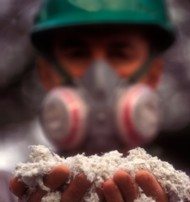
The issue is whether or not there were asbestos fibers, the primary cause of malignant mesothelioma, in Mr. Lanzo’s talcum powder products and whether Johnson & Johnson was hiding that fact.

Talc and asbestos deposits are frequently found in close proximity to each other and some studies have found that there is a chance of asbestos contamination during talc mining.


Johnson & Johnson maintains that its products are rigorously tested and are asbestos-free. But the jury disagreed, awarding $30 million to Lanzo and $7 million to his wife last week and the additional $80 million this week as punishment against Johnson & Johnson for not disclosing the mesothelioma risk.

Can Talcum Powder Be Used Safely?

Unfortunately, there is probably no way to safely use talcum powder products. If even a few fibers of asbestos make their way into the talc and are accidentally inhaled, there is a risk that the user could develop malignant mesothelioma even decades later.

Unlike other types of contaminants, sharp asbestos fibers tend to stay in the body permanently, gradually working their way deeper into the tissues. Over time, this lingering toxin can turn healthy cells into mesothelioma cells.

The Food & Drug Administration (FDA), the entity charged with ensuring that consumer products do not contain mesothelioma-causing asbestos, commissioned a laboratory analysis of cosmetic-grade talc in 2008. Although nine talc suppliers were asked to submit product samples for testing, only four of them complied. A total of thirty-four personal care products were tested and all of them were free of asbestos.

The FDA concluded that, while the results of the analysis were “informative”, “they do not prove that most or all talc or talc-containing cosmetic products currently marketed in the United States are likely to be free of asbestos contamination.”

Beyond that, there is some evidence that talc itself may be harmful if inhaled, although it is not currently classified as a carcinogen. The American Cancer Society advises, “Until more information is available, people concerned about using talcum powder may want to avoid or limit their use of consumer products that contain it.”

In addition to dusting powders, talc can be found in blush, eye shadow, foundations, and face powder, as well as in some consumable products like rice and chewing gum. The accessories company Claire’s has been forced to pull several talc-containing cosmetic products off the shelves in the past year because of asbestos concerns.

Sources:

“Man wins $117 million after getting cancer ‘from baby powder’”, April 12, 2018, Yahoo News

Talcum Powder and Cancer, American Cancer Society

Talc Fact Sheet, US Food & Drug Administration
Similar Posts

  • |

    Mesothelioma Victims’ Victory in Pennsylvania

    Workers and their families have won a victory in Pennsylvania after the state Supreme Court ruled that they could sue former employers over late-manifesting industrial diseases like mesothelioma. The decision focused on a provision in Pennsylvania’s Workers’ Compensation Act that says workers cannot sue an employer if their occupational disease occurred more than 300 weeks after their on-the-job exposure. While many occupational injuries and diseases occur within weeks or months of exposure to a toxin, asbestos diseases like mesothelioma are a notable exception. Believed to be caused by chronic irritation from inhaled or ingested asbestos fibers, mesothelioma does not usually begin to cause symptoms until at least a decade after exposure. Expressing the opinion of the majority, Supreme Court Justice…

  • |

    Last Man Sentenced in Asbestos Dumping Scheme

    The U.S. Justice Department has announced that a New Jersey man will spend 15 months in prison for his part in a scheme to illegally dump thousands of tons of asbestos-contaminated construction debris – putting others at risk for mesothelioma. He was the last person to be sentenced in the conspiracy. Asbestos is the cause of mesothelioma, a difficult to treat and aggressive cancer.  At the height of its popularity from the 1940s to the early 1970s, asbestos was common in building products ranging from floor and ceiling tiles to joint compound, concrete and shingles. It is still present in tens of thousands of older homes and buildings today. In an effort to protect workers and the public from mesothelioma…

  • |

    Mesothelioma Case Shows Danger of Accidental Asbestos Exposure

    A mesothelioma case in Birmingham, England is a dramatic illustration of the very real danger of hidden asbestos. The widow of a physician who died of mesothelioma last year at the age of 51 claims her husband was exposed to asbestos just walking to and from his medical classes. Monisha Coelho believes that exposed asbestos insulation in the underground hallways that connect the University of Birmingham to buildings on the Queen Elizabeth Hospital campus triggered Dr. Ian Pardoe’s mesothelioma. In an article in the Birmingham Mail, Coelho explained how her husband decided how and where the deadly exposure had occurred. “Ian thought long and hard about where he might have come into contact with asbestos,” Coelho told the paper. “He…

  • |

    Short-term Asbestos Exposure Triggers Mesothelioma

    The recent death of a British man from mesothelioma is evidence of the destructive power of asbestos – even when exposure is short.  A British newspaper reports that Welwyn resident Roger Beale first began experiencing a classic symptom of mesothelioma, shortness of breath, nearly 4 years ago. Beale first noticed the problem while walking up stairs. After a chest X-ray, Beale’s symptoms were attributed to a chest infection.  But when his symptoms continued to worsen, Beale sought medical care again in January, 2010 and was diagnosed with pleural mesothelioma, an intractable cancer of the lung lining that is almost always caused by exposure to asbestos. By November of 2010, Beale’s shortness of breath had gotten worse, despite regular monitoring and…

  • |

    Mesothelioma: Surveillance May Reveal Unexpected Exposure Risks

    Researchers say continual surveillance for incidents of mesothelioma in the population can turn up some unexpected sources of asbestos exposure, including the home. Asbestos is the primary cause of mesothelioma, a virulent cancer that attacks the linings around organs and can quickly become debilitating. Most mesothelioma patients were first exposed to asbestos on the job, either in construction or in an industrial setting. For decades, asbestos was used in multiple building products and various insulating materials for its strength and heat resistance. But the job site is not the only place where people might encounter asbestos, as Italian researchers found out when they analyzed nationwide mesothelioma data.  Their study, the results of which were recently published in the medical journal Epidemiology and…

  • |

    States Wrestle with Mesothelioma Laws & Violations

    The city of Paterson, New Jersey is facing hundreds of thousands of dollars in fines for putting city workers at risk for deadly mesothelioma and other asbestos related diseases. A state labor department inspection determined that Paterson had committed 43 OSHA safety violations, including 13 “serious” violations related to asbestos removal. The labor department says the city failed to properly supervise, train or monitor employees charged with removing asbestos ceiling tiles from a city building. They’re also charged with failing to provide the workers with the proper safety equipment. Asbestos is the primary cause of malignant mesothelioma, an aggressive cancer. Workers exposed to the asbestos now face an increased lifetime risk of developing mesothelioma. Paterson could face fines of $4,500 per day…