| | | | |

Could Tanning Beds Help Prevent Mesothelioma?
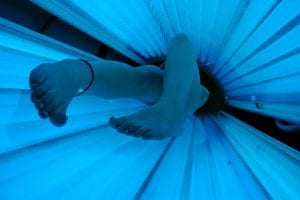
Italian researchers have released a controversial report suggesting that, despite the fact that tanning beds have been associated with an increased risk of skin cancer, they might actually reduce the risk of other cancers such as malignant mesothelioma.

In an article in the journal Advances in Clinical Chemistry, researchers from the University of Verona and the Academic Hospital of Parma are calling for large, randomized studies to “establish whether the unfavorable effects of indoor tanning exposure on skin cancers may be outweighed by the still unexplored benefits attributable to amelioration of vitamin D status.”

The Connection Between Vitamin D and Mesothelioma

A number of studies have already documented a strong association between levels of vitamin D in the blood serum and the risk of developing certain types of cancer. The connection is especially evident in colorectal, breast, bladder, kidney and lung cancer, a cancer that shares many common characteristics with pleural mesothelioma.

According to the Italian scientists, both genomic and nongenomic mechanisms have been identified that help explain the link between vitamin D and cancers like malignant mesothelioma.

As it turns out, tanning beds, which emit UVB light to darken the skin, can dramatically increase vitamin D levels.

“UVB radiation emitted from indoor tanning devices is effective to linearly increase the serum vitamin D concentration, up to twofold,” writes Giuseppe Lippi, author of the report which refers to tanning beds a “Gians Bifrons” – a two-headed god from mythology.

In fact, a 2014 Swedish study found that, not only might UVB exposure reduce the risk of death from cancer, but it also appears to reduce the chances of dying from any cause.

“The mortality rate amongst avoiders of sun exposure was approximately twofold higher compared with the highest sun exposure group,” wrote author Pelle Lindqvist of the Karolinska Institute in the Journal of Internal Medicine.

Should You Tan if You Are at Risk for Mesothelioma?

The short answer is, no. There is not yet enough evidence that the known risks of UVB exposure inside a tanning bed can be outweighed by a reduced risk of mesothelioma.

However, the current study does suggest that it would be wise to “stay tuned” as the science on vitamin D, sun exposure, and cancer risk evolves.

In the meantime, if you have been exposed to asbestos, the primary cause of mesothelioma, there are some things you can do to reduce your risk of dying from this aggressive cancer.

  • Know the symptoms of mesothelioma and do not ignore them
  • Have regular physical exams to monitor for early signs of mesothelioma
  • Keep your immunity strong with a healthy lifestyle, including a diet rich in fruits and vegetables
  • If you smoke, stop. Smoking has been linked to increased risk and poorer mesothelioma outcomes in asbestos-exposed people.
  • Talk to your doctor about screening CT

Malignant mesothelioma impacts about 2,500 new patients each year in the US, despite decades of heavy regulation of the asbestos industry. Although new treatments, including several types of immunotherapy drugs, are in development, there is currently no cure for mesothelioma.

Sources:

Lippi, G, et al, “Indoor Tanning a Gianus Bifrons: Vitamin D and Human Cancer”, December 8, 2017, Advances in Clinical Chemistry, Epub ahead of print

Lindqvist, PG, at all, “Avoidance of sun exposure is a risk factor for all-cause mortality: Results from the MISS cohort”, April 2014, Journal of Internal Medicine


Similar Posts

  • |

    Mesothelioma Still Rising Despite Ban in Ireland

    A study in Ireland confirms that it can take many years for a ban on asbestos to have a measurable impact on a country’s rates of malignant mesothelioma. Mesothelioma is the most serious of a list of diseases – including lung cancer, pleural plaques, asbestosis, and others – linked with exposure to asbestos dust. Affecting the linings around the lungs and other organs, mesothelioma is often resistant to most cancer treatments and may be fatal within a year of diagnosis. According to the International Ban Asbestos Secretariat, Ireland is one of 55 countries that have enacted some type of asbestos ban. However, although Ireland banned asbestos in 2000, a new study published in Cancer Epidemiology shows that incidence of the…

  • |

    Website Aims to Protect Homeowners from Mesothelioma

    Australia’s Cancer Council is trying to educate home renovators about their risk for mesothelioma with a new e-learning course. Australia has one of the highest per capita rates of mesothelioma in the world, largely because of several asbestos mining operations that were once located there. Although asbestos has been banned from building products in Australia since 1989, asbestos-linked diseases like mesothelioma, lung cancer, and asbestosis continue to pose a serious health concern. While mesothelioma has traditionally occurred among people exposed to asbestos on the job, Australia is now bracing for another “wave” of mesothelioma victims among homeowners who encounter asbestos while doing their own renovation projects. Cancer Council Australia has launched “kNOw asbestos in your home” in an effort to…

  • |

    Ape Virus Shrinks Mesothelioma Tumors in Lab

    A virus that causes leukemia in gibbon apes may have the power to help fight malignant mesothelioma in people. Gibbon ape leukemia virus (GALV) has been tested for years as a viral vector, a carrier of therapeutic genetic information, in the treatment of various human illnesses, including cancer. A new study in Japan compared GALV with a leukemia virus derived from mice to see which carrier communicated most efficiently with mesothelioma cells. While both types of viruses replicated in most of the mesothelioma cell lines tested, the mouse-derived virus was not effective in a mesothelioma cell line called ACC-MESO-1. In this cell line, only the GALV spread efficiently both in culture and in mice that had been given human mesothelioma…

  • | | |

    Mesothelioma Nurses Ready for New Cases in Australia

    Australia is bracing for an expected new wave of mesothelioma cases in the next decade and the Lung Foundation of Australia is taking action now to get ready. The Foundation has paid for ten nurses from around the country to receive specialized training in helping patients and families cope with mesothelioma. The nurses, who have recently completed the training, are now equipped to lead treatment planning for these complex cancer patients and to help other nurses do the same. Pleural mesothelioma is an aggressive cancer that occurs in the lining around the lungs. It is caused by exposure to asbestos dust, a toxin that was once alarmingly prevalent in Australia where it was mined and heavily used in construction. Because…

  • | |

    Spanish Mesothelioma Deaths Likely to Continue for Decades

    New research in Spain suggests that mesothelioma deaths will continue in the country until the “last surviving member” of the group of people exposed to occupational asbestos succumbs to the disease. Like many countries, Spain used asbestos heavily in the first half of the 20th century, especially in construction, where the mineral was prized for its durability, low cost, and resistance to fire and corrosion.  Asbestos was banned in Spain in 2002. Observing that more than 2.5 million metric tons of asbestos were imported into Spain from 1906 to 2002, researchers say deaths from mesothelioma have risen steadily. Between 1976 and 1980, a total of 491 Spanish people died of mesothelioma. By the 5-year period from 2006 to 2010, that…

  • | |

    Micro-RNAs May Offer New Way to Fight Mesothelioma

    Scientists at one of the world’s top mesothelioma research centers, the Asbestos Diseases Research institute in Sydney, Australia, say that restoring the expression of certain micro RNAs in the cells of mesothelioma patients may offer a new way to fight the disease. A microRNA is a small RNA molecule which is involved in the regulation of gene expression. According to a new report in the Annals of Oncology, the Australian scientists found reduced expression of the micro RNA-15 family (miR-15/16) in the cells of mice with mesothelioma. “When malignant pleural mesothelioma cell lines were compared with the normal mesothelial cell line MeT-5A, the downregulation of miR-15/16 was 2- to 10-fold,” they report. This finding is consistent with previous cancer research…