| | | | | |

Mobile App Could Help Mesothelioma Patients Find New Treatments
Mesothelioma patients now have a high-tech new way to connect with cutting edge mesothelioma treatments around the world – for a price.

A pair of Harvard-trained oncologists have just rolled out a new app that promises to connect people who have cancers like pleural mesothelioma with treatments and clinical trials that even their physicians may not be aware of.

The app, called Driver, is being rolled out this week in the US and China in the wake of a trial run with a hundred people over the past year.

How Might Driver Help Mesothelioma Patients?

One of the biggest obstacles faced by patients diagnosed with rare cancers like pleural or peritoneal mesothelioma is getting the most up-tp-date information about potential treatments.

Mesothelioma is a virulent cancer caused by asbestos exposure. Because it effects only about 2,500 new patients in the US each year, many oncologists have never even seen a case, let alone studied the new or experimental mesothelioma treatments.

Driver aims to help cancer patients, doctors, and researchers find all the available treatment options for cancers like mesothelioma, including clinical trials listed with the National Cancer Institute, the primary agency for US cancer research.

NCI is a partner with Driver along with a dozen top US cancer hospitals, and has validated its treatment matching system.  

“In a world of Amazon, Airbnb, and other technology platforms that have revolutionized our ability to access products and services, consumers deserve the same power of these next generation marketplaces when they get cancer and need a treatment,” said Driver CEO Dr. William Polkinghorn, a former Memorial Sloan Kettering Cancer Center radiation oncologist.

Using Driver to Find New Mesothelioma Treatments

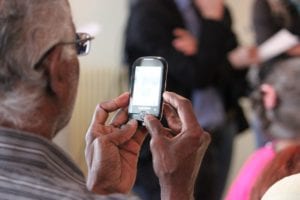
In order to use Driver, mesothelioma patients must download the mobile app and give consent for the platform to acquire their medical records and lab results.

Driver labs in San Francisco and Southern China can analyze patient tumors, DNA, and other data and the app shows them the best treatments and trials for their specific tumors.

“What’s missing in this crowded, noisy ecosystem is something that takes the patient end to end, soup to nuts, and provides them with a comprehensive picture of what their options are and if they’d like to proceed by accessing those options,” said Driver co-founder Petros Giannikopoulos, MD, who graduated from Harvard Medical School with Dr. Polkinghorn.

Dr. Giannikopoulos was a pathologist at Harvard when the two came up with the idea for the platform.

Driver May Be Out of Reach for Some Mesothelioma Patients

Unfortunately, Driver’s services are likely to be out of reach for many mesothelioma patients, who may already be grappling with rising out-of-pocket medical costs. The full service, including tumor and records processing, treatment-matching, and referral to relevant specialists, carries a one-time price tag of $3000 and a monthly fee of $20.

Giannikopoulos says Driver, which is being backed by Hong Kong billionaire Li Ka-shing, initially plans to help cover the cost of the products for underserved communities. That will not include travel costs if a patient wants to seek care at a distant hospital.

Mesothelioma patients can read more about Driver at the company’s website at Drive.xyz.

Sources:

Ho, Catherine, “A second opinion on a cancer diagnosis, from the comforts of home — for a price”, September 5, 2018, San Francisco Chronicle

“Harvard Doctors Backed by Billionaire Try to Revamp Cancer Care”, September 5, 2018, Bloomberg News

Herman, Bob, “How a tech startup wants to connect cancer patients to treatments”, September 6, 2018, Axios


Similar Posts

  • | |

    Doctors Describe "Concrete Therapeutic Approach" for Mesothelioma

    A team of medical researchers in Italy have achieved what they are calling “excellent” tumor control and survival results in malignant pleural mesothelioma patients using a combination of surgery, chemotherapy, and radiotherapy. Caused by exposure to asbestos, mesothelioma typically spreads quickly across the lung-encasing membrane called the pleura. There is no known cure but treatments are improving. In the current prospective study, 20 malignant pleural mesothelioma patients underwent radical pleurectomy/decortication followed by high doses of radiation. After surgeons removed as much of the visible mesothelioma tumor and surrounding tissue as possible, patients received 50Gy of radiation to the effected side of their chest, delivered in 25 fractions. Regions of particular concern for mesothelioma regrowth got an extra radiation “boost” to…

  • |

    Mesothelioma Still Rising Despite Ban in Ireland

    A study in Ireland confirms that it can take many years for a ban on asbestos to have a measurable impact on a country’s rates of malignant mesothelioma. Mesothelioma is the most serious of a list of diseases – including lung cancer, pleural plaques, asbestosis, and others – linked with exposure to asbestos dust. Affecting the linings around the lungs and other organs, mesothelioma is often resistant to most cancer treatments and may be fatal within a year of diagnosis. According to the International Ban Asbestos Secretariat, Ireland is one of 55 countries that have enacted some type of asbestos ban. However, although Ireland banned asbestos in 2000, a new study published in Cancer Epidemiology shows that incidence of the…

  • | |

    Does Radiotherapy Reduce Mesothelioma Pain?

    A new study says there is not enough evidence to support the use of radiotherapy for the treatment of pain associated with malignant pleural mesothelioma. Researchers at the University of Edinburgh in Scotland reviewed a range of past studies on mesothelioma pain and radiotherapy by searching databases that date back as far as 1974. To be eligible to be included in their review, the study had to focus on malignant pleural mesothelioma and radiotherapy given “with the intent of improving pain”. The study also had to report doses and fractionation of the radiotherapy and how the pain responded. In all, the researchers found eight studies on mesothelioma pain and radiotherapy that met the criteria. Two of the studies were prospective…

  • |

    Website Aims to Protect Homeowners from Mesothelioma

    Australia’s Cancer Council is trying to educate home renovators about their risk for mesothelioma with a new e-learning course. Australia has one of the highest per capita rates of mesothelioma in the world, largely because of several asbestos mining operations that were once located there. Although asbestos has been banned from building products in Australia since 1989, asbestos-linked diseases like mesothelioma, lung cancer, and asbestosis continue to pose a serious health concern. While mesothelioma has traditionally occurred among people exposed to asbestos on the job, Australia is now bracing for another “wave” of mesothelioma victims among homeowners who encounter asbestos while doing their own renovation projects. Cancer Council Australia has launched “kNOw asbestos in your home” in an effort to…

  • |

    Ape Virus Shrinks Mesothelioma Tumors in Lab

    A virus that causes leukemia in gibbon apes may have the power to help fight malignant mesothelioma in people. Gibbon ape leukemia virus (GALV) has been tested for years as a viral vector, a carrier of therapeutic genetic information, in the treatment of various human illnesses, including cancer. A new study in Japan compared GALV with a leukemia virus derived from mice to see which carrier communicated most efficiently with mesothelioma cells. While both types of viruses replicated in most of the mesothelioma cell lines tested, the mouse-derived virus was not effective in a mesothelioma cell line called ACC-MESO-1. In this cell line, only the GALV spread efficiently both in culture and in mice that had been given human mesothelioma…

  • | |

    Radiotherapy for Mesothelioma: Better But Still Limited

    A form of highly-targeted radiation therapy for mesothelioma is better than it used to be, but is still risky. That is the message of a recent article on intensity-modulated radiation therapy (IMRT) in Seminars in Thoracic and Cardiovascular Surgery. Author Kenneth E. Rosenzweig, MD, a Radiation Oncologist with Mount Sinai Hospital in New York, reviewed recent studies on IMRT and mesothelioma. He concludes that, while the “troubling toxicity” associated with IMRT when it was first introduced has not been entirely eliminated, the fact that clinicians now have more experience with it is making a positive difference for mesothelioma patients. Before targeted therapies like IMRT were available, high-dose radiation was not usually a feasible option for mesothelioma since the irregular shape…