| |

Still No Clear Answer on SMART Protocol for Pleural Mesothelioma

SMART protocol for mesotheliomaAnother study is out and there is still no clear answer about the value of the SMART protocol for mesothelioma. 

SMART stands for surgery for mesothelioma after radiotherapy. After studying nearly a hundred patients, doctors in Toronto say radical surgery after RT can be effective. But they also say it is still very hard to prevent serious complications, even in an experienced center like theirs. 

The team at Princess Margaret Cancer Center tested the SMART protocol on previously-untreated pleural mesothelioma patients. 

As with previous studies of the SMART protocol for mesothelioma, some of the patients did very well. Many lived longer than they would normally expect to live. But there was also a high incidence of serious surgery-related complications. 

The SMART Protocol for Pleural Mesothelioma

Pleural mesothelioma is a rare but often deadly cancer caused by asbestos. It affects the membrane around the lungs. When asbestos fibers get into the tissue, they cause damage and cancer in some people. 

Most patients have a combination of treatments for mesothelioma. These may include chemotherapy, radiotherapy, immunotherapy, surgery, and others. Even with combination treatment, the prognosis for mesothelioma is poor. 

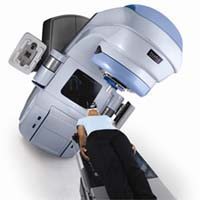
Researchers developed the SMART protocol for mesothelioma to improve the odds. It relies on high doses of targeted radiotherapy prior to surgery. The RT may help make tumors easier and safer to remove. This is followed by EPP surgery to remove one lung and surrounding tissue.

With the SMART protocol for mesothelioma, patients get RT over just a few days. Then they go right to surgery. It is a faster approach to treatment than chemotherapy. This is important because mesothelioma tumors grow quickly.

Effective but Risky

EPP surgery is a radical treatment. Patients can have serious complications and may even die. This is one reason many surgeons now prefer lung-sparing PD surgery for pleural mesothelioma instead. 

The SMART protocol for mesothelioma aims to improve survival after EPP. Clinical trials show a median overall survival time of 51 months. This is better than any other single treatment. 

But the new Canadian study shows it is not easy to achieve these kinds of results. The study included 96 patients treated between 2008 and 2019. Patients got five doses of IMRT over a week. They had surgery within the next week.

Half of the patients on this SMART protocol for mesothelioma had serious (grade 3 – 4) complications in the first 30 days. One patient died of pneumonia. The good news is that it took years for cancer to recur in some cases. But after a median follow-up of 47 months, 63% percent of patients had signs of mesothelioma again. 

“Results from this study suggest that extrapleural pneumonectomy after radiotherapy can be done with good early and long-term results,” concludes the report in The Lancet Oncology

But there was also a caveat: “Minimising grade 4 events on the protocol is technically demanding and might affect survival beyond the post-operative period.”

Patients with good overall health, small tumors, and the epithelial subtype typically get the best results from the SMART protocol for mesothelioma. 

Sources:

Cho, BCJ, et al, “Surgery for malignant pleural mesothelioma after radiotherapy (SMART): final results from a single-centre, phase 2 trial”, January 2021, Lancet Oncology, Online ahead of print, https://www.thelancet.com/journals/lanonc/article/PIIS1470-2045(20)30606-9/fulltext

De Perrot, M, et al, “Accelerated hemithoracic radiation followed by extrapleural pneumonectomy for malignant pleural mesothelioma”, February 2016, The Journal of Thoracic and Cardiovascular Surgery, https://www.sciencedirect.com/science/article/pii/S0022522315019868

 

Similar Posts

  • | |

    Doctors Describe "Concrete Therapeutic Approach" for Mesothelioma

    A team of medical researchers in Italy have achieved what they are calling “excellent” tumor control and survival results in malignant pleural mesothelioma patients using a combination of surgery, chemotherapy, and radiotherapy. Caused by exposure to asbestos, mesothelioma typically spreads quickly across the lung-encasing membrane called the pleura. There is no known cure but treatments are improving. In the current prospective study, 20 malignant pleural mesothelioma patients underwent radical pleurectomy/decortication followed by high doses of radiation. After surgeons removed as much of the visible mesothelioma tumor and surrounding tissue as possible, patients received 50Gy of radiation to the effected side of their chest, delivered in 25 fractions. Regions of particular concern for mesothelioma regrowth got an extra radiation “boost” to…

  • | |

    Does Radiotherapy Reduce Mesothelioma Pain?

    A new study says there is not enough evidence to support the use of radiotherapy for the treatment of pain associated with malignant pleural mesothelioma. Researchers at the University of Edinburgh in Scotland reviewed a range of past studies on mesothelioma pain and radiotherapy by searching databases that date back as far as 1974. To be eligible to be included in their review, the study had to focus on malignant pleural mesothelioma and radiotherapy given “with the intent of improving pain”. The study also had to report doses and fractionation of the radiotherapy and how the pain responded. In all, the researchers found eight studies on mesothelioma pain and radiotherapy that met the criteria. Two of the studies were prospective…

  • | |

    Radiotherapy for Mesothelioma: Better But Still Limited

    A form of highly-targeted radiation therapy for mesothelioma is better than it used to be, but is still risky. That is the message of a recent article on intensity-modulated radiation therapy (IMRT) in Seminars in Thoracic and Cardiovascular Surgery. Author Kenneth E. Rosenzweig, MD, a Radiation Oncologist with Mount Sinai Hospital in New York, reviewed recent studies on IMRT and mesothelioma. He concludes that, while the “troubling toxicity” associated with IMRT when it was first introduced has not been entirely eliminated, the fact that clinicians now have more experience with it is making a positive difference for mesothelioma patients. Before targeted therapies like IMRT were available, high-dose radiation was not usually a feasible option for mesothelioma since the irregular shape…

  • | |

    A Second-Line Option for Mesothelioma?

    Although survival was not significantly extended, the chemotherapy drug vinorelbine might be a treatment option for mesothelioma patients whose cancer has returned after first-line chemotherapy with pemetrexed. A new study on vinorelbine as a second-line treatment finds that the drug is “moderately active” in mesothelioma patients who were initially treated with pemetrexed-based chemotherapy. Pemetrexed (Alimta), along with a platinum-based drug like cisplatin, is the primary first-line drug therapy for mesothelioma. But vinorelbine is gaining attention as a possible option for mesothelioma, in part because it is available in a less expensive generic form. In “Vinorelbine in pemetrexed-pretreated patients with malignant pleural mesothelioma”, the Italian authors detail the results of their study on 59 patients with unresectable pleural mesothelioma.  These patients…

  • | |

    Repeat HIPEC Improves Mesothelioma Survival

    If one cytoreductive surgery and HIPEC procedure for mesothelioma is good, subsequent treatments may be even better. That is the central message of research conducted at the Moffitt Cancer Center in Florida. The study’s aim was to assess overall survival among peritoneal mesothelioma patients who had not just one, but two or more rounds of heated intraperitoneal chemotherapy (HIPEC) after cytoreductive surgery. The cytoreduction/HIPEC approach has become popular for peritoneal mesothelioma, a treatment-resistant cancer of abdominal membranes caused by asbestos. Cytoreductive surgery involves removing as much of the mesothelioma tumor as possible from the abdomen. Because the shape and spreading pattern of mesothelioma tumors make complete cytoreduction difficult, the surgery is often followed by a rinse with a heated solution…

  • | |

    Value of Mesothelioma Surgery Challenged for Healthy Patients

    New research conducted in Italy and presented at the 15th World Conference on Lung Cancer in Sydney, Australia suggests that mesothelioma surgery – no matter what kind – may not offer a survival advantage over medical management for the healthiest of patients. Mesothelioma is a rare but aggressive malignancy that is highly resistant to standard cancer treatments. The two types of mesothelioma surgery considered to be options for people with resectable cancer are pleurectomy decortication (P/D) or extrapleural pneumonectomy (EPP). While EPP is more radical than P/D because it involves removing a lung, both carry a heavy risk of complications and, according to the Italian researchers, may not be of value for certain patients. The study reviewed data from 1,365…