| |

Mesothelioma Survival Case Encouraging for Current Patients

2217578_patient info

A new case report out of Belgium has some encouraging news for mesothelioma patients. It recounts the case of a patient who not only survived multi-modality treatment for mesothelioma, but whose cancer disappeared completely.

The 50-year-old patient was suffering from malignant pleural mesothelioma, a virulent lung-related cancer usually caused by inhalation of asbestos dust. The patient had the epithelial variety of the disease and a fairly contained tumor on the surface of the lung lining. Staging showed that the mesothelioma cells had not yet spread to the lymph nodes, which can be a precursor to metastasis (spread) to other parts of the body.

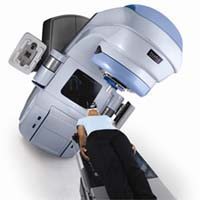
Doctors at the University Hospital in Leuven, Belgium treated the patient with a tri-modality approach, including chemotherapy, surgery and radiation. Induction chemotherapy was administered prior to the surgery in an effort to shrink the primary tumor. Surgeon’s then performed an extrapleural pneumonectomy (EPP), removing the mesothelioma tumor, the nearest lung, and other diseased or at-risk tissues. After surgery, the patient underwent “radical radiotherapy” to destroy any remaining mesothelioma cells that could cause a tumor to regrow.

Following this treatment, the doctors report a “complete disappearance of solid tumor tissue”. Although the patient’s younger age, epithelial subtype, and early-stage mesothelioma were all good prognostic factors, complete remission in mesothelioma is extremely rare. Summarizing these remarkable results in a Belgian medical journal, the authors say more study is needed to determine how they might be replicated in other mesothelioma patients.

“The real prognostic value of the pathologic complete remission of a malignant pleural mesothelioma definitely needs to be further evaluated in a larger series of patients,” they write.

Survival of mesothelioma is not unprecedented and new, investigative treatments are improving the odds for newly-diagnosed patients. At nearly 17 years after his diagnosis, Paul Kraus, author of “Surviving Mesothelioma and Other Cancers: A Patient’s Guide”, is considered the world’s longest-living documented mesothelioma survivor.

Source:

Moubax, K, et al, “Pathologic complete remission of malignant pleural mesothelioma after combined modality treatment: a case report”, October 2013, Acta Clinical Belgica, pp. 386-388.


Similar Posts

  • | |

    Mesothelioma survivor Paul Kraus, alive and well 19 years after writing “Surviving Mesothelioma and Other Cancers

    Paul Kraus is considered the longest documented mesothelioma survivor in the world. He was diagnosed in 1997 with mesothelioma so widespread that he was given little hope of survival. Not willing to give up, he worked with a team of doctors to create his own tailored treatment protocol. This protocol included dramatic life style change, experimental therapies, dietary changes, mind-body medicine, and other modalities. Paul was fortunate. The protocol he and his doctors created helped him keep the mesothelioma in check. His book “Surviving Mesothelioma and Other Cancers: A Patient’s Guide” details his cancer voyage, the decisions he made, and his philosophies about health and healing. This book is now the best-selling mesothelioma book in the world and has inspired…

  • | |

    Doctors Describe "Concrete Therapeutic Approach" for Mesothelioma

    A team of medical researchers in Italy have achieved what they are calling “excellent” tumor control and survival results in malignant pleural mesothelioma patients using a combination of surgery, chemotherapy, and radiotherapy. Caused by exposure to asbestos, mesothelioma typically spreads quickly across the lung-encasing membrane called the pleura. There is no known cure but treatments are improving. In the current prospective study, 20 malignant pleural mesothelioma patients underwent radical pleurectomy/decortication followed by high doses of radiation. After surgeons removed as much of the visible mesothelioma tumor and surrounding tissue as possible, patients received 50Gy of radiation to the effected side of their chest, delivered in 25 fractions. Regions of particular concern for mesothelioma regrowth got an extra radiation “boost” to…

  • |

    Mesothelioma Still Rising Despite Ban in Ireland

    A study in Ireland confirms that it can take many years for a ban on asbestos to have a measurable impact on a country’s rates of malignant mesothelioma. Mesothelioma is the most serious of a list of diseases – including lung cancer, pleural plaques, asbestosis, and others – linked with exposure to asbestos dust. Affecting the linings around the lungs and other organs, mesothelioma is often resistant to most cancer treatments and may be fatal within a year of diagnosis. According to the International Ban Asbestos Secretariat, Ireland is one of 55 countries that have enacted some type of asbestos ban. However, although Ireland banned asbestos in 2000, a new study published in Cancer Epidemiology shows that incidence of the…

  • | |

    Does Radiotherapy Reduce Mesothelioma Pain?

    A new study says there is not enough evidence to support the use of radiotherapy for the treatment of pain associated with malignant pleural mesothelioma. Researchers at the University of Edinburgh in Scotland reviewed a range of past studies on mesothelioma pain and radiotherapy by searching databases that date back as far as 1974. To be eligible to be included in their review, the study had to focus on malignant pleural mesothelioma and radiotherapy given “with the intent of improving pain”. The study also had to report doses and fractionation of the radiotherapy and how the pain responded. In all, the researchers found eight studies on mesothelioma pain and radiotherapy that met the criteria. Two of the studies were prospective…

  • |

    Website Aims to Protect Homeowners from Mesothelioma

    Australia’s Cancer Council is trying to educate home renovators about their risk for mesothelioma with a new e-learning course. Australia has one of the highest per capita rates of mesothelioma in the world, largely because of several asbestos mining operations that were once located there. Although asbestos has been banned from building products in Australia since 1989, asbestos-linked diseases like mesothelioma, lung cancer, and asbestosis continue to pose a serious health concern. While mesothelioma has traditionally occurred among people exposed to asbestos on the job, Australia is now bracing for another “wave” of mesothelioma victims among homeowners who encounter asbestos while doing their own renovation projects. Cancer Council Australia has launched “kNOw asbestos in your home” in an effort to…

  • |

    Ape Virus Shrinks Mesothelioma Tumors in Lab

    A virus that causes leukemia in gibbon apes may have the power to help fight malignant mesothelioma in people. Gibbon ape leukemia virus (GALV) has been tested for years as a viral vector, a carrier of therapeutic genetic information, in the treatment of various human illnesses, including cancer. A new study in Japan compared GALV with a leukemia virus derived from mice to see which carrier communicated most efficiently with mesothelioma cells. While both types of viruses replicated in most of the mesothelioma cell lines tested, the mouse-derived virus was not effective in a mesothelioma cell line called ACC-MESO-1. In this cell line, only the GALV spread efficiently both in culture and in mice that had been given human mesothelioma…