mesothelioma risk

  • |

    States Wrestle with Legal Side of Mesothelioma

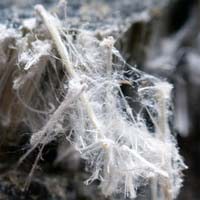
    Recent changes in the way some states handle mesothelioma lawsuits may eventually have an impact nationwide. In Pennsylvania, the state Supreme Court has voted unanimously to reject the scientific theory that even a small amount of asbestos can trigger asbestos diseases such as mesothelioma. Mesothelioma is a virulent cancer whose only known cause is exposure to the mineral asbestos. The Environmental Protection Agency has said there is no safe level of exposure, however scientific evidence suggests that risk of mesothelioma increases with increased asbestos exposure. The Pennsylvania Supreme Court decision means that plaintiffs in mesothelioma cases can no longer argue that exposure as small as a single fiber of asbestos could have triggered their disease. Instead, the court ruled that mesothelioma lawsuits…
  • |

    Landlord’s Action Puts Tenants at Mesothelioma Risk

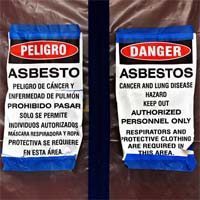
    Property owners who want to remove asbestos are being urged to heed a lesson learned the hard way by a Massachusetts landlord last week. The state’s Attorney General has ruled that a property owner in Springfield, Massachusetts put her tenants, and possibly their neighbors, at risk for asbestos caused diseases like mesotheliomacancer by failing to follow state regulations regarding asbestos removal. Asbestos is the primary cause of mesothelioma, a rare malignancy of the mesothelial membrane that is often fatal. It was long used in the U.S. as a building material, and can still be found in the roofs, floors, walls and siding of tens of thousands of older homes and buildings. Asbestos often disintegrates as it ages, prompting many property owners…

  • | | |

    Unions Call for Asbestos-Free Australia

    The head of an Australian Consortium of Trade Unions (ACTU) is calling on the government to protect its citizens against mesothelioma by ridding the country of asbestos by 2030. Ged Kearney is president of the Australian Council of Trade Unions, which represents construction unions and made the call on the ACTU website. Because asbestos was mined in Australia and in Australian buildings and cement from the 1950’s to the 1970’s, people who work in mining, construction and ship building trades are at higher risk for asbestos-linked diseases such as asbestosis and mesothelioma. According to the ACTU, Australia had the highest per capita use of asbestos in the world from the 1950’s to the 1980’s. The Australian government banned the use of asbestos…

  • |

    Mesothelioma Risk Depends on Asbestos Fiber Size

    Scientists who study the connection between asbestos fibers and mesothelioma say they now understand what size particles pose the most danger. Asbestos is the primary cause of mesothelioma, but some manmade fibers can also be carcinogenic. Manmade nanotubes or nanoparticles are carbon molecules constructed for use in nanotechnology, electronics, optics and other fields of materials science. Some studies have suggested that their shape can allow them to cross membrane barriers inside the body and cause “inflammatory and fibrotic reactions.”  Such reactions are believed to be the same mechanism by which asbestos fibers may trigger malignant mesothelioma in the pleural membrane around the lungs. Although scientists have long known that the affects of fibers depends on their length, the “key threshold length”…

  • |

    Finding the Mesothelioma Asbestos Connection

    Even though the cause of mesothelioma – exposure to asbestos – is well-known, it is not always easy for a mesothelioma patient to find his or her own ‘asbestos connection’. For people who worked in asbestos-filled job environments, such as asbestos mines or factories which manufactured asbestos-containing products, the connection can be obvious. The same is true for mesothelioma patients who have worked as electricians, plumbers, construction workers, or in ship building or demolition – all careers where exposure to asbestos materials was common. But for others, the link can be more challenging.  Since work history can be a vital part of diagnosing mesothelioma, not knowing where, or even if, a person has been exposed to asbestos can delay treatment and impact…

  • | |

    Mesothelioma Still on the Rise in Japan

    While the rate of mesothelioma continues to slowly decline in the U.S., the virulent asbestos-linked cancer is still on the rise in Japan. A new Japanese study on future health trends projects that the incidence of mesothelioma won’t peak in Japan until 2027.  In the meantime, tens of thousands of Japanese workers are expected to die of mesothelioma.  Based on considerations such as the number of workers in industrial jobs and the likelihood of asbestos exposure, the study projects the mesothelioma death toll to reach 66,327 people ages 50 to 89 between 2003 and 2050. Although a 2009 study of Japanese mesothelioma risk predicted a maximum of just 37,000 deaths by 2070, the new study’s authors say their prediction method is likely…

  • | |

    UK Announces “Landmark” Mesothelioma Ruling

    Britain’s highest court has issued what is being called a ‘landmark’ ruling for victims of mesothelioma and other industrial diseases. Mesothelioma is a fast-growing cancer of the membranous tissue (mesothelium) that surrounds the lungs and lines the abdomen. It is caused by exposure to asbestos.  Because of the heavy use of asbestos as an insulator and building material in the past, England now has one of the highest per capita rates of mesothelioma in the world. According to the country’ largest trade union, approximately 2,500 people are diagnosed with mesothelioma each year – about the same number as are diagnosed in the entire United States. Since mesothelioma can take decades to develop, the UK Supreme Court was being asked to decide…

  • | | |

    Mesothelioma Death: Asbestos Was Climber’s Greatest Risk

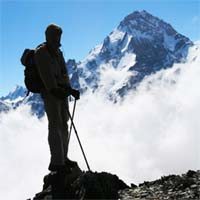
    An Australian mountain climber who made headlines in 2006 by surviving a harrowing experience on Mt. Everest has died of mesothelioma. Fifty-six year old Lincoln Hall had climbed many of the world’s highest peaks, including Mt. Everest in 2006.  But when he developed serious symptoms of oxygen deprivation on the way down, he was left for dead by his climbing team. An American guide and his two clients found Hall the next day and sacrificed their own summit experience to save his life.  After treatment in a Nepal hospital for a chest infection, fluid on his brain and frostbite, Hall eventually returned to Australia where he was hailed as a hero. Despite the risks Hall took in his life, including his…

  • | | |

    Australia’s Mesothelioma Fight Comes to Television

    Australia’s ongoing mesothelioma problem will soon be the subject of a two-part television miniseries. Produced by Australia’s ABC network and starring some of the country’s most respected actors, “The Devils Dust” tells the story of mesothelioma victim Bernie Banton.  Banton was a long time employee of James Hardie, an Australian manufacturer of fiber cement building products.  For years, the company added asbestos to its cement to increase its strength and durability.  After Banton was diagnosed with pleural mesothelioma in 1999, he became an advocate for mesothelioma sufferers throughout the country. Although mesothelioma cases like Banton’s are tragically common in Australia, Banton’s case was brought into the national spotlight largely because of the book “Killer Company”, by journalist Matt Peacock.  It was Peacock…

  • |

    New Trust for Navy Veterans with Mesothelioma

    Starting this month, Navy veterans who contracted mesothelioma by working with certain types of valves and steam control equipment on ships have a new potential source to help pay their medical bills and expenses. CIRCOR, the parent company of Leslie Controls, a major supplier of valves and gaskets to the US Navy from the 1940s until the 1980s, has created a trust fund specifically for Navy veterans with mesothelioma and other asbestos-related diseases.  The $74 million dollar trust fund was part of a Chapter 11 bankruptcy reorganization plan. Mesothelioma is caused by exposure to the fibrous mineral, asbestos. Asbestos is a known carcinogen that has been linked not only to mesothelioma but also to lung cancer, asbestosis, and a host of other…