| | | |

The High Cost of Mesothelioma in Turkey
cost of mesothelioma

Researchers in Turkey have released a sobering report on the real cost of mesothelioma in their country. 

The article appears in the latest issue of Archives of Environmental & Occupational Health. It details the lives lost to asbestos cancer. It also talks about loss of productivity as a cost of mesothelioma. 

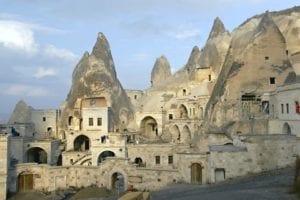
Mesothelioma is a rare but virulent cancer that is resistant to most kinds of treatment. Turkey is a hotbed for mesothelioma because of the high levels of cancer-causing minerals in the soil. Some Turkish people also seem to have a higher genetic susceptibility to mesothelioma. This cancer is so common in some parts of Turkey that it is a popular place for mesothelioma research.  

Why the Cost of Mesothelioma is so High in Turkey

Mesothelioma is usually caused by asbestos exposure. Many mesothelioma patients contract the disease because they worked around asbestos. 

Turkey is a small country with a high per capita rate of mesothelioma. The cost of mesothelioma is higher in Turkey because of environmental asbestos. In some parts of Turkey, there is a high concentration of asbestos in the ground. There are also high amounts of another mesothelioma-linked mineral called erionite

People who live near asbestos and erionite have a higher risk for mesothelioma. The cost of mesothelioma in terms of human life and lost productivity is highest in these regions. 

How Much Does Mesothelioma Really Cost?

To estimate the cost of mesothelioma in Turkey, researchers started by counting the number of mesothelioma deaths. They subtracted each patient’s age at death from their expected normal lifespan. They called this number ‘years of life lost’ or YLL. 

More than 5,600 Turkish people died early because of malignant mesothelioma. Fifty-seven percent of these were men and 42 percent were women. The men died a median of 16 years earlier than expected. The women died 19 years earlier.

To calculate the cost of mesothelioma in terms of productive years (YPLL), the researchers first disregarded deaths in people over 65. Men lost a median of 26 productive years and women lost 28. 

Running the Numbers

The research team calculated that the cost of mesothelioma was $45,963 per person. It was higher in men than in women because of their higher earning potential. 

“Malignant mesothelioma is associated with high YLL, YPLL, and economic burden in a country with environmental asbestos exposure in the rural areas,” they write.

Other researchers have also tried to calculate the cost of mesothelioma in their countries. A 2017 Canadian study came up with a figure of $831 million “in direct and indirect costs for newly identified cases of mesothelioma and lung cancer.” The figure was based on 2,331 new cases of occupational mesothelioma or lung cancer in 2011. It did not include existing cases. 

“Our findings provide important information for…the merits of banning the mining of asbestos and use of products containing asbestos in countries where they are still allowed,” they wrote. 

In the US, where asbestos is still legal, an estimated 2,500 people are diagnosed with mesothelioma each year. There is currently no cure for the disease.

Sources:

Metintas, S, et al “Potential years of life and productivity loss due to malignant mesothelioma in Turkey”, April 13, 2020, Archives of Environmental & Occupational Health, https://www.tandfonline.com/doi/abs/10.1080/19338244.2020.1747380?journalCode=vaeh20

Tompa, E, et al, “The economic burden of lung cancer and mesothelioma due to occupational and para-occupational asbestos exposure”, July 29, 2017, Occupational and Environmental Medicine, https://oem.bmj.com/content/74/11/816


Similar Posts

  • |

    Mesothelioma Still Rising Despite Ban in Ireland

    A study in Ireland confirms that it can take many years for a ban on asbestos to have a measurable impact on a country’s rates of malignant mesothelioma. Mesothelioma is the most serious of a list of diseases – including lung cancer, pleural plaques, asbestosis, and others – linked with exposure to asbestos dust. Affecting the linings around the lungs and other organs, mesothelioma is often resistant to most cancer treatments and may be fatal within a year of diagnosis. According to the International Ban Asbestos Secretariat, Ireland is one of 55 countries that have enacted some type of asbestos ban. However, although Ireland banned asbestos in 2000, a new study published in Cancer Epidemiology shows that incidence of the…

  • |

    Website Aims to Protect Homeowners from Mesothelioma

    Australia’s Cancer Council is trying to educate home renovators about their risk for mesothelioma with a new e-learning course. Australia has one of the highest per capita rates of mesothelioma in the world, largely because of several asbestos mining operations that were once located there. Although asbestos has been banned from building products in Australia since 1989, asbestos-linked diseases like mesothelioma, lung cancer, and asbestosis continue to pose a serious health concern. While mesothelioma has traditionally occurred among people exposed to asbestos on the job, Australia is now bracing for another “wave” of mesothelioma victims among homeowners who encounter asbestos while doing their own renovation projects. Cancer Council Australia has launched “kNOw asbestos in your home” in an effort to…

  • |

    Ape Virus Shrinks Mesothelioma Tumors in Lab

    A virus that causes leukemia in gibbon apes may have the power to help fight malignant mesothelioma in people. Gibbon ape leukemia virus (GALV) has been tested for years as a viral vector, a carrier of therapeutic genetic information, in the treatment of various human illnesses, including cancer. A new study in Japan compared GALV with a leukemia virus derived from mice to see which carrier communicated most efficiently with mesothelioma cells. While both types of viruses replicated in most of the mesothelioma cell lines tested, the mouse-derived virus was not effective in a mesothelioma cell line called ACC-MESO-1. In this cell line, only the GALV spread efficiently both in culture and in mice that had been given human mesothelioma…

  • |

    Teacher’s Diagnosis Highlights Mesothelioma Risk in Schools

    A recent mesothelioma diagnosis in the UK once again dramatically highlights the fact that even a small amount of asbestos can be deadly. Sixty-three-year-old school teacher Marion Potts of Brockenhurst died of mesothelioma in a Southampton hospital in June. According to an article in The Mirror, the Coroner recorded a verdict of “death from an industrial disease” after hearing evidence last week that Potts actually saw asbestos dust being released when she pinned work on the classroom walls. Most recently, Potts was head of the English department at Romsey School in Hampshire until her retirement two years ago. Mesothelioma is a growing threat among school teachers, administrators, maintenance workers, and even students in British schools. A government report released last…

  • | | |

    Mesothelioma Nurses Ready for New Cases in Australia

    Australia is bracing for an expected new wave of mesothelioma cases in the next decade and the Lung Foundation of Australia is taking action now to get ready. The Foundation has paid for ten nurses from around the country to receive specialized training in helping patients and families cope with mesothelioma. The nurses, who have recently completed the training, are now equipped to lead treatment planning for these complex cancer patients and to help other nurses do the same. Pleural mesothelioma is an aggressive cancer that occurs in the lining around the lungs. It is caused by exposure to asbestos dust, a toxin that was once alarmingly prevalent in Australia where it was mined and heavily used in construction. Because…

  • | |

    Spanish Mesothelioma Deaths Likely to Continue for Decades

    New research in Spain suggests that mesothelioma deaths will continue in the country until the “last surviving member” of the group of people exposed to occupational asbestos succumbs to the disease. Like many countries, Spain used asbestos heavily in the first half of the 20th century, especially in construction, where the mineral was prized for its durability, low cost, and resistance to fire and corrosion.  Asbestos was banned in Spain in 2002. Observing that more than 2.5 million metric tons of asbestos were imported into Spain from 1906 to 2002, researchers say deaths from mesothelioma have risen steadily. Between 1976 and 1980, a total of 491 Spanish people died of mesothelioma. By the 5-year period from 2006 to 2010, that…