| | |

Risk for Mesothelioma Does Not Decline After Asbestos Exposure Stops
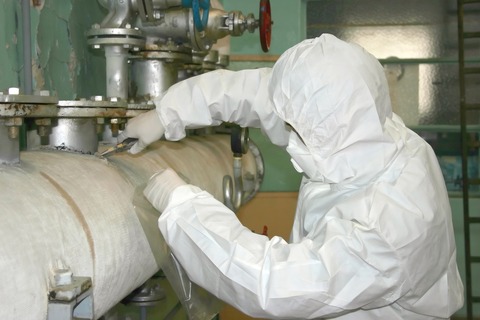
Asbestos worker faces risk for mesothelioma

A new report contains some disappointing news for former asbestos workers: The risk for mesothelioma does not go down when asbestos exposure stops.

A team of US and Italian researchers reached that conclusion after combing the medical literature for studies on the risk for mesothelioma.

Although the risk for several other cancers declines when the person is no longer in contact with the carcinogen, the study shows this does not apply to asbestos cancer.

Asbestos Increases Mesothelioma Risk

Asbestos is the primary cause of mesothelioma. It is a naturally-occurring mineral that is resistant to corrosion, does not burn, and makes an excellent insulator. Malignant mesothelioma was virtually unheard of until people started mining and using asbestos in industry.

Since then, the health risks among asbestos workers have become well-known.

Illnesses and deaths among workers forced many companies to stop using asbestos or to start using protective gear.

But a new study suggests that these protections were too little, too late for many. Even leaving the workplace may not help. The research shows that the risk for mesothelioma stays with a person long after exposure stops.

Measuring the Long-Term Impact of Asbestos Exposure

The new study involved a systematic review of the medical literature on the cessation of asbestos exposure and disease risk.

The researchers found nine relevant studies. Their analysis shows that the 10-year relative malignant mesothelioma risk after asbestos exposure was slightly higher than that of lung cancer.  

“This analysis provides evidence that the risk of mesothelioma does not decrease after cessation of asbestos exposure, while lung cancer risk does,” conclude the researchers.

Why Does Risk for Mesothelioma Persist?

A big reason why the risk for mesothelioma persists after asbestos exposure stops is the character of asbestos fibers. Dust-sized asbestos particles are thin and sharp. They are just the right size to lodge deep in the tissue. Once inhaled or swallowed, asbestos fibers can stay in the body indefinitely.

Over time, inflammation, irritation, and released iron from these fibers may raise the risk for mesothelioma.

Mesothelioma symptoms may not appear until the disease is in an advanced stage. It is important for people who have been exposed to asbestos to make their doctor aware, monitor their health, and have regular checkups.

Source:

Boffetta, P, et al, “Risk of mesothelioma after cessation of asbestos exposure: a systematic review and meta-regression”, April 15, 2019, International Archives of Occupational and Environmental Health, Epub ahead of print, https://link.springer.com/article/10.1007%2Fs00420-019-01433-4

Similar Posts

  • |

    Teacher’s Diagnosis Highlights Mesothelioma Risk in Schools

    A recent mesothelioma diagnosis in the UK once again dramatically highlights the fact that even a small amount of asbestos can be deadly. Sixty-three-year-old school teacher Marion Potts of Brockenhurst died of mesothelioma in a Southampton hospital in June. According to an article in The Mirror, the Coroner recorded a verdict of “death from an industrial disease” after hearing evidence last week that Potts actually saw asbestos dust being released when she pinned work on the classroom walls. Most recently, Potts was head of the English department at Romsey School in Hampshire until her retirement two years ago. Mesothelioma is a growing threat among school teachers, administrators, maintenance workers, and even students in British schools. A government report released last…

  • |

    Mesothelioma Victims’ Victory in Pennsylvania

    Workers and their families have won a victory in Pennsylvania after the state Supreme Court ruled that they could sue former employers over late-manifesting industrial diseases like mesothelioma. The decision focused on a provision in Pennsylvania’s Workers’ Compensation Act that says workers cannot sue an employer if their occupational disease occurred more than 300 weeks after their on-the-job exposure. While many occupational injuries and diseases occur within weeks or months of exposure to a toxin, asbestos diseases like mesothelioma are a notable exception. Believed to be caused by chronic irritation from inhaled or ingested asbestos fibers, mesothelioma does not usually begin to cause symptoms until at least a decade after exposure. Expressing the opinion of the majority, Supreme Court Justice…

  • |

    Study Confirms Firefighters at Elevated Risk for Mesothelioma

    A 5-year National Institute for Occupational Safety and Health (NIOSH) study of U.S. firefighters is the first to confirm what has long been suspected: Firefighters are definitely at higher risk for malignant mesothelioma. The study examined the mortality patterns and cancer incidence (including mesothelioma) among 30,000 firefighters in three major cities. The study subjects were all career firefighters who started their careers after 1950 and were followed through 2009. In order to get a diverse sample of firefighters from across the country, the study focused on firefighters from San Francisco, Chicago and Philadelphia. Comparing firefighters to a sampling of the general public, the study looked at 92 causes of death and 41 cancer incidence groupings, with a focus on 15…

  • | |

    Micro-RNAs May Offer New Way to Fight Mesothelioma

    Scientists at one of the world’s top mesothelioma research centers, the Asbestos Diseases Research institute in Sydney, Australia, say that restoring the expression of certain micro RNAs in the cells of mesothelioma patients may offer a new way to fight the disease. A microRNA is a small RNA molecule which is involved in the regulation of gene expression. According to a new report in the Annals of Oncology, the Australian scientists found reduced expression of the micro RNA-15 family (miR-15/16) in the cells of mice with mesothelioma. “When malignant pleural mesothelioma cell lines were compared with the normal mesothelial cell line MeT-5A, the downregulation of miR-15/16 was 2- to 10-fold,” they report. This finding is consistent with previous cancer research…

  • |

    Mesothelioma Claims Another American Actor

    Another American actor has died of malignant mesothelioma. Veteran character actor Ed Lauter, who worked with such prominent names as Clint Eastwood, George C. Scott, Burt Reynolds and Tom Cruise, died this week in Los Angeles. According to the Associated Press, one of Lauter’s most notable roles was that of a prison guard in the 1974 Burt Reynolds film “The Longest Yard”. He also appeared in Alfred Hitchcock’s “The Family Plot”, “Born on the Fourth of July” with Tom Cruise, and most recently played a butler in the 2011 Oscar-winning film “The Artist”. Lauter’s television appearances included “The Office”, “ER”, “Murder She Wrote” and “The Rockford Files”. Although little is being said about the origin of Lauter’s mesothelioma, an aggressive…

  • |

    Last Man Sentenced in Asbestos Dumping Scheme

    The U.S. Justice Department has announced that a New Jersey man will spend 15 months in prison for his part in a scheme to illegally dump thousands of tons of asbestos-contaminated construction debris – putting others at risk for mesothelioma. He was the last person to be sentenced in the conspiracy. Asbestos is the cause of mesothelioma, a difficult to treat and aggressive cancer.  At the height of its popularity from the 1940s to the early 1970s, asbestos was common in building products ranging from floor and ceiling tiles to joint compound, concrete and shingles. It is still present in tens of thousands of older homes and buildings today. In an effort to protect workers and the public from mesothelioma…